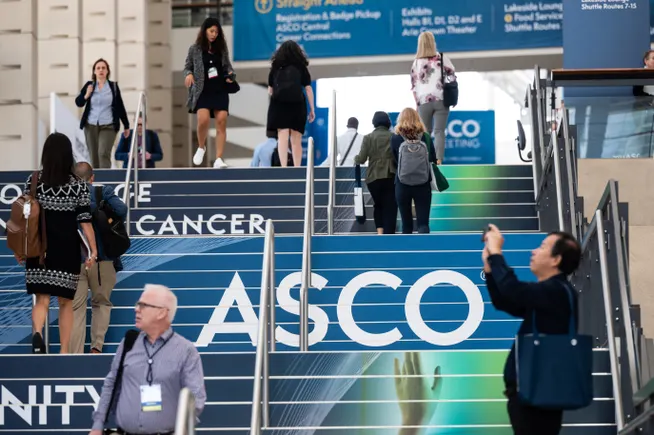
CHICAGO — The annual meeting of the American Society of Clinical Oncology (ASCO) at McCormick Place is traditionally a crucible of innovation, where the trajectory of global medicine is redirected by raw data and clinical trial results. However, the 2026 gathering felt distinct. It was not merely an incremental step forward; it was a watershed moment characterized by the dismantling of long-standing barriers in oncology.
The conference was defined by two primary "anchor" presentations: the breakthrough results from Revolution Medicines regarding pancreatic cancer and the compelling clinical progress demonstrated by Akeso and Summit Therapeutics in lung cancer. Yet, these headlines were the tip of an iceberg. Beneath the surface of the main plenary sessions lay hundreds of studies that fueled intense discourse across the convention center, from hushed hallway debates to high-level strategic planning at pharmaceutical sales meetings.
This report synthesizes the three critical storylines that emerged from this year’s assembly, exploring the technical, clinical, and commercial shifts that will define the next decade of cancer treatment.
1. The Bispecific vs. ADC Showdown: A New Competitive Frontier
For years, the oncology community has been locked in an exploration of two transformative modalities: bispecific antibodies and antibody-drug conjugates (ADCs). The competition between these two classes of medicine has now graduated from theoretical discussion to a head-to-head battle for the future of non-small cell lung cancer (NSCLC) treatment.
The Mechanism of Competition
Bispecific antibodies function as molecular bridges, capable of engaging two distinct targets simultaneously to redirect the immune system’s focus toward a malignancy. Conversely, ADCs act as "guided missiles," using monoclonal antibodies to deliver potent chemotherapy payloads directly to tumor cells while minimizing systemic exposure.
At ASCO 2026, the industry saw a collision of these two philosophies as Merck & Co. and Akeso presented high-stakes data from China-based Phase 3 trials. Merck, working with Kelun Biotech, showcased data for their ADC, "sac-TMT," while Akeso and its partner, Summit Therapeutics, presented results for their bispecific, ivonescimab.
The Toxicity Debate
The core of the debate among oncologists centered on the "therapeutic window." While ADCs have revolutionized precision oncology, they are still burdened by the inherent toxicity of their chemical payloads. Concerns regarding pulmonary inflammation and severe stomatitis (mouth sores) remain significant hurdles for the widespread adoption of agents like sac-TMT.
"You’re not adding a lot of toxicity, and you’re increasing the efficacy fairly substantially," observed Dr. John Heymach, chair of thoracic and head and neck cancer care at MD Anderson Cancer Center, regarding the bispecific approach. His sentiment captured the prevailing mood among many clinicians who view the favorable safety profile of bispecifics as a significant competitive advantage over the traditional ADC model.
Managing the Trade-offs
However, the ADC camp remains steadfast. Proponents, such as Dr. Krushangi Patel of City of Hope, argue that toxicity is a management challenge, not a dealbreaker. By utilizing proactive measures—such as prophylactic eye drops for ocular inflammation, cooling protocols during infusions, and strict monitoring for respiratory distress—oncologists can safely navigate the complex side-effect profiles of modern ADCs. The industry’s ability to standardize these supportive care protocols will be the deciding factor in whether these agents become the gold standard in frontline therapy.
2. The "RAS Revolution": Targeting the Unattainable
For decades, the RAS gene family has been the "Holy Grail" of cancer research. Mutations in these genes act as the primary "driver" for a vast constellation of tumors, yet their smooth, globular protein structure made them notoriously difficult for traditional drugs to bind to.
The Breakthrough
That era of frustration has officially ended. The "RAS revolution," a term championed by Dr. Rachna Shroff of the University of Arizona Cancer Center, was validated in full at ASCO 2026. The highlight was undoubtedly the data from Revolution Medicines’ daraxonrasib.
The clinical results for daraxonrasib in pancreatic cancer were so profound that they elicited a rare, spontaneous standing ovation during the Sunday session. Dr. Jennifer Knox, an oncology expert from the University of Toronto, characterized the survival curve presented by the research team as "an absolutely beautiful curve," noting that the drug essentially doubled survival rates in a disease historically resistant to intervention.
Scientific and Strategic Implications
While the current success is limited to second-line treatment, the broader implications are seismic. More than 20 pharmaceutical giants, including Roche, Eli Lilly, Amgen, and Boehringer Ingelheim, are racing to enter the RAS-targeting space.
Dr. Brian Wolpin, lead investigator of the daraxonrasib trial, emphasized that we are moving toward a future where pancreatic cancer—a "founding event" malignancy—can be treated with the same precision as other manageable chronic conditions. "The next step," Wolpin noted, "is science that lets us have long, durable responses and ultimately cure patients." The shift from viewing RAS as "undruggable" to "targetable" represents one of the most significant pivots in the history of molecular oncology.
3. Paradigm Shift: Redefining Prostate Cancer Treatment
In the realm of urologic oncology, the standard of care has been stagnant for years. Prostate cancer, often characterized by slow growth and late-stage recurrence, has long relied on surgical resection as the definitive primary intervention. However, the high recurrence rate following surgery—often reaching 50% within five years—has created a desperate need for effective systemic therapy.
The PROTEUS Trial Findings
Johnson & Johnson (J&J) challenged this decades-old status quo with the presentation of the Phase 3 PROTEUS study. The trial evaluated the use of the oral medication Erleada in combination with hormonal therapy, administered both before and after surgery.
The results were statistically and clinically significant:
- Risk Reduction: Patients saw a 20% relative reduction in the risk of disease progression or death.
- Pathological Response: Patients were nine times more likely to show no residual cancer at the time of surgery compared to those on the standard-of-care regimen.
- Durability: The time to subsequent treatment was markedly extended.
Commercial and Clinical Impact
Erleada, already a powerhouse for J&J with over $3.5 billion in annual revenue, is now positioned to expand into the localized-disease market. With approximately 50,000 U.S. patients annually who could benefit from this neoadjuvant approach, the potential for market growth is substantial.
However, as Mark Wildgust, J&J’s vice president of global medical affairs, acknowledged, the primary obstacle is not the data—it is behavioral. "We had a conviction that Erleada was really different," Wildgust said, noting that the challenge lies in convincing surgeons and oncologists to abandon a surgical-first mindset in favor of a multimodal, drug-inclusive approach. Changing the "mindset" of the medical community will be the final hurdle in establishing this new paradigm.
Conclusion: The Road Ahead
The 2026 ASCO meeting served as a definitive marker of progress. Whether it is the refinement of bispecific antibodies, the triumphant entry of RAS-targeting therapies, or the integration of systemic drugs into surgical oncology, the common theme is clear: the oncology sector is moving toward a more precise, more aggressive, and more patient-centered future.
As the industry pivots from the excitement of the convention floor to the reality of clinical implementation, the focus will shift to real-world evidence and long-term durability. If the data presented in Chicago this year hold true in global practice, we are not just seeing better treatment options—we are witnessing the beginning of the end for some of the most stubborn diseases in modern medicine.