









While the traditional image of strength training often involves heavy barbells, clanking weight stacks, and high-tech gym machines, the reality for adults over 60 is more nuanced. Achieving longevity and functional independence doesn’t necessarily require a gym membership. In fact, for many, the most effective resistance tool is already available: their own body.
By leveraging gravity, leverage, and controlled tension, older adults can build significant muscle mass, bone density, and metabolic health without ever picking up a single dumbbell.
Main Facts: The Science of Bodyweight Resistance
At its core, strength training is about providing a stimulus that forces muscle fibers to adapt and grow. Weights provide this through external load, but bodyweight training achieves it through mechanical tension. When you move your body through space, your muscles must coordinate not only to lift your own weight but to stabilize joints, maintain balance, and govern posture.
Recent clinical research suggests that for adults over 60, this form of "closed-chain" exercise—where the hands or feet are fixed against a surface—often yields better carryover to daily life. Whether you are rising from a recliner, carrying groceries, or navigating uneven terrain, bodyweight exercises mimic the physical demands of daily living. By integrating slower tempos, extended holds, and single-limb variations, you can create enough resistance to trigger hypertrophy (muscle growth) and neuromuscular recruitment equivalent to moderate-weight training.
Chronology: A Progressive Approach to Longevity
Building strength after 60 is a marathon, not a sprint. The following timeline provides a framework for integrating these movements into your life, ensuring long-term safety and consistent gains.
- Phase 1: Foundation (Weeks 1–4): Focus entirely on range of motion and form. Use supports like chairs or walls to ensure stability. The goal is to establish a "mind-muscle connection."
- Phase 2: Stabilization (Weeks 5–8): Begin introducing "time under tension." Slow down the lowering phase of your squats and push-ups to a count of three seconds.
- Phase 3: Progressive Overload (Weeks 9–12): Increase the difficulty by modifying the leverage. Transition from wall push-ups to counter-height push-ups, or from standard squats to pause-squats.
- Phase 4: Maintenance and Refinement: Once you achieve a baseline, aim for 2–3 sessions per week, focusing on consistency over intensity.
Supporting Data: Why "No-Equipment" Wins on Consistency
The primary barrier to exercise in the over-60 demographic is not a lack of interest, but a lack of convenience. Data consistently shows that "exercise adherence" is the single greatest predictor of health outcomes.
Unlike a gym routine that requires commuting, waiting for equipment, and complex setup, bodyweight training is frictionless. A 15-minute routine performed in the living room is statistically more likely to be completed than a 60-minute gym session. Furthermore, studies published in the Journal of Aging and Physical Activity indicate that bodyweight movements emphasizing balance and proprioception significantly reduce fall risk—a metric often ignored by traditional heavy-weight training programs.
Six Essential Movements for Strength After 60
1. The Chair Squat: The Gold Standard for Mobility
This move targets the quadriceps, glutes, and core. It is the functional equivalent of the "sit-to-stand" test, which is a common clinical measure of physical independence.
- The Technique: Position yourself in front of a sturdy chair. Lower your hips back and down until you lightly tap the seat, then drive through your heels to return to a standing position.
- Progression: Remove the chair entirely, or perform the descent over a slow 4-second count.
2. The Incline Push-Up: Chest and Core Stability
Push-ups are the ultimate upper-body compound movement. By using an incline (a wall or a kitchen counter), you offload some of the weight, making it accessible while still taxing the chest, shoulders, and triceps.
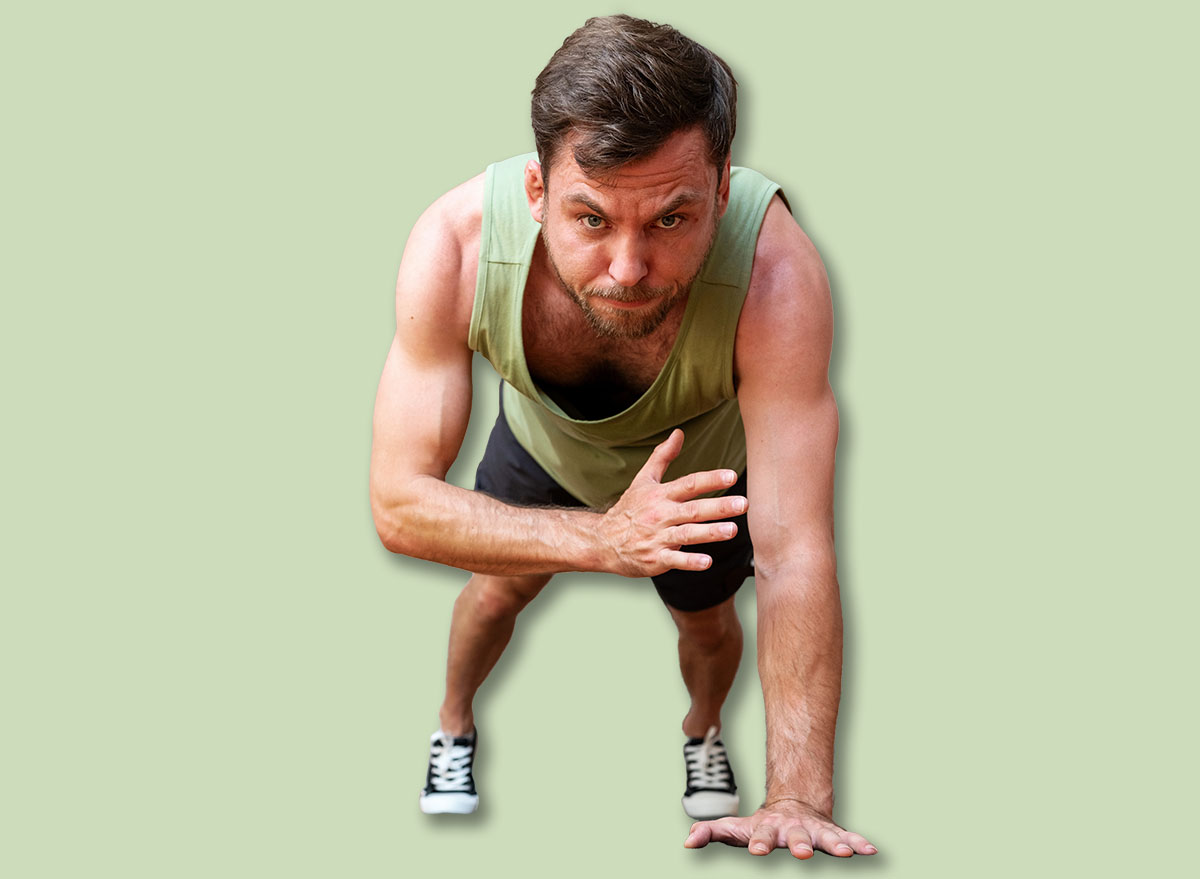
- The Technique: Place hands on a surface slightly wider than shoulder-width. Keep your body in a straight line from head to heels. Lower your chest toward the surface, keeping elbows angled back at a 45-degree angle.
- Progression: Gradually move your hands to lower surfaces, such as a sturdy sofa or a low step.
3. The Reverse Lunge: Unilateral Stability
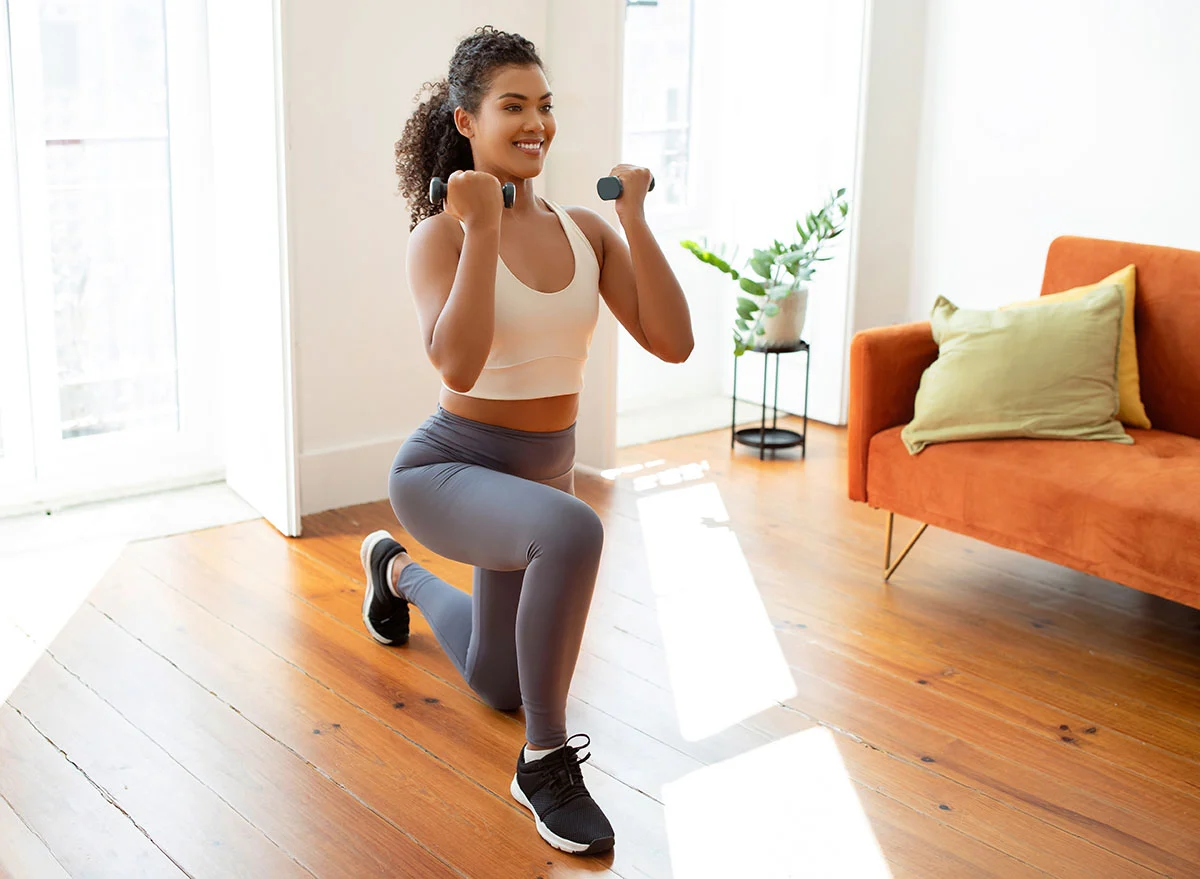
Single-leg training is vital as we age because it corrects muscle imbalances and drastically improves balance. The reverse lunge is preferred over the forward lunge as it puts less stress on the knee joints.
- The Technique: Stand tall, step one foot backward, and lower your back knee toward the floor. Keep your torso upright.
- Progression: Use a wall for light fingertip balance support, eventually moving to "hands-free" lunges.
4. The Glute Bridge Walkout: Posterior Chain Power
This movement targets the "posterior chain"—the muscles along the back of your body that are essential for posture and walking.
- The Technique: Lie on your back, knees bent, feet flat. Lift your hips into a bridge, then take two tiny, controlled steps away from your body with your feet. Hold, then return to the start.
- Progression: Extend the distance of the "walkout," or perform the bridge on a single leg.
5. The Wall Sit March: Isometric Endurance
Isometric training (holding a position) is incredibly effective for building joint-specific strength without the impact of repetitive motion.
- The Technique: Lean your back against a wall and slide down until your thighs are at a comfortable angle. Once stable, lift one foot slightly off the floor, alternating legs.
- Progression: Increase the hold time or deepen the squat angle.
6. The Plank with Shoulder Taps: Anti-Rotation Core Strength
This is not just an abdominal exercise; it is an "anti-rotation" movement that teaches your body to remain rigid while limbs are moving—a key skill for preventing back injuries.
- The Technique: Get into a high plank position (top of a push-up). Without letting your hips sway, lift one hand to tap the opposite shoulder.
- Progression: Move slower to increase the stability demand on your core.
Official Perspectives: Expert Consensus
Physical therapists and geriatric specialists generally endorse bodyweight training for the "longevity athlete." The consensus is that the risk-to-reward ratio of bodyweight training is superior for the average adult over 60. While heavy lifting is effective for power, bodyweight training promotes functional strength—the ability to perform activities of daily living with ease and confidence.
"The best exercise is the one you actually do," notes Dr. Elena Rossi, a specialist in geriatric rehabilitation. "When you remove the barrier of equipment, you normalize the act of movement. Over 60, we aren’t training for the Olympics; we are training for the ability to carry groceries, play with grandchildren, and maintain our autonomy."
Implications: The Long-Term Impact
The decision to adopt a bodyweight regimen has profound implications for long-term health. Beyond the obvious muscular benefits, these exercises:
- Enhance Bone Density: Controlled loading through movement stimulates osteoblast activity, which is critical for preventing osteoporosis.
- Improve Joint Health: By strengthening the musculature around the knees, hips, and shoulders, you provide a natural "brace" that can alleviate chronic joint pain.
- Boost Metabolic Health: Sustained engagement of large muscle groups improves insulin sensitivity and helps manage blood sugar levels, which are critical as metabolic rate naturally slows with age.
Conclusion
Strength after 60 is not about how much you can lift; it is about how well you can move. By mastering these six bodyweight foundations, you are investing in a future of mobility, resilience, and vitality. Start slow, prioritize your form, and remember that every repetition is a deposit into your health account. With consistency, you will find that your own body is the most sophisticated and effective gym you will ever need.