





For millions of people suffering from sleep apnea, the road to diagnosis is often paved with discomfort. The gold standard for detecting breathing irregularities—polysomnography or home sleep apnea testing—frequently requires patients to wear cumbersome headgear, chest belts, and, most notoriously, nasal cannulas: thin, rigid plastic tubes that must be inserted directly into the nostrils. For many, the physical intrusion of these devices is enough to disrupt sleep, potentially skewing the very data the test is meant to collect.
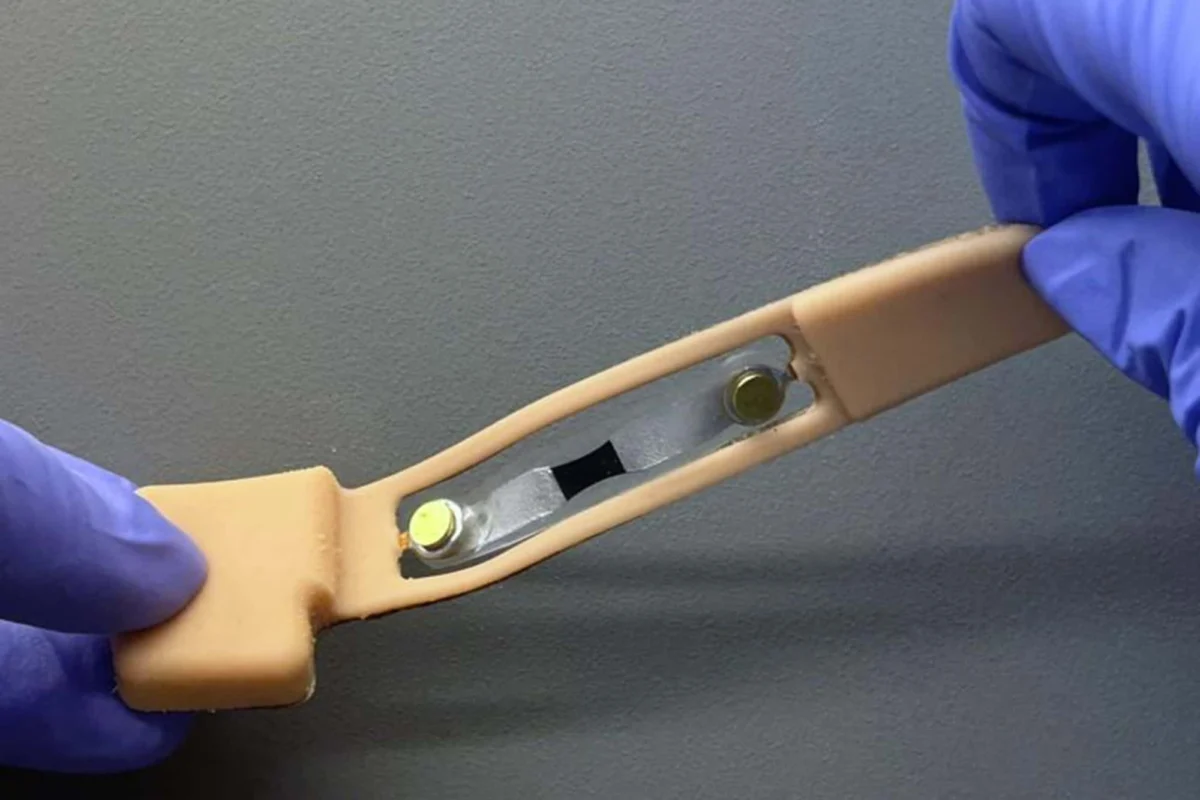
However, a breakthrough from the Georgia Institute of Technology may soon render these bulky diagnostic tools a relic of the past. Researchers have unveiled a soft, wireless, skin-like nasal patch capable of tracking breathing patterns with high precision, all without the need for intrusive tubes, wires, or direct airflow measurements.
Main Facts: A Paradigm Shift in Wearable Diagnostics
The technology, detailed in a study published in the Proceedings of the National Academy of Sciences (PNAS), represents a significant leap forward in soft electronics. Led by W. Hong Yeo, the Peterson Professor in Pediatric Research at the George W. Woodruff School of Mechanical Engineering, the team has engineered a device that adheres comfortably to the skin of the nose.
Unlike traditional monitors that rely on measuring air pressure or flow through the nostrils, this novel patch utilizes ultrathin, flexible electronic sensors. These sensors detect the subtle mechanical deformations and muscle movements of the nose that occur in rhythm with the respiratory cycle. By capturing these minute biological signals, the patch can map breathing patterns with clinical-grade accuracy. Because the device is wireless and flexible, it eliminates the "tethering" effect of traditional equipment, allowing patients to move, roll over, and sleep naturally—the fundamental requirement for an accurate sleep study.
Chronology of Development: From Concept to Clinical Potential
The journey toward this wearable solution began with a fundamental question: How can we monitor human physiological states without imposing the constraints of traditional medical hardware?
- Early Conceptualization: The research team began by analyzing the limitations of current sleep-monitoring devices. They identified that the "intrusiveness" of nasal cannulas was the primary cause of patient non-compliance in home sleep studies.
- Material Engineering: The researchers pivoted toward "soft electronics"—a field that combines biocompatible polymers with conductive nanomaterials. The goal was to create a sensor that could withstand the humidity and mechanical movement of the facial skin throughout the night.
- Proof of Concept: Initial prototypes were tested in controlled laboratory environments to calibrate the sensors against standard medical equipment. The team focused on signal-to-noise ratio, ensuring that the subtle movements of the nose were not masked by other facial movements like swallowing or jaw clenching.
- Pilot Validation: Following successful bench testing, the team conducted a series of validation studies. By comparing the data from the patch with traditional polysomnography (PSG) equipment, the researchers demonstrated that the patch could reliably identify apneic events—periods where breathing stops or becomes dangerously shallow.
- Current Status: The technology is currently moving through advanced validation phases, with researchers focusing on optimizing the signal processing algorithms to ensure that the device remains accurate across different age groups and anatomical variations.
Supporting Data: Understanding the Scale of the Challenge
The necessity for this innovation is underscored by the global prevalence of sleep-disordered breathing. Sleep apnea is not merely a nuisance; it is a serious medical condition characterized by recurrent pauses in breathing during sleep.
The Scope of the Problem
- Prevalence: According to the American Academy of Sleep Medicine, nearly 30 million adults in the United States alone suffer from obstructive sleep apnea (OSA). However, a staggering 80% of these cases remain undiagnosed.
- The Diagnostic Gap: The barrier to diagnosis is primarily economic and experiential. The cost of an in-lab sleep study is high, and the "first-night effect"—where patients cannot sleep well in an unfamiliar clinical environment—often leads to inaccurate data.
- Technical Performance: In the PNAS study, the researchers highlighted that the nasal patch achieved high correlation coefficients when compared to traditional nasal pressure transducers. Specifically, the device demonstrated the ability to detect respiratory effort, airway obstruction, and oxygen desaturation trends, providing a holistic view of the patient’s sleep health.
The data suggests that by removing the "barrier to entry" (the uncomfortable cannula), the patient compliance rate for home-based screening could increase significantly. Increased compliance directly correlates to higher diagnosis rates and, consequently, earlier intervention for conditions like hypertension, heart disease, and stroke—all of which are exacerbated by untreated sleep apnea.
Official Responses: Insights from the Research Team
Professor W. Hong Yeo, who spearheaded the project, believes that this technology is more than just a convenience upgrade; it is a democratizing force for healthcare.
"Our goal was to design a system that essentially vanishes once applied to the skin," said Yeo. "When a patient forgets they are wearing a diagnostic device, the data we collect becomes significantly more representative of their true physiological state. We aren’t just replacing a tube with a patch; we are changing the relationship between the patient and the monitoring process."
The research team emphasized that the "softness" of the device is its greatest asset. By matching the mechanical modulus of human skin, the patch moves with the user, minimizing skin irritation—a common complaint with the adhesive sensors used in current Holter monitors or sleep tests.
In their official findings, the team noted: "The soft, skin-like nasal patch could transform sleep monitoring by providing a less intrusive interface for patients in home healthcare settings. This technology bridges the gap between bulky, high-fidelity clinical equipment and the low-fidelity, consumer-grade wearables currently on the market."
Implications: The Future of Sleep Medicine and Beyond
The introduction of this skin-like nasal patch has profound implications for both clinical practice and the broader landscape of digital health.
1. The Decentralization of Healthcare
The "hospital-at-home" movement is accelerating. By moving diagnostics out of the clinic and into the bedroom, healthcare systems can reduce overhead costs while increasing the volume of patients screened. This patch is a foundational tool for such a transition.
2. Long-term Longitudinal Monitoring
Traditional sleep studies are often "snapshots," occurring over one or two nights. However, sleep patterns can change based on medication, weight fluctuations, or stress. Because the patch is non-intrusive and relatively low-cost, it opens the door for longitudinal monitoring—tracking a patient’s sleep health over weeks or months to see how lifestyle changes or treatments like CPAP therapy are actually working.
3. Pediatric Applications
One of the most exciting potential applications is in pediatrics. Monitoring breathing in infants or young children is notoriously difficult; traditional equipment is often too large and easily displaced by a restless child. A soft, biocompatible patch that adheres to a child’s nose could allow for pediatric sleep studies to be conducted in the comfort of a child’s own bed, reducing the trauma of a hospital stay.
4. Integration with AI
The data collected by the nasal patch is ripe for machine learning analysis. Future iterations of this technology will likely include on-device processing, where an AI algorithm analyzes the breathing pattern in real-time and alerts a physician only when a significant pattern of concern is detected, further reducing the burden on sleep technicians who currently have to manually score hours of recorded data.
Conclusion
As we stand on the precipice of a new era in wearable technology, the nasal patch developed at Georgia Tech serves as a poignant reminder that the most sophisticated solutions are often those that integrate seamlessly into the human experience. By shedding the wires and tubes of the 20th century, we are moving toward a future where health monitoring is intuitive, continuous, and invisible.
While further clinical trials and regulatory hurdles lie ahead, the promise of this soft, skin-like sensor is clear: it is time to move past the mask and embrace a more comfortable, accurate, and accessible future for sleep medicine. For the millions currently struggling with the silence of undiagnosed sleep apnea, this tiny patch represents a much-needed breath of fresh air.