






In the American cultural imagination, the Amish are often reduced to a monochromatic, static image of horse-drawn buggies and pre-industrial simplicity. However, beneath this perception lies a dynamic, rapidly growing population that presents one of the most compelling case studies in modern public health, genetics, and socio-religious autonomy.
Last fall, the national conversation regarding the Amish and health was reignited when high-profile political figures, including President Trump, invoked the community as a touchstone in vaccine discourse. The claim—that the Amish eschew all vaccinations and, as a corollary, remain immune to autism—offered a simplistic narrative that, according to experts, obscures a far more intricate and evolving reality.
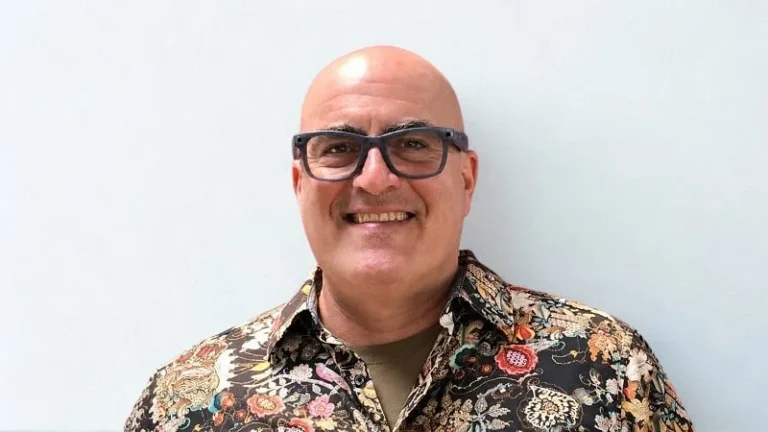
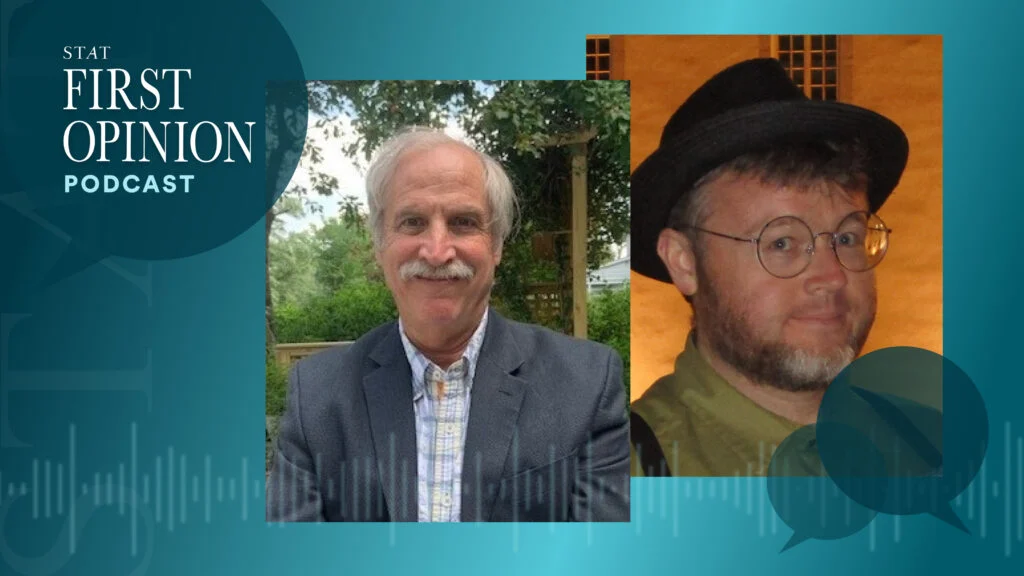
To better understand this intersection, STAT’s First Opinion Podcast recently convened two leading experts: Braxton Mitchell, a professor of medicine and vice chair for research at the University of Maryland School of Medicine, and Cory Anderson, a postdoctoral researcher in population health and demography at Penn State University. Their insights reveal a population that is not only navigating the challenges of modern medicine but is also poised to significantly impact the rural health landscape of North America in the coming decades.
Defining the Amish: A Diverse Religious and Ethnic Tapestry
To analyze Amish health, one must first dismantle the "monolithic" misconception. Cory Anderson defines the Amish as a Christian religious group rooted in the 500-year-old Anabaptist movement, which emerged from the Protestant Reformation’s push for a church separated from the state.
"They are a religious group that also has a strong ethnicity component," Anderson explains. Arriving in the United States in the 1700s to escape religious persecution in the German-Swiss border regions, the Amish have maintained a distinct linguistic and cultural identity. Crucially, they are an endogamous group—they marry almost exclusively within their own community. Over the last 80 years, only about 154 individuals from outside the culture have joined the Amish faith, meaning the population’s growth is almost entirely internal.
Far from being a single entity, the Amish are comprised of six primary denominations. While they share core values, the diversity in practice—from community to community and church to church—is significant. This heterogeneity makes broad generalizations about their medical behaviors or healthcare utilization scientifically precarious.
A Chronology of Research: From Genetic Rareties to Population Dynamics
The study of Amish health has evolved significantly over the last few decades. Braxton Mitchell, a genetic epidemiologist, notes that his early work focused on the unique genetic profile of the Lancaster, Pennsylvania, community.
"The Lancaster Amish are a founder population," Mitchell says. "They came from a small group of perhaps 500 or 600 individuals in the early 1700s. Today, there are 43,000 Amish in Lancaster, yet they are all descendants of that original group."
This limited genetic diversity once led researchers to focus primarily on rare childhood recessive diseases. However, in recent years, the scope has widened. Researchers are now looking at common adult diseases—such as diabetes, osteoporosis, and heart disease—to identify how the specific lifestyle of the Amish influences disease progression.
Concurrently, demographers like Anderson have shifted the focus toward population projections. Using a database of roughly 55,000 Amish households, Anderson’s work highlights a demographic explosion. With a Total Fertility Rate (TFR) of 6.1—exceptionally high by modern standards—and a life expectancy of 81 years, the Amish are thriving.
Supporting Data: The "Thriving" Population
The data suggests that the Amish are not a "dying way of life," but rather a population in the midst of a sustained expansion.
- Growth Projections: The Amish population is currently estimated at roughly 400,000. Depending on future TFR and retention rates, projections indicate there could be between 1.2 million and 2 million Amish by 2075.
- The Doubling Effect: The community has historically doubled in size every 20 years, a rate that persists even as they branch out into new geographical areas across the U.S. and Canada.
- Health Outcomes: While they are often viewed through the lens of "what they don’t do," they display notable health profiles. Some studies suggest lower rates of certain cancers and asthma, potentially linked to environmental factors like exposure to agricultural dust, though these findings remain part of a complex, ongoing investigation.
The Vaccination Discourse: Politics vs. Pragmatism
The recent political rhetoric surrounding Amish vaccination rates and autism has sparked debate within the medical community. Mitchell and Anderson clarify that the reality is neither "all or nothing."
"In the Lancaster community, many do vaccinate, many don’t," Mitchell observes. "There is no directive from the church bishops on this issue. Families choose for themselves."
The confusion, however, is exacerbated by the politicization of public health. Anderson points out that during the Covid-19 pandemic, resistance to vaccination in some Amish circles was less about a "thus sayeth the Lord" religious objection and more about a cultural skepticism of government and the "medical elite."
Furthermore, the discussion around autism is plagued by diagnostic challenges. Because the Amish lack the centralized, school-based health screenings that identify autism in mainstream society, the condition may be under-diagnosed or, at the very least, observed through a different cultural lens. "We don’t have good numbers," Mitchell notes. "But they certainly get autism. To suggest otherwise is to ignore the reality of human biology."
Implications: The Future of Rural Healthcare
The rise of the Amish population carries profound implications for American healthcare systems, particularly in rural areas where the Amish are moving to establish new settlements.
The Financial Dilemma
The Amish approach to healthcare financing is fundamentally communal. They generally avoid government programs like Medicare or Medicaid, preferring to pool resources through church-based aid programs or community auctions. When a "catastrophic" medical event occurs—such as a child with leukemia requiring millions of dollars in care—the community is forced to navigate a high-stakes conflict between their desire for autonomy and the crushing reality of modern hospital billing.
"They don’t want outside organizations controlling the aid process," Anderson explains. "But when you have a $3 million bill, the hospital needs to be paid. This leads to difficult scenarios involving liens on property or the exhaustion of community-wide charity funds."
A Changing Public Health Landscape
As the Amish move into depopulated rural counties, their influence on land use and local politics will grow. With their preference for religious freedom and free-market autonomy, they have become a target demographic for political parties.
For public health officials, the challenge lies in building trust. If the medical establishment is viewed as an extension of a government or an elite class that does not respect their cultural boundaries, the Amish are likely to continue seeking "a la carte" healthcare—relying on chiropractors, supplements, and independent clinics.
The Call for Culturally Informed Care
The consensus among experts is clear: the future of Amish health research must involve a more nuanced, collaborative approach. Mitchell and Anderson argue that the medical community must move beyond the "genetic curiosity" phase and engage with the Amish as a thriving, modern population with specific needs.
"We need to rethink how a public health measure becomes politicized," Anderson concludes. "If we want to reach these populations, we must understand the distrust of institutions and the deep-seated desire to protect the purity of their religious and cultural beliefs."
As the Amish population continues to double and expand, they will inevitably become a more central part of the American public health discussion. Whether that leads to integration or further friction will depend on the ability of researchers and policymakers to look past the myths and engage with the complex, living reality of the Amish people.