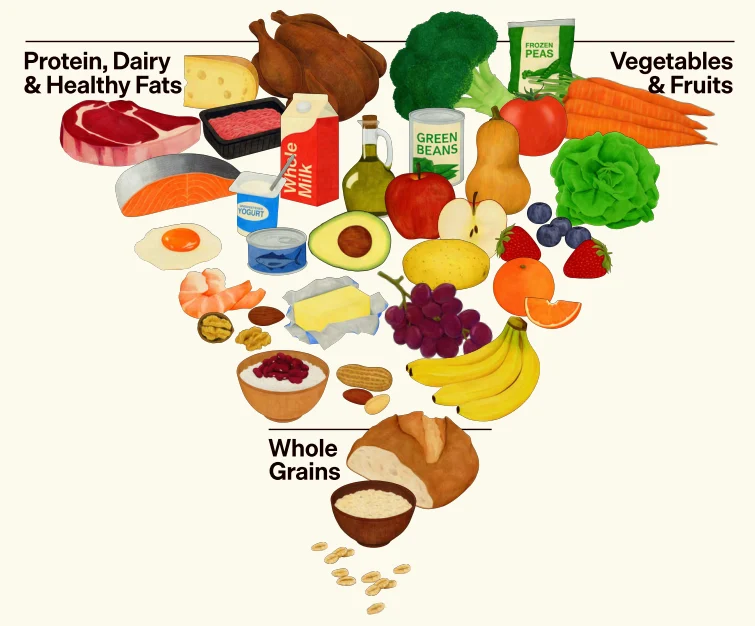






The release of the 9th edition of the Dietary Guidelines for Americans (2020-2025) marked a significant, albeit controversial, milestone in public health policy. With the overarching mandate to "Make Every Bite Count," this comprehensive document serves as the cornerstone for federal nutrition programs, healthcare providers, and policymakers. Expanding to nearly 150 pages, this iteration represents a shift toward life-cycle nutrition, offering tailored guidance for every developmental stage, from infancy through older adulthood.
However, as the document settles into the national consciousness, it has become the subject of rigorous academic debate. While it offers necessary flexibility by emphasizing dietary patterns over rigid nutrient tracking, critics—including leading experts from the Harvard T.H. Chan School of Public Health—argue that the guidelines represent a missed opportunity to address the intersection of human health and environmental sustainability.
Main Facts: A Life-Cycle Approach to Nutrition
The core philosophy of the 2020-2025 Guidelines is the promotion of "dietary patterns." Rather than obsessing over individual "superfoods," the federal government encourages a holistic view of the diet. The premise is that health benefits are derived from the cumulative effect of nutrient-dense choices across various food categories.
This edition is uniquely comprehensive, providing specific nutritional benchmarks for infants, toddlers, pregnant women, and the elderly. By recognizing that nutrition is not a "one-size-fits-all" endeavor, the Guidelines explicitly instruct educators and policymakers to consider the social determinants of health. These include:
- Cultural Traditions: Acknowledging that food is central to identity and community.
- Economic Constraints: Factoring in the budget-conscious realities of families.
- Food Access: Addressing the prevalence of food deserts and the difficulty of sourcing fresh produce in underserved areas.
- Personal Beliefs: Respecting the diverse moral and ethical frameworks that guide dietary choices.
Chronology: The Evolution of Federal Guidance
To understand the significance of the 2020-2025 edition, one must look at the trajectory of federal dietary policy. For decades, the Guidelines were characterized by an emphasis on specific nutrients (e.g., "avoid fat"). However, starting with the 2015-2020 edition, the federal government shifted its focus toward "dietary patterns."
This shift was largely a response to the scientific consensus that humans consume food, not isolated nutrients. By moving toward patterns—such as the Healthy U.S.-Style, Healthy Mediterranean-Style, and Healthy Vegetarian patterns—the government aimed to provide more actionable, flexible advice. The 2020-2025 iteration acts as a refinement of this strategy, adding a life-cycle focus to the existing framework. Despite these incremental improvements, critics point out that the core recommendations regarding meat, dairy, and sugar consumption have remained largely static for nearly a decade, failing to keep pace with contemporary research on metabolic health and climate science.
Supporting Data: The Protein and Dairy Dilemma
The Guidelines maintain a firm focus on limiting saturated fats, added sugars, and sodium, with explicit age-based targets for the first time. Yet, these recommendations are often overshadowed by the "Healthy U.S.-Style Pattern," which relies heavily on animal-derived proteins.
The Dairy Disconnect
One of the most contentious aspects of the report is the recommendation of three servings of dairy per day. Experts, including Dr. Walter Willett of the Harvard T.H. Chan School of Public Health, have long questioned the evidentiary basis for this specific quantity. Beyond the clinical data, there is a logistical irony inherent in the advice to prioritize low-fat and fat-free dairy. As Dr. Willett notes, the mass production of low-fat dairy results in the disposal of massive quantities of dairy fat. If this fat is not removed from the food supply, it often finds its way into processed foods, creating a circular logic that complicates the government’s own goal of reducing saturated fat intake.
The Meat Paradox
The Guidelines advocate for "lean meats" but provide insufficient detail on how to manage the remainder of the animal carcass. The concern is that if the market focuses exclusively on "lean" cuts, the remaining fatty cuts will not simply disappear. Instead, they are likely to be sold as lower-cost, processed meats—the very items that are linked to higher rates of obesity, cardiovascular disease, and type 2 diabetes. While the text briefly warns against processed meats like hot dogs and sausages, this advice is relegated to secondary chapters rather than being positioned as a primary, emphasized directive.
Official Responses and Expert Critique
The reception of the 2020-2025 Guidelines within the scientific community has been tepid. Dr. Walter Willett’s assessment captures the frustration of many in the field: "In general, there was minimal change from the last edition… However, guidance that considers scientific evidence on specific protein sources and health, and also the environmental consequences of dietary patterns, is needed."
The failure of the Guidelines to address sustainability is a significant point of contention. Other international health organizations have begun to integrate planetary health into their dietary advice, acknowledging that the production of red meat and dairy is a leading driver of greenhouse gas emissions. The U.S. government’s decision to remain silent on the environmental impact of the recommended dietary patterns is viewed by many as a concession to powerful industry lobbies, rather than a decision based on the best available science regarding the future of the food system.
Implications: The Future of Public Health
The implications of these Guidelines are far-reaching. Because they dictate the menus for federal nutrition programs—including school lunches and the Supplemental Nutrition Assistance Program (SNAP)—the disconnect between the recommended "Healthy U.S.-Style Pattern" and the urgent need for sustainable, plant-forward diets will have lasting effects on the nation’s health trajectory.
The Sustainability Gap
As climate change accelerates, the environmental cost of food production can no longer be decoupled from nutritional science. The reliance on animal-based proteins in the Guidelines is at odds with the global necessity to reduce the environmental footprint of our food supply. By failing to provide a clear roadmap for transitioning toward plant-based proteins, the government is missing an opportunity to align national health goals with global climate commitments.
A Call for Clarity
For the average American, the Guidelines present a challenge in interpretation. While the document encourages variety and nutrient density, the lack of emphasis on the dangers of processed meats and the lack of guidance on the environmental impact of dairy leaves a vacuum in public education. Consumers are left to navigate a complex marketplace where "lean" labels on processed meats can be misleading.
To improve future editions, experts argue that the USDA and HHS must:
- Integrate Sustainability: Formally recognize the impact of dietary patterns on the climate.
- Differentiate Protein Sources: Explicitly prioritize plant-based proteins, fish, and legumes over red and processed meats, moving this advice from the footnotes to the executive summary.
- Justify Dairy Targets: Re-evaluate the three-servings-per-day recommendation based on modern, comprehensive health outcome data.
Conclusion
The 2020-2025 Dietary Guidelines for Americans represent a rigorous effort to organize nutrition into a manageable, life-cycle-based framework. Its emphasis on dietary patterns rather than singular "superfoods" is a welcome move toward a more flexible and realistic approach to eating. However, by adhering to traditional, meat-and-dairy-heavy paradigms, the Guidelines fall short of the transformative potential required by the current health and climate crises. For these guidelines to truly "make every bite count," they must evolve to embrace the full scope of human impact—not just on the individual body, but on the planet that sustains it. As it stands, the document provides a foundation, but it is a foundation that requires a significant structural overhaul to meet the challenges of the 21st century.