









For many families, the arrival of summer is synonymous with a sense of liberation—an escape from the rigid architecture of school bells, homework deadlines, and overbooked calendars. It is a season historically romanticized as a time for endless outdoor adventure. Yet, beneath the veneer of sun-drenched freedom, a concerning trend has emerged: for a significant portion of the youth population, the end of the school year marks not an increase in activity, but a sudden, precipitous decline in physical movement.
As we rethink the landscape of youth wellness, it has become increasingly clear that our societal obsession with organized sports is overshadowing a more critical goal: the cultivation of physical literacy. To foster a generation that remains active well into adulthood, we must shift our focus from the scoreboard to the spark of intrinsic motivation.
The Myth of the "Active Summer"
The prevailing assumption among parents and educators is that children naturally become more active when liberated from the classroom. While longer days and warmer weather theoretically provide more opportunities for play, the reality is far more complex.
During the school year, children benefit from a "stealth" fitness regimen. The daily commute to school, the physical demands of navigating hallways, the structured requirements of physical education (PE) classes, and the non-negotiable window of recess provide a baseline of movement that is often lost during the summer. Once the final bell rings in June, those consistent, moderate-intensity movement opportunities vanish.
In their place, sedentary behaviors often rush to fill the void. Between the rise of digital entertainment, the unpredictability of summer schedules, and the heat-related limitations in certain geographic regions, the "freedom" of summer can easily transition into a period of prolonged inactivity. For families juggling work-life balance, the lack of structured physical programming often means that movement becomes an afterthought rather than a priority.
The "Sports-Only" Trap: A Narrow View of Fitness
One of the most persistent misconceptions in modern youth development is the equation of "youth fitness" with "youth sports." While organized athletics offer undeniable benefits—including teamwork, leadership, and discipline—they are merely one pathway to physical development, not the entire destination.
When we conflate the two, we unintentionally create a binary outcome: children are either "athletes" or they are "sedentary." This narrow definition alienates the significant population of children who do not gravitate toward competitive team sports, or whose families lack the financial or logistical means to participate in elite leagues. By branding fitness solely through the lens of competition and performance, we risk teaching children that if they aren’t on a team, they aren’t "fit."
This creates a high-pressure environment that often leads to early specialization—a phenomenon where children repeat the same movement patterns year-round, increasing the risk of burnout and injury. More importantly, it fails to prepare the majority of children for a life where they will no longer have a coach, a league, or a schedule.
The Role of Physical Literacy
To address this, experts are increasingly turning to the concept of "physical literacy." This framework moves beyond athletic performance to prioritize the motivation, confidence, competence, and knowledge required to engage in physical activity for a lifetime.
Physical literacy is about building a broad, versatile foundation. A child who learns how to balance, climb, throw, swim, and navigate different terrains is not just learning a specific sport—they are developing the movement vocabulary required to be active in any environment.
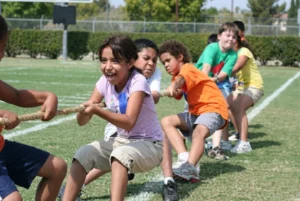
Summer is the laboratory for this development. Without the pressure of a coach’s expectations or the stress of a league standing, children have the autonomy to explore. Whether it is hiking, cycling, dancing, or simply navigating a local park, these informal, varied activities develop proprioception, endurance, and confidence. When a child learns that they are capable of moving their body in diverse ways, they are far more likely to seek out physical activity as an adult, regardless of whether they ever step foot on a competitive field again.
The Undervalued Power of Unstructured Play
In an era of hyper-scheduled childhoods, "free play" is often treated as a luxury or a waste of time. However, researchers continue to emphasize that unstructured movement is a cornerstone of child development.
When children design their own obstacle courses in a backyard or explore a forest trail without adult interference, they are engaging in complex problem-solving. They are learning to manage risk, navigate social dynamics, and, most importantly, they are learning to move because it feels good—not because a coach told them to.
This internal motivation is the "holy grail" of fitness. When movement is tied to curiosity and fun, the need for external rewards diminishes. A child who discovers the joy of riding a bike isn’t checking a box for a physical education requirement; they are discovering a mode of freedom that will likely stick with them for decades.
Strategic Shifts: What Professionals Can Do
Fitness professionals, coaches, and recreational leaders have a pivotal role in this paradigm shift. The goal for summer programming should be to create experiences that prioritize exploration and skill-building over high-stakes competition.
Key Strategies for Youth Programming:
- Gamification: Use challenges and games that require creativity and cooperation rather than rigid, drill-based repetition.
- Multisport Exposure: Instead of focusing on one sport, encourage programs that mix swimming, gymnastics, movement games, and outdoor exploration to develop well-rounded physical competence.
- Parental Education: Help parents understand that "success" in summer fitness is not measured by athletic trophies, but by a child’s willingness to stay active and their growing confidence in their own physical abilities.
- Focus on Enjoyment: If a child enjoys a session, they are statistically more likely to return. Fitness professionals should treat "fun" as a clinical metric of engagement.
Implications for Lifelong Health
The ultimate metric of a successful youth fitness program is not the number of medals won in July, but the number of active adults created by the age of 30. We must acknowledge that only a tiny fraction of children will pursue organized athletics into adulthood. However, nearly 100% of children will require the health benefits of an active lifestyle to combat the sedentary nature of modern life.
If we view summer as a chance to build a "movement foundation" rather than a "performance season," we can change the trajectory of public health. We can help children move from being passive consumers of sports to active participants in their own well-being.
Looking Ahead: Building the Future
As summer wanes and the school year approaches, the habits cultivated during the warmer months will inevitably influence the fall. A child who has learned to enjoy a hike or a swim is more likely to seek out those activities as stressors increase during the academic year.
Organized sports will continue to hold a place of prominence in our culture, providing social connection and skill development. However, the future of youth fitness depends on our ability to broaden our horizons. We must validate the bike ride, the park exploration, and the backyard game as being just as valuable as the varsity game.
By reclaiming the summer for play, exploration, and broad-based physical literacy, we are doing more than just keeping kids busy—we are gifting them a lifetime of health, confidence, and the enduring joy of being active. Fitness is not confined to the court, the field, or the gym; it is, quite literally, everywhere. It is time we start teaching our children to move that way.
References
- Brenner, J. S., Watson, A. M., & the Council on Sports Medicine and Fitness. (2023). Promoting healthy youth sports participation and reducing burnout in young athletes. Pediatrics, 151(4), e2023061124.
- Cairney, J., et al. (2022). Physical literacy, physical activity and health: Toward an evidence-informed conceptual model. Sports Medicine, 52(4), 679–691.
- Hulteen, R. M., et al. (2022). Development of foundational movement skills and physical activity across childhood: Implications for lifelong health. Sports Medicine, 52(5), 1045–1058.
- International Physical Literacy Association. (2023). Physical literacy and lifelong participation in physical activity: Current perspectives and practical applications. Journal of Physical Education, Recreation & Dance, 94(6), 28–35.
- Lopes, L., et al. (2021). Associations between physical activity, motor competence and health-related fitness in children and adolescents: A systematic review. Journal of Sports Sciences, 39(15), 1741–1752.
- McLoughlin, G. M., et al. (2023). Seasonal changes in children’s physical activity patterns and sedentary behavior: Implications for summer health promotion. Preventive Medicine Reports, 34, 102245.
- Rudd, J. R., et al. (2024). Physical literacy as a determinant of lifelong engagement in physical activity: An updated review. International Journal of Environmental Research and Public Health, 21(3), 1178.
- Stodden, D. F., et al. (2022). The role of motor competence in promoting physical activity and positive youth development. Kinesiology Review, 11(2), 112–124.
- Tremblay, M. S., et al. (2022). Importance of outdoor play and unstructured movement for child health and development: Updated evidence review. Applied Physiology, Nutrition, and Metabolism, 47(7), 781–794.
- World Health Organization. (2024). Physical activity guidelines for children and adolescents: Evidence update and implementation considerations. Geneva, Switzerland.