When you are standing backstage at a premier powerlifting event like the Powerlifting United (PLU) American Pro at the Henrico Sports and Events Center, the sensory experience is visceral. You are greeted by the sharp, stinging scent of ammonia caps and the rhythmic, low-frequency thud of heavy steel plates colliding with rubber flooring. It is in this high-octane environment that you begin to grasp a fundamental truth about strength sports: months of meticulous preparation ultimately boil down to a singular, fleeting ability to execute when the spotlight is blinding and the silence of the judges is deafening.
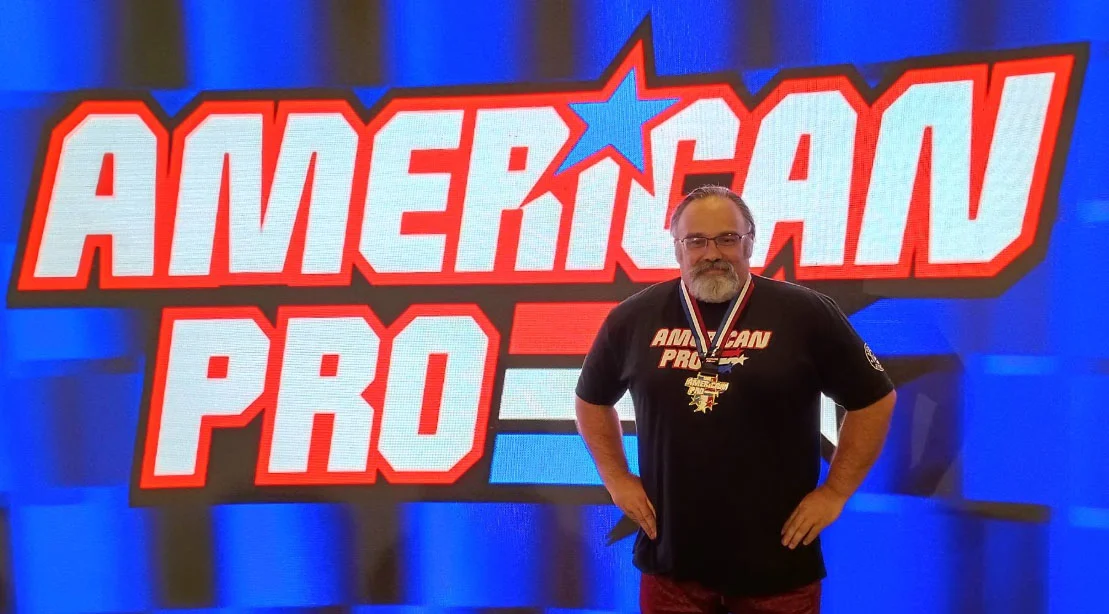
On August 7 and 8, 2026, my role shifted from observer to participant. For months, I had been documenting the narrative of the American Pro from behind a camera lens and a keyboard. However, I felt a pressing need to move from the periphery to the platform. I wanted to know, with absolute, tangible certainty, that Theodore Roosevelt’s legendary "Man in the Arena" warning did not apply to me—at least not in the way of a critic. I needed to be the man whose face was marred by the dust, sweat, and blood of the struggle, rather than the spectator pointing out where the strong man stumbles.
The Invisible Variables of Preparation
The road to the platform is never linear. No meet preparation exists in a vacuum, and no training cycle survives contact with the chaotic reality of life. You map out a 12-week block with surgical precision, calculating RPE (Rate of Perceived Exertion) and peaking phases down to the single pound. Then, the universe intervenes.
Whether it is a nagging injury, the sudden loss of a training facility, professional upheaval, or personal tragedy, the competitor’s burden is to either address these variables with clinical speed or compartmentalize them until the final lift is recorded. Every athlete walking through the warm-up area carries a phantom list of variables they cannot control.
Take, for instance, the journey of Maddy Forberg. Her return to the platform at the American Pro represented a complex navigation of shifting focus from bodybuilding back to powerlifting while managing a history of injuries. Watching her perform was a masterclass in resilience—a testament to the fact that elite lifting is not just about raw power, but the ability to absorb adversity without retreating. Similarly, the pressure surrounding John Haack, who arrived in pursuit of all-time world records with the gaze of the entire sport’s fanbase fixed upon him, highlights a different kind of tension. Haack’s ability to treat the intense scrutiny as mere noise and simply execute his lifts illustrates the psychological fortitude required to dominate at the highest level.
Chronology of the Arena: From Warm-Up to Judgment
By the time an athlete arrives at the venue, the physical work is largely finished. The battle then shifts to the mental landscape. The warm-up area at the Henrico Sports and Events Center serves as a microcosm of human temperament. Some lifters exist in a state of sensory deprivation, eyes closed behind noise-canceling headphones, building an internal fortress. Others pace like apex predators, their aggression directed toward the iron. Coaches and handlers act as the logistical architects, managing flight rotations and monitoring the clock with the intensity of air traffic controllers.
When the curtain rises and your name booms over the arena speakers, the backstage noise evaporates. The transition to the competition platform is jarring. Under the glare of the arena lights, the American Pro transforms from a meet into a theater of consequence. You approach the bar, the weight suddenly feeling both heavier and more familiar than it did in the training hall.
The binary nature of the sport is cruel in its simplicity: three referees, three lights, one goal. Two white lights signify a successful lift. The logic of the nine-attempt structure (three for squat, three for bench, three for deadlift) is a game of risk management.
- The Opener: A conservative attempt, designed to clear the qualifying hurdle and calm the nerves.
- The Second Attempt: The realistic, data-driven goal based on the preceding weeks of training.
- The Third Attempt: The "house money" phase, where lifters either chase personal records (PRs) or fight to salvage a total after a difficult start.
Supporting Data and The Weight of the Iron
Powerlifting is a game of total mass moved, but it is also a game of attrition. If a lifter misses all three attempts on any single lift, they are disqualified from the total—an outcome that turns months of anticipation into a hollow "no total" (NT) on the scorecard.
My own experience at this year’s meet was a sobering lesson in the reality of the sport. During the preparation phase, a hip injury emerged, a complication that was subsequently aggravated during my third squat attempt. The resulting 876-pound total was, objectively, far below the standards I had set for myself in training.
However, the beauty of the sport lies in the context of the competition. Within my specific category, the stats reflected a reality check: while my 308-pound squat, 292-pound bench press, and 275-pound deadlift represented the lowest total on the men’s side, they served a purpose beyond the spreadsheet. They secured an Open category medal and, perhaps more importantly, filled a void in the West Virginia state record books for PLU’s 140-kilogram Raw Masters 45-49 division. It was a reminder that in powerlifting, the goalpost is often internal.
The Cultural Implications of the Community
The American Pro is more than a display of brute force; it is a display of a unique, almost paradoxical, subculture. In what other sport do you find competitors genuinely cheering for their rivals?
The support structure of the powerlifting community is its greatest asset. When a lifter struggles, they are not met with ridicule, but with encouragement from the very people vying for the same podium. This environment fosters a unique psychological benefit. For the amateur, focusing on strength training—when performed with proper form and attention to recovery—drastically improves the quality and longevity of life. It provides a structured goal that demands discipline, patience, and the acceptance of failure as a prerequisite for growth.
Lessons from the Platform
As the final plates were stripped from the bar at the Henrico Sports and Events Center, the overarching lesson was clear: powerlifting is not defined by the weight on the bar, the trophy on the mantle, or the numbers on a results sheet. It is defined by the decision to step into the arena despite the likelihood of discomfort, failure, or injury.
Whether you are a legend like John Haack rewriting the history books, or a Masters competitor fighting to put a modest total on the board, the barbell remains the great equalizer. It demands the same respect, the same focus, and the same courage from everyone.
The American Pro serves as a reminder that we do not lift to prove our superiority over others; we lift to prove our mastery over our own limitations. The "Man in the Arena" is not just the athlete hitting a world record; it is every individual who chooses to put themselves in a position where they might fail, and who shows up to the platform regardless. The competition may end when the last flight of deadlifts is concluded, but the resilience cultivated under the iron remains long after the lights in the arena go dark.
For those watching from the sidelines, the advice is simple: stop criticizing the lifters from the safety of the bleachers. Find a gym, load a bar, and experience for yourself what it means to face the weight. You may find that the most significant PR you set isn’t in pounds or kilograms, but in the character you build while under the bar.