Every year, as the confetti settles on New Year’s Eve, millions of people wake up on January 1st with a renewed sense of purpose. We trade champagne and calorie-laden celebrations for strict, often punishing, self-improvement regimes. Yet, the cycle is as predictable as it is disheartening: by mid-January, the initial fervor begins to wane. Research consistently indicates that by February, a staggering 80% of individuals have abandoned their well-intended New Year’s resolutions. There is even a tongue-in-cheek "Ditch Your Resolution Day" on January 17th, a cultural acknowledgement that our ambitions are frequently no match for the relentless reality of daily life.
For the 65 million Americans serving as family caregivers—a significant portion of whom belong to the "Sandwich Generation," balancing the needs of aging parents and growing children—this cycle of goal-setting and subsequent failure is particularly toxic. When life’s challenges do not pause simply because the calendar turned, the pressure to "better oneself" can feel like just another chore on an impossible to-do list.
The Failure of the Traditional Resolution
The traditional New Year’s resolution (NYR) model is built on a foundation of "all or nothing." It often demands immediate, drastic lifestyle changes—be it intensive gym routines, radical dietary shifts, or complex financial overhauls. For a caregiver whose schedule is dictated by medical appointments, medication management, and the unpredictable needs of a loved one, these rigid goals are inherently unsustainable.

When a caregiver inevitably misses a workout or fails to hit a rigid target, they don’t just feel like they’ve missed a goal; they feel they have failed themselves. This leads to a sense of defeat, further fueling the burnout that is already prevalent in the caregiving community. The solution, according to wellness experts, is not to work harder at your resolutions, but to replace them entirely with a more compassionate, flexible, and sustainable framework: Me Time Monday (MTM).
The MTM Framework: A Holistic Approach to Self-Care
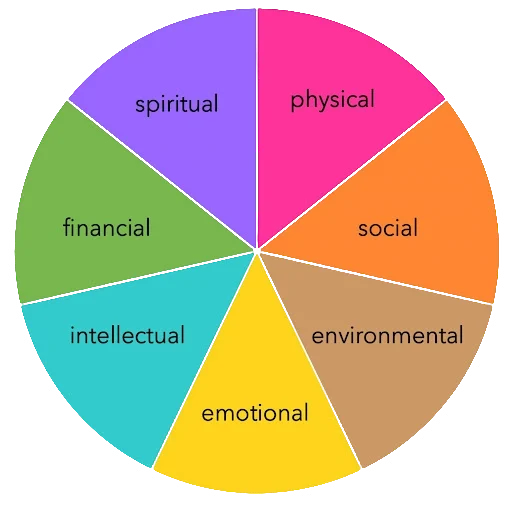
The Me Time Monday program, pioneered by author and wellness expert Sherri Snelling, shifts the focus from rigid, high-stakes goals to a process of "cross-training" for life. MTM posits that true wellness is not achieved through a single, narrow objective, but through a holistic examination of seven key elements: Physical, Emotional, Social, Intellectual, Environmental, Financial, and Spiritual wellness.
Step 1: ME (Finding Your ‘Ikigai’)
The first step of the MTM program is self-discovery. Caregivers often lose their sense of identity in the service of others, shifting from an "internal locus of control"—where you make choices for your own life—to an "external locus of control," where your schedule is dictated by the needs of those you care for.

MTM encourages participants to rediscover their ikigai, a Japanese concept representing one’s "reason for being." By balancing passion, mission, and unique skills across the seven wellness elements, caregivers can begin to reclaim their sense of self. This isn’t just about taking a break; it is about engaging in activities that feed the soul, restore the heart, and provide a much-needed sense of peace. Embracing this, as Snelling notes, is not selfish—it is "self-full."
Step 2: TIME (The Power of Seven)
The most common barrier to self-care is the perception of "time poverty." Caregivers often feel that if they cannot commit to an hour of yoga or a full day of relaxation, they have no time for themselves at all. MTM dismantles this myth through the "Power of 7."
The program advocates for micro-habits—small, manageable, seven-minute increments of self-care. By thinking in terms of "small, short, and easy," caregivers can build momentum without the fear of failure. Furthermore, the program champions "habit stacking"—a psychological technique where you attach a new, positive action to an existing, automatic routine. For example, practicing gratitude while showering, listening to an uplifting podcast while preparing a meal, or performing gentle stretches while brushing your teeth. This prevents the "brain overload" associated with multi-tasking and helps convert time poverty into "time affluence."

Step 3: MONDAY (The Secret Sauce)
Why Monday? Research from Johns Hopkins and other institutions confirms that Monday is the most effective day to initiate positive behavioral change. It is embedded in our cultural DNA as a "fresh start." However, the brilliance of MTM is that it is not a one-time launchpad; it is a weekly reset.
Unlike the annual NYR, which offers only one chance to succeed or fail, MTM provides 52 opportunities a year to refine your approach. If you have a difficult week, you don’t have to wait until next January to start over; you simply use the next Monday to review, reward, and reset. This consistency transforms wellness from a goal into a routine, and as the saying goes, "Routines beat resolutions every time."
Supporting Data: Why Small Steps Succeed
The efficacy of the MTM program is supported by behavioral science. The "Healthy Monday" campaigns have demonstrated that individuals who approach their week with a positive, structured mindset on Monday are 64% more likely to maintain that positivity throughout the week.

Furthermore, the "micro-flow" approach—or baby steps—is highly effective in mitigating the "February slump." By setting the bar low, participants achieve frequent "wins." Each win releases a small amount of dopamine, reinforcing the behavior and creating a sustainable feedback loop. This is the antithesis of the "all or nothing" NYR, which creates high-pressure spikes followed by deep, demoralizing troughs.
Implications for the Sandwich Generation
For the millions of individuals caught between the needs of aging parents and their own children, the implications of MTM are profound. Caregiver burnout is a major public health concern, contributing to higher rates of depression, anxiety, and physical illness among those providing care.
By adopting the MTM mindset, the caregiver shifts from a state of reactive survival to proactive wellness. It allows for a "joyconomy"—a term coined by Snelling to describe the cumulative effect of small, intentional investments in one’s own wellness. By treating self-care like a professional mixology project—periodically swapping out elements, adjusting ingredients, and trying new combinations—caregivers can maintain a level of balance that protects their long-term health.

A Call to Action: How to Start
The beauty of the Me Time Monday program lies in its simplicity and lack of a definitive "finish line." It is an ongoing, perpetual journey. To get started:
- Reflect: On the next Monday, take a few moments to identify which of the seven wellness elements (Physical, Emotional, Social, Intellectual, Environmental, Financial, or Spiritual) you have been neglecting.
- Stack: Identify a daily, automatic task and "stack" a seven-minute self-care action onto it.
- Reset: If the week goes off-track, do not be discouraged. Use the next Monday as a clean slate to recalibrate your intentions.
In a world that demands constant output from caregivers, the most revolutionary act is to invest in yourself. By replacing the pressure of the annual resolution with the weekly grace of Me Time Monday, you are not just checking a box on a list; you are building a foundation of resilience, joy, and longevity. You are, in the truest sense, becoming the architect of your own well-being.
© 2026 Sherri Snelling. Adapted from "Me Time Monday – The Weekly Wellness Plan to Find Balance and Joy for a Busy Life." For more resources on caregiver wellness, visit the Caregiving Club.