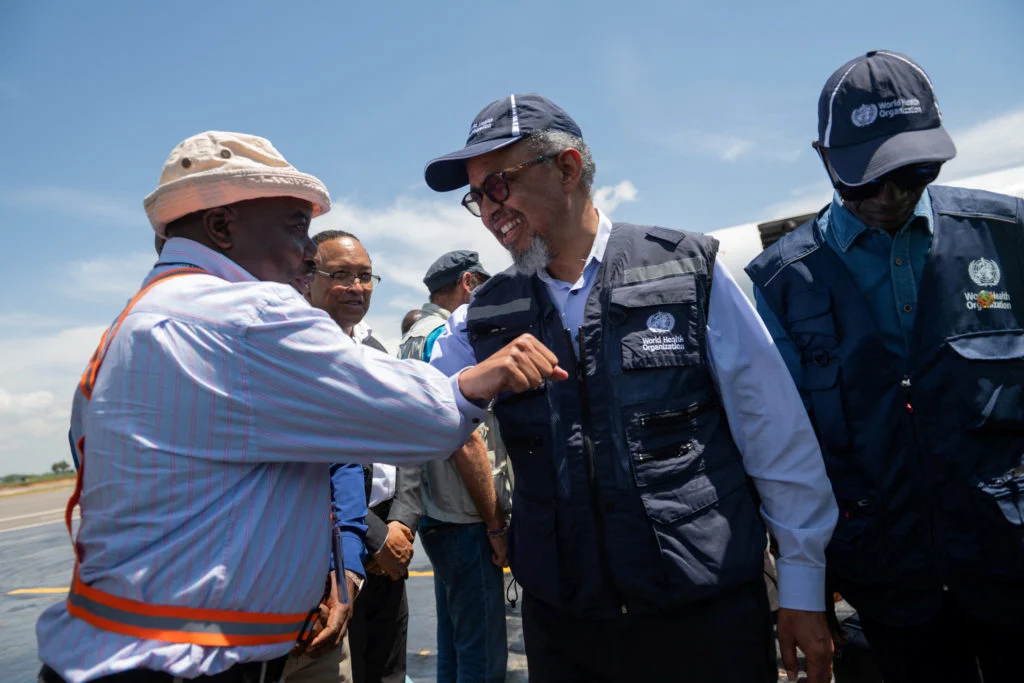
BUNIA, Democratic Republic of the Congo — The World Health Organization (WHO) Director-General, Tedros Adhanom Ghebreyesus, arrived in the eastern Congolese city of Bunia on Saturday, landing in the epicenter of a rapidly accelerating public health emergency. As the region grapples with a virulent strain of the Ebola virus, the international community finds itself in a race against time, struggling to outpace a pathogen that is currently spreading faster than the global response can contain it.
Despite the recent arrival of medical aid and an increased organizational presence in local facilities, the situation on the ground remains dire. With thousands of lives hanging in the balance, the crisis highlights the immense difficulties of managing a high-stakes outbreak in a region fractured by historical conflict, deep-seated mistrust, and a lack of approved vaccines or treatments for the specific Bundibugyo strain involved.
The Core Facts: A Race Against an Invisible Enemy
The current outbreak is characterized by the Bundibugyo virus, a rare and particularly elusive form of Ebola. Unlike more common strains that have seen some success with experimental vaccines, this variant poses a unique challenge: there are currently no approved medical countermeasures—neither vaccines nor specific antiviral treatments—to combat it.
As of the latest briefings, the scale of the crisis is alarming. Official figures from the WHO and local health ministries report 906 suspected cases and 223 suspected deaths. The virus has already breached international borders, with Uganda confirming nine cases and one death. In the eastern provinces of the Democratic Republic of the Congo (DRC)—specifically Ituri, North Kivu, and South Kivu—the virus is moving through densely populated areas, complicating contact tracing and containment efforts.
While facilities like Bunia’s Rwampara and General hospitals have seen a surge in resources, including additional medical personnel and essential personal protective equipment (PPE), they remain overwhelmed. Patients continue to arrive at all hours, testing the limits of infrastructure that was already fragile before the outbreak began.
A Chronology of Escalation
The trajectory of this outbreak has been marked by a staggering velocity that has caught global health experts off guard.
- Initial Declaration: Following the initial cluster of cases, local health authorities struggled to contain the spread as the virus moved from remote areas into major transit hubs like Bunia.
- The Spillover: By late last week, neighboring Uganda reported its first confirmed cases, effectively regionalizing the emergency and prompting a wave of border closures and restrictive travel policies from international powers, including the United States.
- The Arrival of Support: Thursday marked a pivot point in the logistics of the response. A major shipment of medical supplies, coordinated by the European Union, landed in Ituri. Simultaneously, the U.S. government announced an additional $80 million in aid, bringing its total financial commitment to over $112 million.
- The High-Level Mission: On Friday, Dr. Tedros held critical meetings with Congolese Prime Minister Judith Suminwa Tuluka to coordinate a unified response. This was followed by his Saturday visit to the frontlines in Bunia to assess the efficacy of the treatment centers and engage with frontline health workers and affected families.
Supporting Data and Medical Analysis
The severity of the outbreak is underscored by the statements of organizations like Doctors Without Borders (MSF). Dr. Alan Gonzalez, MSF’s deputy director of operations, issued a sobering warning on Saturday: "Never before has an Ebola outbreak recorded so many cases so soon after its declaration. Nobody knows the true scale and severity of this outbreak."
Statistical Breakdown:
- Total Suspected Cases: 906
- Total Suspected Deaths: 223
- International Reach: 9 confirmed cases in Uganda, 2 cases reported in areas controlled by the M23 rebel group.
- Financial Aid: Over $112 million pledged by the U.S. alone, with additional support flowing from the EU and other international partners.
The data suggests that the "R-naught" (the basic reproduction number) of this strain may be higher than previously documented for Bundibugyo outbreaks, or that the urban density of the affected areas is facilitating rapid transmission. The call from medical experts is unified: there must be an immediate expansion of testing capacities, a more aggressive deployment of medical staff, and, most importantly, sustained, reliable access for medical supply chains to reach the most isolated populations.
Official Responses and Diplomatic Friction
The response to the outbreak has become as much a diplomatic challenge as a medical one. While the WHO is calling for global solidarity and transparency, some nations have responded with isolationist policies.
The Border Closure Controversy
Several countries have implemented strict border closures and travel bans. Notably, the U.S. administration recently barred entry to non-U.S. passport holders who have visited the affected regions of the Congo, Uganda, or South Sudan.
Dr. Tedros has been vocal in his opposition to these measures, arguing that they are counterproductive. "Closing borders, as some countries have done, only discourages transparency," Tedros told reporters on Friday. He emphasized that the DRC has been reporting the situation with openness and that isolating the region only serves to hamper the flow of essential goods and experts, while providing a false sense of security to the international community.
Domestic Engagement
The Congolese government, in coordination with the WHO, is attempting to manage the crisis while balancing local sensitivities. Prime Minister Tuluka has reiterated the government’s commitment to controlling the virus, noting that the DRC has successfully navigated past Ebola outbreaks. However, the current environment is significantly more volatile due to the overlap of the health crisis with existing security concerns.
Complex Implications: Security and Cultural Barriers
The fight against Ebola in eastern Congo is not taking place in a vacuum; it is happening within a landscape of deep-rooted conflict and social tension.
The Security Dilemma
The effectiveness of the medical response is directly hampered by the presence of armed groups. In Ituri, the Allied Democratic Forces (ADF)—an extremist group linked to the Islamic State—and various ethnic militias continue to engage in hostilities. These conflicts prevent humanitarian workers from accessing certain "red zones," effectively creating reservoirs for the virus where it can circulate unchecked. In North and South Kivu, the M23 rebel group, backed by Rwanda, controls key cities like Goma and Bukavu, further complicating the administration of vaccines or the movement of medical supplies.
Cultural Friction
A significant barrier to the response is the breakdown of trust between local communities and health officials. Stringent medical protocols for the burial of Ebola victims—designed to prevent the transmission of the virus through physical contact—are in direct conflict with traditional, intimate burial rites. This has led to widespread anger, resulting in at least three documented attacks against medical centers by local residents who view these protocols as a violation of their customs.
The implication is clear: medical interventions alone will not suffice. Success depends on a "social vaccine"—a massive effort to engage local community leaders, religious figures, and families to foster cooperation. Without this, even the most well-funded medical response will continue to face hostility and physical resistance.
Conclusion: A Turning Point for Global Health
As the world watches the unfolding crisis in Bunia, the stakes could not be higher. The combination of an aggressive, treatment-resistant virus, a volatile security environment, and the resurgence of international travel restrictions creates a "perfect storm" for the outbreak to expand.
The message from the WHO is one of cautious confidence, but the urgency in the voices of frontline workers suggests that the window for containment is closing. The coming weeks will determine whether the international aid currently pouring into the region can be translated into effective, culturally sensitive, and secure medical care on the ground. For the people of eastern Congo, this is not merely a regional health emergency; it is a battle for survival that demands a more coordinated, sustained, and nuanced global response.