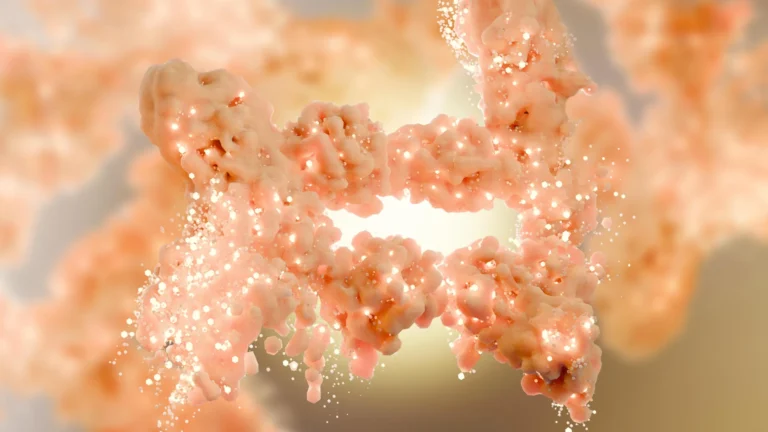
In the intricate architecture of human biology, few components have been as well-defined as telomeres—the repetitive, protective caps at the ends of our chromosomes. For decades, the protein TRF2 (Telomeric Repeat Binding Factor 2) has been understood primarily as a guardian of these chromosomal ends, preventing them from fraying or being misidentified by the cell as broken DNA. However, a groundbreaking study from the Perelman School of Medicine at the University of Pennsylvania has fundamentally challenged this traditional paradigm, revealing that TRF2 serves a much more dynamic and expansive role: it is a master regulator of muscle stem cell identity and tissue repair.
This discovery, published in the journal Science Advances, provides a new roadmap for understanding how muscle tissue regenerates throughout the human lifespan. By identifying that TRF2 does not merely protect DNA but actively manages the genetic instructions required for stem cell function, researchers have unlocked potential new avenues for treating muscular dystrophy and deepened our understanding of the delicate balance between regenerative biology and cancer.
The Traditional View vs. The New Paradigm
To understand the significance of this finding, one must first look at the conventional wisdom regarding cellular maintenance. Since its discovery, TRF2 has been categorized as a "telomere-binding protein." Its primary function, according to standard textbook biology, is to facilitate the formation of the T-loop structure—a protective knot at the end of chromosomes that hides the telomere from the cell’s DNA damage response machinery.
"For years, TRF2 has been viewed as a protein whose primary job is protecting the ends of chromosomes from damage or corruption," says senior author Foteini Mourkioti, PhD, an associate professor of Orthopedic Surgery at Penn Medicine. "But our research suggests that its role is far more multifaceted. Rather than simply protecting DNA, TRF2 seems to be key to orchestrating the complex biological dance of regenerating muscle throughout the course of a lifetime."
The study illustrates that TRF2 is not a static guardian; it is a dynamic participant in the cellular lifecycle. By monitoring the levels of TRF2 in muscle stem cells as they transition from dormancy to active repair, the researchers observed a highly synchronized, rhythmic fluctuation. The protein levels rise and fall in lockstep with the cell’s functional requirements—resting, multiplying to repair damage, and eventually returning to a state of quiescence to preserve the stem cell pool.
Chronology of the Discovery: From Observation to Genetic Intervention
The path to this discovery was paved by a series of rigorous laboratory experiments designed to isolate the function of TRF2 in a living system.
Phase I: The In Vivo Deletion
The researchers began by creating a mouse model where TRF2 could be selectively removed from muscle stem cells. In the initial period following the deletion, the mice appeared deceptively healthy. Their muscles functioned within normal parameters, suggesting that the protein might be redundant. However, as time progressed, the researchers noticed a critical failure in the muscle’s long-term maintenance. The supply of muscle stem cells began to dwindle, not because the cells were undergoing apoptosis (programmed cell death), but because they were losing their core identity.
Phase II: The Identity Crisis
The loss of TRF2 triggered a phenomenon that the researchers described as a "molecular identity crisis." Without the protein, the stem cells remained present, but they lost the genetic programming that defined them as "muscle stem cells." Consequently, when the mice suffered muscle injuries, the stem cells were unable to execute the necessary repair protocols. Instead of regenerating healthy muscle fibers, the tissue was replaced by fibrotic scar tissue and fat deposits—a hallmark of advanced muscle degeneration.
Phase III: The Dystrophy Connection
The researchers then applied this model to a scenario of clinical urgency: Duchenne muscular dystrophy (DMD). By introducing the TRF2 deficiency into a mouse model of DMD, they observed a catastrophic acceleration of the disease. The loss of the protein meant that the muscles, already under constant stress due to the genetic condition, lost their last line of defense. The mice exhibited significantly faster muscle deterioration and, ultimately, reduced lifespans, underscoring the critical nature of TRF2 in maintaining muscle integrity under pathological pressure.
Genomic Mechanics: The Role of G-Quadruplexes
One of the most profound revelations of the study is where TRF2 exerts its influence. By performing deep genomic mapping, the team discovered that TRF2 does not operate solely at the chromosome ends. Instead, it frequently binds to regulatory regions distributed throughout the genome—regions that control the specific genes necessary for stem cell identity.
Many of these regulatory regions contain G-quadruplexes (G4s)—secondary DNA structures that form when guanine-rich strands of DNA fold back on themselves. G4s are known to be "hubs" for genomic instability and are currently the subject of intense investigation in cancer research as potential therapeutic targets.
"We found that TRF2 works through these secondary DNA structures to preserve the identity of muscle stem cells and keep them capable of repairing damaged muscle," Dr. Mourkioti explains. This finding bridges the gap between telomere biology and broader genomic regulation, suggesting that TRF2 acts as a molecular "switchboard" that stabilizes these complex DNA formations to ensure that the cell’s regenerative identity remains intact.
Implications for Muscular Dystrophy and Cancer Biology
The potential clinical applications of this research are twofold: they offer a potential therapeutic lever for muscular dystrophy and a conceptual framework for why muscle tissue is resistant to certain types of cancer.
A New Target for DMD
Current treatments for Duchenne muscular dystrophy focus largely on managing symptoms or addressing the underlying dystrophin protein deficiency. The Penn Medicine study opens a new door: if researchers can develop methods to stabilize or boost TRF2 activity in the muscle stem cells of patients, it might be possible to slow the progression of the disease by preserving the regenerative capacity of the muscle, even in the presence of the genetic defect.
The Cancer Paradox
Perhaps the most intriguing theoretical implication of the study involves the "Cancer Paradox." Skeletal muscle is a tissue that undergoes massive regeneration throughout an individual’s life, yet it is rarely the primary site for cancer development. This is a biological puzzle; generally, tissues that regenerate frequently (like the skin or intestinal lining) are more prone to cancer because the constant division of cells increases the risk of accumulating oncogenic mutations.
The study suggests that TRF2 may be the key to this resistance. By acting as a rigid guardian of cellular identity, TRF2 ensures that muscle stem cells regenerate exactly as they should, preventing the "drift" or dedifferentiation that often precedes tumor formation. By understanding how muscle stem cells utilize TRF2 to maintain this high-fidelity regeneration, scientists may eventually be able to unlock the secrets of "safe" tissue repair—stimulating healing in other tissues without increasing the risk of cancerous mutation.
Future Directions and Conclusion
The research team at the Perelman School of Medicine is now moving into the next phase of their inquiry. Their current focus is determining whether the interaction between TRF2 and G-quadruplexes can be modulated pharmacologically. If they can influence this pathway, the implications for regenerative medicine could be transformative.
Furthermore, the study serves as a poignant reminder of the importance of basic research. What began as a question about a "simple" protein protecting a chromosome end has evolved into a fundamental discovery about the mechanics of life-long tissue maintenance.
"Our work highlights that the proteins we think we understand are often playing roles far larger than we initially gave them credit for," says Dr. Mourkioti. "We are only just beginning to scratch the surface of how TRF2 orchestrates the genome, and we are hopeful that this knowledge will eventually reach the clinic to help those suffering from debilitating muscle diseases."
As the scientific community continues to digest these findings, the study stands as a benchmark for future research. It reinforces the idea that the genome is not just a blueprint, but a highly regulated, three-dimensional landscape where proteins like TRF2 serve as the architects of our long-term health. Through the lens of this discovery, the future of muscular dystrophy treatment and cancer prevention appears more promising, anchored in the newly understood power of one of our cells’ most essential, and formerly underestimated, proteins.
This research was supported by grants from the National Institutes of Health and the National Institute of Arthritis and Musculoskeletal and Skin Diseases (R01 DK123356, R01s CA174904, GM101149, and FDN-143330).