EDITOR’S NOTE: This story includes discussion of suicide and severe mental health crises. If you or someone you know needs help, the national suicide and crisis lifeline in the U.S. is available by calling or texting 988.
Two weeks after the birth of her daughter, Bridget María Chesterton, a 52-year-old history professor from Buffalo, New York, found herself in a state of profound psychological fracture. Curled on her bathroom floor, she spoke in disjointed fragments, her grip on reality slipping away. At the emergency room, her confusion deepened, manifesting in the repetitive, hollow inquiry: "What’s going on?"
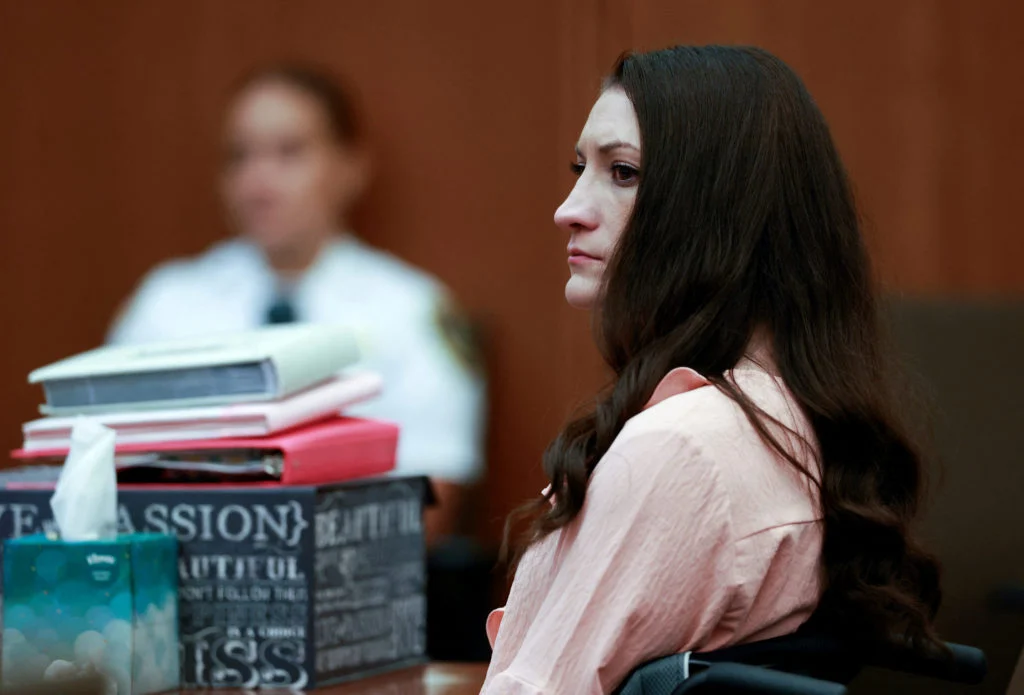
Chesterton was suffering from postpartum psychosis, a rare but devastating mental health emergency. As the nation watches the high-profile legal proceedings surrounding Lindsay Clancy—a Massachusetts mother accused of killing her three children—the public is finally beginning to confront the terrifying, often misunderstood reality of this condition. For survivors like Chesterton, the conversation is not merely academic; it is a vital effort to peel back the layers of stigma that prevent families from seeking life-saving intervention.
The Anatomy of a Crisis: Understanding Postpartum Psychosis
Postpartum psychosis is not merely a severe form of "baby blues" or postpartum depression. While postpartum depression affects roughly 1 in 7 women and manifests primarily as a mood disorder characterized by sadness and anxiety, postpartum psychosis is a medical emergency that disrupts a person’s cognitive foundation.
Symptoms include vivid hallucinations, severe paranoia, disorganized thinking, and delusions. Researchers estimate that the condition affects 1 to 2 out of every 1,000 women following childbirth. While the vast majority of women suffering from the condition do not harm their children, the severity of the delusions can lead to tragic outcomes, including suicide or, in rare, extreme cases, harm to the infant.
For Chesterton, the onset was sudden and disorienting. Despite having no history of bipolar disorder or other underlying psychiatric conditions—which are known risk factors—she was thrust into a nightmare state where she could not recognize her own child.
A Chronology of Trauma and Recovery
The path to motherhood was a grueling, years-long struggle for Chesterton and her husband, James Fitzsimmons. Following extensive fertility treatments, she became pregnant in her mid-40s. The pregnancy itself was fraught with physical complications, including severe asthma that necessitated multiple hospitalizations.
In January 2019, the couple’s daughter was born via C-section, two months premature. The infant was immediately transferred to the neonatal intensive care unit (NICU), leaving the parents in a state of exhaustion and high-stress isolation.
The Breakdown
Following the discharge, Chesterton initially appeared to be coping. However, the reality of her mental state surfaced when her husband discovered her on the bathroom floor. Her behavior was erratic—she made nonsensical comments about "meditation day," a practice she did not follow, and failed to recall the recent birth of her child.
"She didn’t even remember having a baby," recalled her mother, Maria Chesterton. "She knew us vaguely."
Institutionalization and the Road Back
Chesterton was transported to BryLin Hospital, a facility specializing in crisis mental healthcare. She spent two weeks in inpatient care, during which time her family served as a vital, if heartbroken, support system. Upon her initial release, she experienced a relapse, staring blankly into space and losing touch with her surroundings once again.
Recognizing the gravity of the situation, the family faced the difficult, involuntary decision to return her to the hospital for another two-week stay. During this period, her daughter remained in the NICU—a coincidence of timing that, in a tragic irony, provided a safe, professional environment for the baby while her mother navigated the depths of psychosis.
The Path to Stability
The recovery process was slow, arduous, and heavily reliant on a combination of pharmacological intervention and a robust network of human support. Antipsychotic medication was the cornerstone of her stabilization, but, as Chesterton notes, "it could have gone sideways" without the relentless dedication of her husband, her parents, and a professional postpartum doula.
Over the course of a year, the "fog" gradually lifted. By the time of her daughter’s first birthday, Chesterton had returned to her life as a professor, successfully tapering off her medication and reclaiming her role as a parent.
Data and Clinical Perspectives: Why Support Systems Matter
Medical experts emphasize that Chesterton’s story highlights a critical gap in postpartum care: the lack of societal awareness regarding the warning signs of psychosis.
Dr. Emily Williams of Buffalo OB/GYN underscores that while the condition is statistically rare, the outcomes are highly dependent on the speed of clinical response. "The more hands on deck, the better," Williams said. She warns that families often attempt to rationalize erratic behavior as simple sleep deprivation or the general stress of new parenthood, delaying professional help until a crisis point is reached.
Risk Factors and Prevention
While women with a history of bipolar disorder or a previous episode of postpartum psychosis are at a statistically higher risk, the case of Bridget Chesterton serves as a reminder that the condition can emerge without warning in women with no prior mental health history. This unpredictability makes it essential for obstetricians and pediatricians to screen for cognitive shifts, not just mood shifts, during the postpartum period.
The Cultural Stigma: Beyond the Headlines
The trial of Lindsay Clancy has brought the condition into the national spotlight, but it has also triggered a wave of misinformation. Online forums and social media commentary often dismiss the disorder as a "legal defense" rather than a legitimate medical crisis.
Chesterton bristles at these narratives. She has chosen to speak out—sharing her experience through poetry and public interviews—specifically to dismantle the stigma that leaves mothers feeling "embarrassed" to ask for help.
"It’s something that we do not talk about as a society," Chesterton said. "I’m not embarrassed about what happened. I want people to know about it."
Her advocacy is fueled by a desire to provide a counter-narrative to the sensationalism often found in media coverage of postpartum psychosis. By focusing on the medical reality—that it is a treatable condition—she hopes to encourage families to prioritize mental health check-ins with the same rigor they apply to physical postpartum recovery.
Implications for Future Policy and Public Health
The medical community is increasingly calling for "wraparound" care for postpartum mothers. This involves:
- Increased Education: Providing expectant parents and their families with clear information on the difference between "baby blues," postpartum depression, and postpartum psychosis.
- Expanded Screening: Implementing mandatory mental health screenings during postpartum visits that include questions about delusions, hallucinations, and sleep disturbances.
- Community Support: Recognizing that "it takes a village" is not just a platitude but a clinical necessity. Access to doulas, mental health professionals, and extended family networks significantly improves outcomes for mothers in crisis.
- Destigmatization: Moving away from the criminalization of postpartum mental illness and toward a healthcare-first approach that treats these cases as medical emergencies.
For Bridget Chesterton, the journey has been one of survival and transformation. Her experience serves as a testament to the fact that postpartum psychosis does not have to be a permanent state. With prompt intervention, consistent medication, and a loving, vigilant support system, the "fog" can lift, allowing mothers to return to their lives and their children.
As the medical community continues to study the biological underpinnings of this condition, the voices of survivors are proving to be the most powerful tool in ensuring that other families do not have to walk the path of isolation. The message is clear: help is available, the condition is real, and no mother should have to face the darkness alone.