











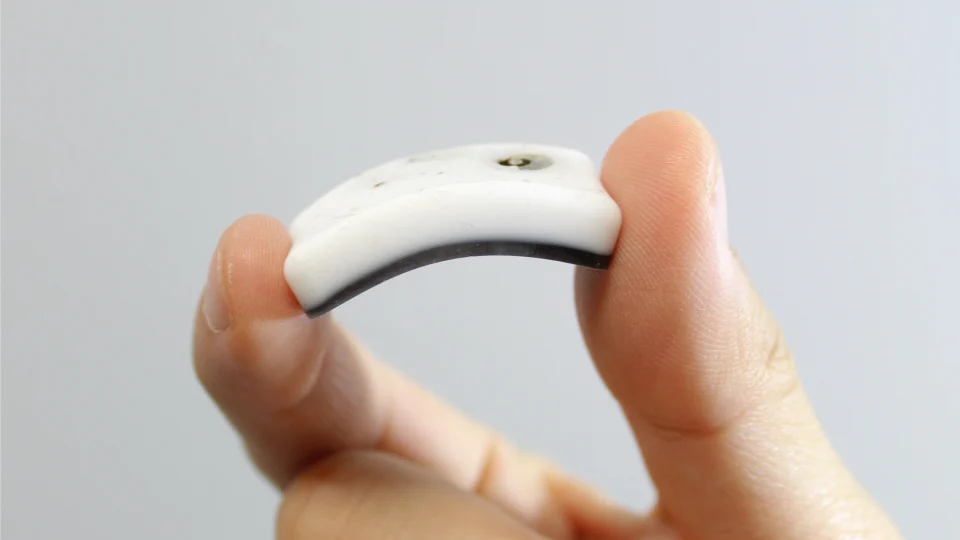
In a significant leap forward for neurology and sleep science, researchers at the Georgia Institute of Technology have unveiled a soft, wireless, and noninvasive wearable device capable of monitoring physiological indicators of brain health in the home environment. By bridging the gap between high-cost clinical diagnostics and accessible personal health technology, this innovation promises to demystify the critical waste-clearing processes that occur while we sleep.
The study, published in the journal Science Advances, details how this technology—a sophisticated near-infrared spectroscopy (NIRS) system—can track the dynamics of the glymphatic system. By moving diagnostic capabilities out of the hospital and into the bedroom, researchers hope to gain unprecedented insights into how sleep quality impacts long-term cognitive health, memory formation, and the prevention of neurodegenerative diseases.
The Main Facts: A Paradigm Shift in Brain Monitoring
For decades, the “gold standard” for tracking brain function has been tethered to clinical infrastructure. Tools such as Magnetic Resonance Imaging (MRI) and polysomnography—the traditional sleep study—require patients to lie in bulky, uncomfortable machines or stay overnight in specialized clinics. These environments are inherently unnatural, often disrupting the very sleep patterns researchers seek to study.
The Georgia Tech team has developed a lightweight, flexible patch that adheres to the forehead. Utilizing light-based sensing, the device continuously monitors physiological changes related to brain water content and glymphatic clearance.
Key Technical Specifications:
- Noninvasive Sensing: The device employs LED light at specific wavelengths that penetrate the skin and skull to interact with brain tissue.
- Wireless Connectivity: Data is transmitted in real-time via Bluetooth to a smartphone or computer, eliminating the need for cumbersome wiring.
- Wearable Ergonomics: Constructed from soft, biocompatible materials, the device is designed to be worn throughout the night without interfering with the user’s sleep quality.
- Real-time Analytics: The system provides a continuous stream of data, allowing for the observation of trends over several hours rather than a single, static snapshot in a laboratory.
Chronology of Development: From Concept to Clinical Potential
The development of this wearable was driven by the urgent need to understand the glymphatic system—a macroscopic waste clearance pathway that utilizes cerebrospinal fluid (CSF) to wash away metabolic waste products from the brain’s interstitial space.
Early Research Phase:
The team, led by W. Hong Yeo, focused on the limitations of existing NIRS technologies, which were historically rigid and power-hungry. The researchers spent several years iterating on the miniaturization of the sensors, ensuring that the light-emitting diodes (LEDs) and photodetectors were sensitive enough to detect minute fluid shifts through the skull without requiring the immense power of a desktop unit.
Prototyping and Testing:
The transition from lab-bench testing to human subjects required rigorous calibration. The team had to ensure the device could distinguish between true physiological signals—such as the pulse of blood or the flow of interstitial fluid—and "noise" caused by external factors.
Validation Phase:
The study published in Science Advances represents the culmination of this testing phase. By validating the device against established, albeit restrictive, clinical metrics, the team confirmed that the wearable provides a reliable, high-fidelity data stream that mirrors the results of more complex diagnostic tools.
Supporting Data: Understanding the Glymphatic System
To understand why this wearable is so vital, one must understand the biological stakes. The glymphatic system is most active during deep sleep. During these phases, the brain undergoes a "cleansing" process, flushing out metabolic byproducts—including proteins like amyloid-beta and tau—that have accumulated during the day.
The Consequences of Disrupted Clearance:
- Metabolic Accumulation: If sleep is consistently fragmented or shortened, the glymphatic system cannot function at peak efficiency.
- Cognitive Decline: The failure to clear these proteins is strongly linked to the progression of neurodegenerative conditions, including Alzheimer’s disease and other forms of dementia.
- Memory Formation: Effective waste removal is crucial for synaptic homeostasis, which is the process of resetting neurons to allow for new learning and memory storage the following day.
The Georgia Tech device provides a window into this process. By measuring optical signals reflected back from the brain, the system detects fluctuations in fluid dynamics. While the researchers are careful to note that these measurements are influenced by variables such as breathing depth, head position, and skin temperature, they argue that the trends—the patterns of change over the course of a night—are highly indicative of overall brain health.
Official Responses and Expert Perspectives
W. Hong Yeo, the Peterson Endowed Professor in the Woodruff School of Mechanical Engineering and director of the Wearable Intelligent Systems and Healthcare Center, emphasized the transformative nature of this work.
“This paper introduces the first soft, wireless, and noninvasive wearable near-infrared spectroscopy system capable of continuously monitoring brain water and glymphatic clearance dynamics in a natural home sleep environment,” Yeo stated in a recent press release. “We are effectively overcoming the restrictive, costly, and invasive limitations of traditional methods like MRI and polysomnography.”
The research team is transparent about the current limitations of the device. Because the skull is a dense barrier, optical measurements can be affected by external variables. "Some of the measured signals may reflect effects from the skin, scalp, device pressure, or movement," the authors noted in their study. Consequently, they advocate for using the device to track long-term longitudinal trends—such as a user’s nightly recovery cycle—rather than seeking a "perfect" measurement of brain water at any single second.
Implications: A Future of Personalized Neurology
The implications of this technology extend far beyond the laboratory. By democratizing access to neurological data, this wearable could revolutionize several sectors of healthcare.
1. Longitudinal Health Tracking
Currently, most brain health data is cross-sectional—a snapshot in time. A wearable that functions at home allows for longitudinal studies, where researchers can observe how a patient’s sleep health changes over months or years. This could lead to early warnings for individuals at risk of cognitive decline, allowing for lifestyle interventions long before clinical symptoms appear.
2. Tailored Therapeutic Interventions
Physicians could potentially use data from these wearables to tailor treatments for sleep disorders. By seeing exactly how a patient’s brain fluid dynamics change in response to different medications or sleep hygiene strategies, doctors can move away from "trial-and-error" prescribing.
3. Democratizing Sleep Science
Many sleep disorders remain undiagnosed due to the barrier of entry for clinical sleep studies. A device that can be worn at home removes the "first-night effect," where patients sleep poorly because they are in a strange hospital bed. This leads to more accurate data that reflects the patient’s true physiological state.
4. Future Research Directions
The Georgia Tech team is already looking toward the next generation of the device. Future iterations may include sensors for oxygen saturation, heart rate variability, and even more advanced imaging techniques. As the semiconductor technology within the patch becomes more efficient, the potential for integration with AI-driven analytics software grows, enabling the device to provide automated, actionable insights to the user.
Conclusion
The Georgia Tech research team has not merely developed a new gadget; they have laid the groundwork for a new era of proactive brain health management. By moving the monitoring of the glymphatic system from the MRI suite to the comfort of the home, this wireless wearable offers a glimpse into a future where we can manage our neurological well-being with the same precision and ease as we currently track our daily step counts or heart rates.
While challenges remain in refining signal processing and navigating the complexities of non-clinical environments, the current progress marks a definitive step toward closing the loop on one of the most mysterious and vital processes in human biology: the way the brain cleanses itself while we dream. As this technology matures, it stands to become an indispensable tool in the global fight against neurodegenerative diseases and a cornerstone of modern preventive medicine.