








15 October, 2026
In a landmark development for public health policy across the continent, the inaugural European Union (EU) Screening Week has concluded, leaving behind a legacy of heightened awareness and concrete legislative progress. Held from 28 September to 4 October 2026, the campaign—a cornerstone of the European Commission’s “Know Your Numbers” initiative—sought to fundamentally shift how Europeans perceive, monitor, and manage their long-term health. By bridging the gap between clinical diagnostics and public accessibility, the week successfully repositioned respiratory health as a vital component of routine medical check-ups, standing shoulder-to-shoulder with cardiovascular monitoring.
Main Facts: A Continent-Wide Mobilization
The EU Screening Week was not merely an awareness campaign; it was a massive, coordinated effort to decentralize medical diagnostics and bring them directly to the citizenry. Under the stewardship of Olivér Várhelyi, European Commissioner for Health and Animal Welfare, the initiative aimed to dismantle the barriers that often prevent early detection of chronic conditions.
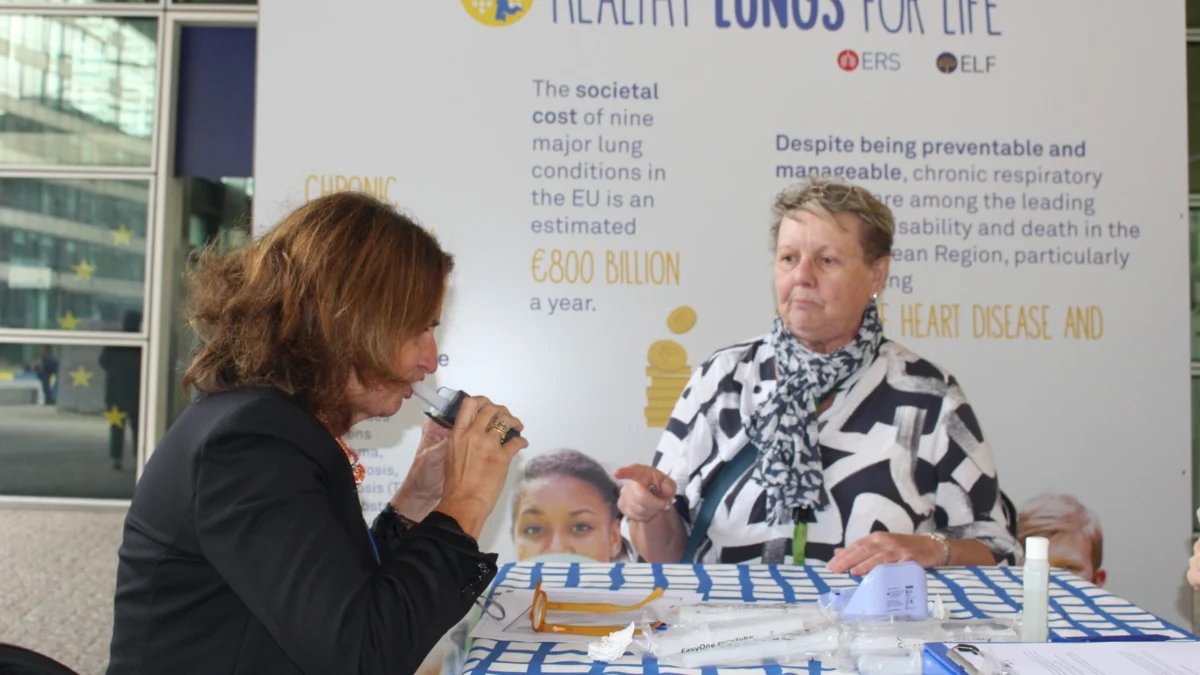
At the heart of the week’s mission was the normalization of diagnostic tools that have traditionally been reserved for specialized clinical settings. Specifically, the campaign championed the use of spirometry—a standard test for assessing lung function—as a routine assessment. By hosting hundreds of pop-up testing centers, mobile clinics, and community workshops, the European Commission, alongside the European Respiratory Society (ERS) and the European Lung Foundation (ELF), transformed public squares and health centers into hubs of preventive medicine. The central message was clear: proactive monitoring is the most effective weapon against the rising tide of chronic respiratory and cardiovascular diseases.
Chronology: A Week of Action and Advocacy
The success of the inaugural Screening Week was the culmination of months of logistical planning and inter-institutional collaboration.
- Pre-Launch (September 2026): Stakeholders and health ministries across the EU Member States finalized the strategic framework for the "Know Your Numbers" campaign, focusing on integrating respiratory testing with existing cardiovascular screening protocols.
- 28 September 2026: Official launch of EU Screening Week. Commissioner Olivér Várhelyi inaugurated the week with a keynote address emphasizing that health sovereignty begins with personal knowledge of one’s physiological benchmarks.
- 29 September – 3 October 2026: The core of the campaign. Across Belgium, Greece, Italy, Poland, Romania, and Spain, partners of the Healthy Lungs for Life initiative facilitated free, high-accessibility screening events. These events provided not only spirometry testing but also comprehensive counseling on smoking cessation, the long-term impacts of air quality, and the importance of immunization.
- 4 October 2026: The week concluded with a formal high-level summit in Brussels, where the European Commission confirmed the integration of respiratory testing into its official recommendations to the European Council regarding cardiovascular health.
Supporting Data: The Burden of Respiratory Disease
The urgency behind this initiative is rooted in sobering epidemiological data. Across Europe, chronic respiratory diseases—including Chronic Obstructive Pulmonary Disease (COPD), asthma, and interstitial lung diseases—represent a significant percentage of mortality and morbidity. According to health data cited during the week, millions of Europeans remain undiagnosed, living with compromised lung function that goes undetected until it reaches an acute stage.
The "Know Your Numbers" campaign provided a vital platform to showcase the efficacy of early detection. Preliminary reports from the week’s events indicated a high uptake among populations that traditionally avoid clinical environments, such as younger adults and those living in rural areas. By offering "one-stop-shop" screenings, the campaign observed a marked increase in individuals identifying early-stage symptoms, such as persistent breathlessness or chronic cough, which are often dismissed by patients as benign.
Furthermore, the integration of cardiovascular and respiratory screening is supported by the biological reality of the "heart-lung axis." Conditions that affect the lungs often put additional strain on the cardiovascular system, and vice versa. By advocating for joint screenings, the EU is effectively optimizing resource allocation, reducing the administrative burden on health systems, and catching comorbidities before they manifest as catastrophic health events.
Official Responses: Aligning Policy with Patient Needs
The political consensus surrounding the initiative was notably strong. Commissioner Olivér Várhelyi underscored that the EU’s role is to harmonize the standard of care across Member States, ensuring that a citizen in Romania has the same access to preventive diagnostic tools as a citizen in Belgium.
"Health is not merely the absence of disease; it is the presence of the tools and information necessary to maintain vitality," Commissioner Várhelyi stated during the launch. "By including respiratory testing in our formal recommendations, we are signaling to the European Council that the status quo of reactive healthcare is no longer sufficient. We must move toward a model of early, routine, and accessible prevention."
The European Respiratory Society (ERS) and the European Lung Foundation (ELF) issued a joint statement praising the Commission’s move. Their representatives highlighted that the Healthy Lungs for Life campaign was instrumental in proving that the public is not only willing but eager to engage with preventive testing when the process is simplified and de-stigmatized. Their collaboration served as the operational arm of the week, providing the clinical expertise required to turn policy into practice.
Implications: A New Era for European Healthcare
The confirmation that the European Commission has included respiratory testing in its recommendations to the European Council is perhaps the most significant outcome of the week. This is not just a symbolic gesture; it is a policy shift that will dictate the flow of healthcare funding and institutional priorities for years to come.
The Path Forward
- Standardization of Care: By codifying these recommendations, the EU is encouraging national health ministries to update their own clinical guidelines. We can expect to see a more uniform approach to health check-ups across the Union, where spirometry is as standard as blood pressure monitoring.
- Economic Efficiency: Early detection significantly lowers the long-term cost of healthcare. Treating a patient with chronic respiratory failure is exponentially more expensive than managing early-stage conditions through lifestyle intervention and medication. By investing in Screening Week, the EU is effectively investing in the fiscal sustainability of its national health systems.
- Public Empowerment: The "Know Your Numbers" campaign has fostered a cultural shift. By encouraging individuals to take agency over their own diagnostic data, the EU is building a more health-literate population. When citizens understand their own lung function metrics, they are more likely to demand cleaner air, support smoking cessation initiatives, and adhere to preventative health schedules.
- Addressing Environmental Determinants: A key takeaway from the week was the inextricable link between lung health and environmental factors. The awareness initiatives regarding air quality have reinforced the European Commission’s broader "Green Deal" goals. By linking individual health outcomes to environmental pollutants, the campaign provides a powerful, human-centric argument for stricter air quality regulations.
Conclusion: Sustaining the Momentum
As the curtains close on the first EU Screening Week, the focus now shifts to implementation. The European Council is expected to review the Commission’s recommendations in the coming months. If adopted, these measures will solidify a comprehensive framework for preventive care that prioritizes the lungs as much as the heart.
The success of this week serves as a blueprint for future public health campaigns. It proved that when political will meets clinical expertise and community engagement, the results are transformative. As we look toward the future of European health, the legacy of this inaugural week will be found in every early diagnosis, every life saved through timely intervention, and every citizen empowered by the knowledge of their own health. The "Know Your Numbers" campaign has effectively set a new benchmark for what it means to be a healthy European in the 21st century.
For those who wish to review the full scope of activities or access educational materials on lung health, the European Commission has maintained an open portal detailing every local event, workshop, and lecture held during the week. As the continent continues to prioritize health equity, the lessons learned during this inaugural week will undoubtedly serve as the foundation for a more resilient, better-informed, and healthier European society.