1 August 2026
As the global medical community observes World Lung Cancer Day, a sobering reality remains at the forefront of public health discourse: while lung cancer stands as the leading cause of cancer-related mortality globally, it is also a disease where the timing of intervention determines the difference between life and death. With 1.8 million lives lost in 2022 and 2.5 million new diagnoses recorded in the same period, the World Health Organization’s (WHO) data serves as a stark reminder of the scale of the crisis.
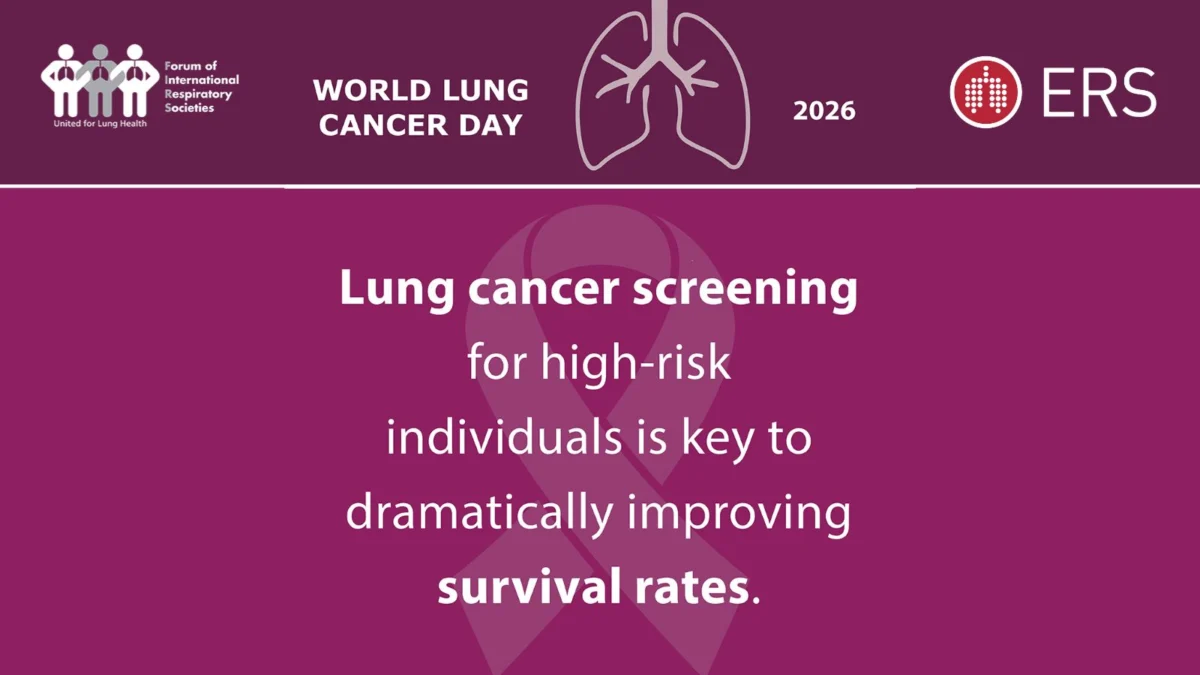
On this day, the Forum of International Respiratory Societies (FIRS)—of which the European Respiratory Society (ERS) is a prominent founding member—has launched a renewed call to action. The message is unequivocal: early detection saves lives, but only when screening is equitable, accessible, and integrated into routine healthcare pathways.
The Landscape of the Crisis: Main Facts and Global Burden
Lung cancer is a complex, multifaceted disease. Historically, it has been characterized by late-stage diagnosis, largely because early-stage tumors often present without distinct symptoms. By the time a patient experiences persistent coughing, hemoptysis (coughing up blood), or unexplained weight loss, the cancer has frequently advanced beyond the point of surgical cure.
The Scale of Mortality
The statistics provided by the WHO underscore the urgency. In 2022, the 1.8 million deaths attributed to lung cancer were not merely data points; they represented a failure of systemic early detection and a lack of universal access to advanced diagnostic tools. The disease’s global prevalence is linked to a variety of factors, including tobacco use, exposure to environmental carcinogens, occupational hazards, and genetic predispositions.
The Diagnostic Paradox
We currently live in an era of unprecedented medical innovation. From targeted molecular therapies to advanced immunotherapy, the arsenal available to oncologists is vast. However, these treatments are most effective when administered at the earliest possible stage. The "diagnostic paradox" of lung cancer is that while we possess the technology to catch the disease early, the majority of global health infrastructure fails to deploy these tools to the populations who need them most.
Chronology of a Global Health Challenge
The trajectory of lung cancer care has evolved significantly over the last two decades, moving from a nihilistic "wait and see" approach to a proactive, screening-led strategy.
- Pre-2010: Lung cancer was largely diagnosed through symptomatic presentation, often resulting in dismal five-year survival rates.
- 2011: The publication of the National Lung Screening Trial (NLST) results in the United States marked a turning point. The trial demonstrated that low-dose computed tomography (LDCT) reduced lung cancer mortality by 20% compared to chest X-rays.
- 2015–2020: International respiratory societies began formalizing guidelines for high-risk screening, shifting the focus toward "screening for survival."
- 2022: The WHO released comprehensive data highlighting the 2.5 million global diagnoses, reinforcing the need for systemic screening programs in low- and middle-income countries.
- 2026 (Present Day): The focus has shifted from the feasibility of screening to the equity of screening. Today, the priority is removing barriers—be they financial, geographical, or structural—that prevent vulnerable populations from accessing LDCT scans.
Supporting Data: Why LDCT Screening is the Gold Standard
The evidence supporting Low-Dose Computed Tomography (LDCT) is robust. Unlike conventional X-rays, which often miss early-stage nodules, LDCT provides detailed cross-sectional images of the lungs, allowing radiologists to identify small, localized tumors that are significantly more treatable.
The Impact of Early Intervention
Clinical data consistently show that when lung cancer is detected at Stage I, the survival rate is dramatically higher compared to detection at Stage IV. Annual LDCT screening for eligible, high-risk individuals (typically long-term smokers or those with specific occupational exposures) has been proven to:
- Reduce Mortality: Studies have indicated a relative reduction in lung cancer-specific mortality of approximately 20% to 25% in high-risk cohorts.
- Optimize Treatment: Early detection allows for minimally invasive surgical interventions rather than systemic, debilitating chemotherapy.
- Cost-Effectiveness: While the upfront cost of imaging is high, the long-term economic burden of late-stage, chronic cancer care is significantly higher. Early detection is an investment in both human life and national healthcare budgets.
Official Responses and Strategic Calls to Action
In alignment with World Lung Cancer Day, FIRS and its member organizations have issued a clarion call to global stakeholders. The following pillars represent the necessary roadmap for governments, health systems, and clinicians:
1. For Policymakers: Prioritizing Infrastructure
Policymakers must move beyond acknowledging the burden of lung cancer and begin funding national screening programs. This requires the integration of LDCT services into public healthcare mandates, ensuring that screening is viewed as a standard of care rather than a luxury service.
2. For Health Systems: Removing Barriers
The current inequity in screening access is driven by "healthcare deserts." In many regions, the distance to a facility with CT scanning capabilities is prohibitive. Health systems must implement mobile screening units and community-based outreach programs to reach marginalized populations.
3. For Clinicians: Enhancing Risk Assessment
Clinicians are the frontline in the fight against lung cancer. The mandate is to refine risk assessment tools—incorporating not only smoking history but also family history, radon exposure, and air pollution indices—to identify individuals who would benefit most from screening.
4. For Global Health Organizations: Standardization
There is a pressing need for international consensus on screening eligibility. By harmonizing standards, global bodies can provide a framework for developing nations to build effective, sustainable, and culturally sensitive lung cancer detection programs.
Implications: The Path Toward a Future Without Late-Stage Diagnosis
The implications of failing to act are clear: the global death toll will continue to climb, placing an unsustainable burden on oncology departments worldwide. However, if the global community commits to the goals set forth on this World Lung Cancer Day, the narrative can be rewritten.
The Social and Economic Impact
Beyond the clinical metrics, the social impact of early detection is profound. Keeping a person healthy and active preserves the family unit and maintains the economic productivity of the workforce. When a cancer is caught early, the patient avoids the physical and psychological toll of advanced metastatic disease, allowing for a better quality of life.
Embracing Technological Synergy
Looking toward the future, the integration of Artificial Intelligence (AI) into diagnostic radiology promises to further refine the efficacy of LDCT. AI algorithms can assist radiologists in identifying minute nodules that might otherwise be overlooked, potentially reducing false positives and improving the precision of diagnosis.
A Holistic Commitment
The fight against lung cancer is not just a medical challenge; it is a moral one. It requires a commitment to overcoming the socioeconomic disparities that currently dictate who survives and who succumbs. Equitable access to screening is the most powerful tool currently available to close the gap between current mortality rates and the potential for long-term survival.
As the sun sets on 1 August 2026, the respiratory community remains resolute. The mission is defined, the tools are in hand, and the goal is singular: to transform lung cancer from a silent killer into a manageable condition, diagnosed in time to save millions of lives.
Resources and Further Reading
- World Health Organization (WHO) Lung Cancer Fact Sheet: https://www.who.int/news-room/fact-sheets/detail/lung-cancer
- Forum of International Respiratory Societies (FIRS): firsnet.org
- European Respiratory Society (ERS) Policy Initiatives: ersnet.org
Disclaimer: This article is intended for informational purposes and reflects the advocacy positions of the Forum of International Respiratory Societies as of 1 August 2026. For personal health concerns, please consult a medical professional.