











ALTADENA, CA — In an era where the digital landscape evolves faster than the policies designed to govern it, a new national alliance is seeking to put the tools of change directly into the hands of those most affected: the youth. On June 12, 2026, Active Minds, the nation’s premier nonprofit dedicated to mobilizing young adults around mental health, announced a landmark $5 million expansion of its digital wellbeing and mental health programming.
Supported by Google’s philanthropic arm, Google.org, the initiative aims to equip 100,000 youth and young adults across 154 high schools nationwide with the literacy and agency required to navigate a world increasingly defined by Artificial Intelligence (AI) and ubiquitous connectivity. The announcement, made in the shadow of the San Gabriel Mountains, underscores a pivotal shift in mental health strategy—moving from reactive treatment to proactive, student-led advocacy and digital resilience.
Main Facts: A $5 Million Investment in the Next Generation
The core of the announcement is a multi-year, $5 million grant from Google.org. This funding is specifically earmarked to scale Active Minds’ existing frameworks, focusing on the intersection of mental health and digital safety. While Active Minds has long been a staple on college campuses and high schools, this expansion represents a significant deepening of their "digital-first" curriculum.
The initiative targets three primary pillars:
- Mental Health Literacy: Educating students on identifying stressors, understanding the psychological impacts of digital consumption, and reducing the stigma associated with seeking help.
- Digital Agency and Safety: Providing youth with the skills to use emerging tools—including generative AI and social media—responsibly, while advocating for safer digital environments.
- Peer Support Networks: Strengthening the "student-to-student" model that has been the hallmark of Active Minds’ success, ensuring that help-seeking behavior is normalized within social circles.
A critical component of this expansion is the Active Minds Program Fund. This fund is designed to ensure equity, providing resources to communities of color, rural districts, and under-resourced schools that might otherwise lack the budget to implement comprehensive mental health experiences. By removing the financial barrier, Active Minds and Google.org aim to create a truly national network of "wellbeing advocates."
Chronology: From Local Crisis to National Blueprint
The timing and location of the announcement—Altadena, California—were deeply symbolic. The journey to this national launch is rooted in a timeline of community resilience following local tragedy.
- 2023–2024: The Rise of Digital Pressures. Following the pandemic, data from the CDC and various mental health organizations highlighted a sharp increase in youth anxiety and depression, much of it linked to social isolation and the "comparison culture" of social media.
- 2025: The Eaton Fire. A devastating wildfire swept through the Altadena and Pasadena areas, displacing families and destroying local infrastructure. This event served as a "compounding stressor," where physical trauma met the digital fatigue of a generation already on edge.
- Early 2026: Strategic Partnership. Active Minds and Google.org began collaborating on a curriculum that addressed both "offline" community trauma and "online" safety. The goal was to create a program that wasn’t just a textbook, but a living resource.
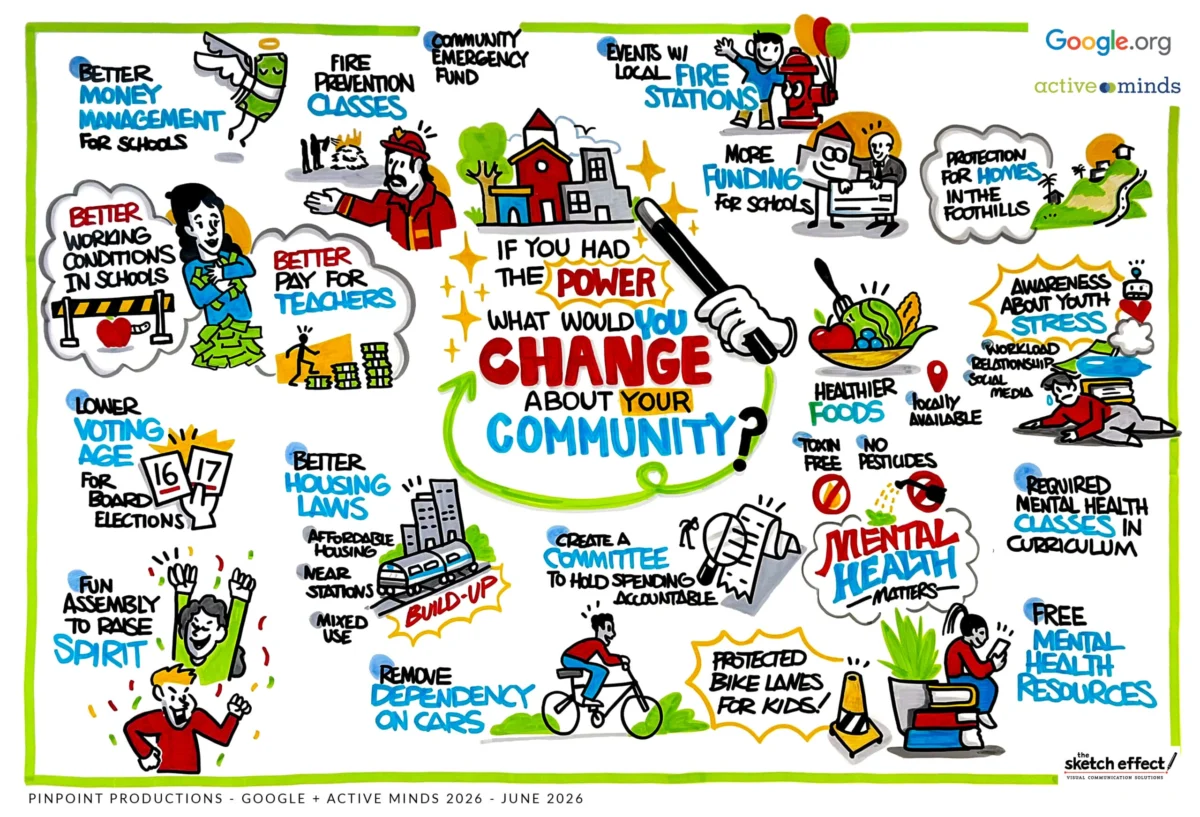
- June 12, 2026: The Altadena Launch. The official rollout occurred alongside Assemblymember John Harabedian and the Pasadena Unified School District (PUSD). The event featured interactive workshops where students translated their experiences with the Eaton Fire and digital stressors into actionable community goals.
This chronology demonstrates a move away from "one-size-fits-all" mental health kits toward a localized, responsive model that can be replicated in other disaster-prone or high-stress regions.
Supporting Data: The High Stakes of Youth Wellbeing
The necessity of this $5 million investment is backed by sobering data regarding the state of youth in the mid-2020s. According to recent surveys cited by Active Minds, Gen Z and Gen Alpha are the first generations to have their entire social development mediated by algorithms.
- The AI Factor: With AI now woven into educational platforms and social apps, students report a "blurred line" between authentic human connection and algorithmic engagement. Active Minds’ research indicates that while technology offers connectivity, it also contributes to a "24/7" performance pressure.
- Peer-to-Peer Efficacy: Research consistently shows that youth are significantly more likely to turn to a peer than a professional or parent when first experiencing a mental health crisis. The Active Minds model capitalizes on this, with data suggesting that schools with active chapters see a marked increase in student-led referrals to counseling services.
- The Equity Gap: Students in under-resourced schools are 40% less likely to have access to a dedicated school psychologist. The Google.org-funded Program Fund directly addresses this gap, targeting 154 schools where mental health resources are most scarce.
By targeting 100,000 students by 2028, the initiative seeks to create a "critical mass" of advocates who can influence local school board policies and state-level legislation regarding digital safety.
Official Responses: Voices of Leadership and Advocacy
The launch event featured a coalition of voices from the nonprofit, corporate, and legislative sectors, all emphasizing that mental health is no longer a peripheral issue but a foundational one for societal health.
Alison Malmon, Founder and Executive Director of Active Minds, who started the organization after the tragic loss of her brother to suicide, emphasized the evolution of the mission. "Youth and young adults are navigating an increasingly complex world where mental health, technology, and connection are deeply intertwined," Malmon stated. "This support from Google.org allows us to significantly expand our work, ensuring that more young people have access to the stories and peer connections that help them feel seen and supported."

Representing the legislative side, Assemblymember John Harabedian (D-Pasadena) linked the initiative to community recovery. "The youth of Pasadena Unified have shown immense resilience in the wake of last year’s devastating Eaton Fire," Harabedian noted. "But we cannot overlook the compounding pressures they face. This program empowers them to play an active, vital role in building community resilience, using their voices to inform the policies that govern our state."
From a corporate perspective, Dr. Megan Jones Bell, Senior Director of Clinical at Google, highlighted the tech giant’s responsibility. "At Google, we believe child safety and digital wellbeing warrant unique, proactive protections," Bell said. "By supporting Active Minds to put youth at the center of this movement, we are championing student-led leadership that shifts the paradigm toward proactive empowerment. We want the next generation to navigate the digital future not with fear, but with agency."
Implications: A New Era of Student-Led Governance
The expansion of Active Minds, backed by Google.org, has implications that reach far beyond the classroom. It signals a shift in how society views the "digital native." Rather than seeing youth as passive victims of technology, this initiative treats them as co-designers of a safer digital world.
1. Shaping Future Policy
By bridging the gap between youth voices and decision-makers, the program creates a pipeline for student advocacy. The ideas generated in high school workshops in Altadena are intended to reach the halls of the State Capitol. This could lead to more nuanced regulations regarding AI in schools and data privacy for minors, informed by the actual lived experiences of students.
2. Redefining "Digital Safety"
Traditionally, digital safety meant "don’t talk to strangers" or "don’t share passwords." The Active Minds/Google.org curriculum redefines it to include emotional regulation, the ability to recognize algorithmic bias, and the agency to "unplug" without social penalty. This holistic approach prepares students for a workforce where AI and digital collaboration are mandatory.
3. Community Resilience as a Reproducible Model
The "Altadena Model"—using a national curriculum to address localized trauma (like the Eaton Fire)—serves as a blueprint. Whether a community is dealing with natural disasters, economic downturns, or local violence, the framework of "Peer Support + Digital Agency" provides a reproducible structure for emotional recovery.
4. Corporate Responsibility and Philanthropy
Google.org’s $5 million commitment sets a precedent for other tech leaders. It suggests that "digital wellbeing" is not just a feature to be toggled on in an app’s settings, but a social infrastructure that requires external investment. The involvement of a "Clinical Director" like Dr. Bell indicates that Google is treating this as a health issue, not just a PR one.
Conclusion: Empowering the Future Leaders
As the event in Altadena concluded, a live mural—created by a local artist and informed by student brainstorming—stood as a vibrant testament to the initiative’s goals. The mural featured themes of fire safety, housing, healthier food, and mental health, illustrating that for today’s youth, wellbeing is an intersectional issue.
With the support of Google.org, Active Minds is not just teaching students how to survive the digital age; it is teaching them how to lead it. By 2028, if the initiative hits its goal of 100,000 trained advocates, the landscape of American high schools could look very different—one where mental health is valued, prioritized, and, most importantly, protected by the very people who use the technology every day.
The message from Altadena is clear: the future of digital safety isn’t just in the code—it’s in the community.