











In a significant move to reshape the daily workflows of healthcare professionals, Oracle Health announced on Monday that its clinical artificial intelligence agent—previously a tool reserved exclusively for physicians—is now officially available to nurses across the United States. This expansion marks a pivotal shift in how the healthcare industry integrates generative AI, moving beyond the physician-centric focus that has dominated the early stages of the "AI boom" in medicine.
For hospitals and health systems, the integration represents more than just a software update; it is a strategic effort to mitigate the pervasive issue of nursing burnout, which has been exacerbated by the relentless demands of electronic health record (EHR) documentation. By allowing nurses to utilize voice commands for chart navigation and automated summary generation, Oracle is attempting to reorient the nursing profession toward patient care rather than data entry.
The Evolution of Oracle’s Clinical AI Agent: A Chronology
The journey toward this rollout began two years ago when Oracle first introduced its clinical AI agent for physicians. The initial deployment focused on the high-acuity needs of doctors: drafting clinical notes, suggesting follow-up laboratory testing, and automating the cumbersome process of writing discharge summaries.
The Timeline of Innovation
- Initial Launch (Two Years Ago): Oracle releases its AI agent for physicians, primarily focusing on automating documentation and reducing the "pajama time" associated with clearing EHR backlogs after clinical hours.
- August 2024 Expansion: Building on the success of the initial rollout, Oracle added advanced capabilities, including sophisticated chart review assistance, medical dictation, and automated coding. These features were designed to provide doctors with a more comprehensive "co-pilot" experience.
- Present Day (September 2026): Oracle officially opens the platform to nurses. This development is accompanied by a tailored interface designed to handle the specific documentation needs of the nursing profession, such as shift handoffs and care plan updates.
This progression reflects a deliberate "physician-first" strategy, common in health-tech product lifecycles, where developers test AI reliability in high-stakes diagnostic environments before expanding to the broader, high-volume documentation workflows handled by nursing staff.
Supporting Data: The Disparity in AI Adoption
The delay in bringing AI to the bedside is not merely a technical challenge; it is a cultural and systemic one. While physicians were the immediate beneficiaries of the first wave of clinical AI, recent research suggests that nurses—who are often the primary users of clinical information systems—have felt excluded from the conversation.
According to data from Elsevier’s Clinician of the Future report, there is a marked "AI adoption gap" between the two professions. While 57% of physicians report using AI tools regularly in their practice, only 41% of nurses report the same level of engagement. Perhaps more concerning is the sentiment expressed by a significant portion of the nursing workforce: 41% of surveyed nurses believe that their specific professional needs and viewpoints are rarely, if ever, reflected in institutional AI decision-making.
This gap has significant implications for hospital efficiency. Nurses spend a disproportionate amount of their time navigating EHRs to find vital signs, medication history, and care plans. By failing to provide them with the same efficiency tools afforded to doctors, health systems have inadvertently allowed the "administrative burden" to act as a bottleneck for patient throughput.

Official Responses and Strategic Vision
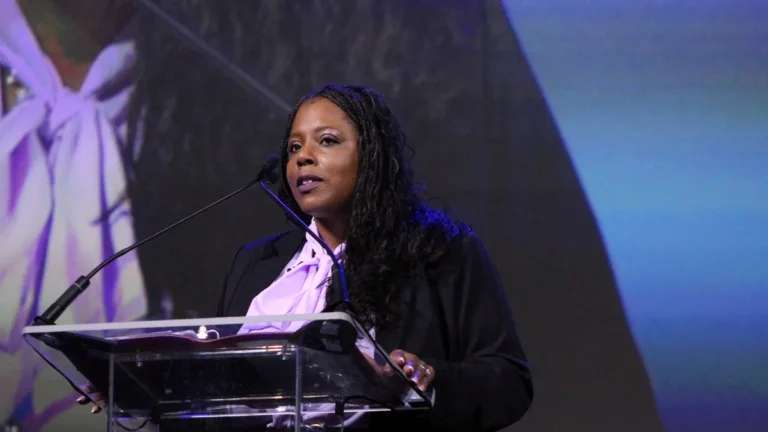
Seema Verma, executive vice president and general manager at Oracle Health and Life Sciences, emphasized the importance of this shift during Monday’s announcement.
"Nurses are the heart of patient care, yet too much of their day is spent on manual repetitive work, searching for information, documenting care, and coordinating across the care team," Verma stated. "Our goal is to alleviate that administrative burden, returning time to the bedside where it matters most."
Oracle’s strategy is rooted in the belief that AI should not just be a "tool" but an "agent" capable of autonomous action. By embedding these capabilities directly into the EHR, Oracle is minimizing the "context switching" that often plagues clinical staff—the need to jump between different software platforms or browser tabs to aggregate patient data. Because the system is already part of the existing Oracle infrastructure, health systems currently using the clinical AI agent can activate these nursing features immediately without extensive new procurement or complex integration projects.
Implications for Healthcare Operations
The introduction of AI for nurses carries profound implications for the future of hospital operations and the clinical workforce.
1. The Death of the "Administrative Burden"
For decades, the rise of the EHR has been blamed for the rise of "burnout." By automating the synthesis of patient charts, Oracle is attempting to turn the EHR from a data-entry repository into a proactive assistant. If a nurse can use voice commands to instantly retrieve a summary of a patient’s last 24 hours of care, the time spent in front of a computer screen could drop significantly, potentially improving morale and reducing turnover.
2. A Shift in Patient Safety
Automated documentation carries risks, but it also carries the potential for increased safety. When human fatigue is high—such as during the final hours of a 12-hour shift—manual documentation errors are more likely. AI-generated summaries, provided they are reviewed and validated by the clinician, offer a standardized, comprehensive overview that can catch inconsistencies in a patient’s chart that a tired human might overlook.
3. Broadening the AI Portfolio
Oracle’s move to support nurses is part of a wider, aggressive expansion of its health-tech ecosystem. Over the past 18 months, the company has:

- Launched an AI-backed EHR: Specifically designed for ambulatory providers, with a planned rollout for the acute care market later this year.
- Unveiled an AI-powered Patient Portal: Moving AI influence beyond the clinical staff and into the hands of the patients themselves, allowing for better engagement and communication.
These initiatives indicate that Oracle is betting heavily on the "Platformization of AI"—the idea that AI shouldn’t be a collection of disconnected apps, but a core layer of the operating system that runs the entire healthcare enterprise.
The Road Ahead: Challenges and Considerations
While the potential benefits are clear, the industry must remain vigilant regarding the risks of clinical AI. The reliance on AI to summarize charts requires robust guardrails to ensure accuracy and prevent "hallucinations" or the omission of critical clinical details.
Furthermore, the adoption of these tools among nurses will depend heavily on the cultural implementation within hospitals. As research shows, nurses have been historically sidelined in tech-adoption discussions. For this tool to be successful, hospital administrators must ensure that nurses are not just recipients of the technology, but active participants in the refinement and training of these models.
As health systems experiment with similar ambient AI solutions—such as those being piloted at institutions like Mount Sinai—the data will soon reveal whether these tools actually reduce documentation time or simply shift the burden to "verifying" AI-generated work.
In conclusion, Oracle’s decision to extend its clinical AI agent to nurses is a significant milestone in the digitalization of healthcare. It represents an acknowledgement that the "AI revolution" in medicine cannot be limited to the diagnostic and decision-making roles of physicians; it must fundamentally address the operational and administrative realities of the entire care team. If successful, this integration may finally begin to unlock the promise of EHRs, turning them from sources of clinician frustration into engines of clinical efficiency.