For decades, the pulse oximeter has been a cornerstone of clinical medicine. From intensive care units to routine physicals, this simple device—usually clipped onto a fingertip—has provided clinicians with a quick, non-invasive snapshot of a patient’s blood oxygen saturation levels. However, beneath the surface of this medical staple lies a systemic issue that has increasingly come under scrutiny: traditional pulse oximeters often fail to perform accurately on patients with darker skin tones.
Now, a team of researchers at Tufts University has unveiled a breakthrough prototype, dubbed "ChromaSense," which promises to rectify this longstanding bias through advanced adaptive technology. By automatically reading and adjusting to an individual’s unique skin pigmentation, the device ensures that vital sign measurements—including pulse, respiration, and oxygen saturation—are accurate regardless of race, age, or skin tone.
The Core Problem: Why Conventional Oximetry Fails
The traditional pulse oximeter operates on a principle known as spectrophotometry. It emits red and infrared light through a patient’s tissue, measuring how much of that light is absorbed by oxygenated and deoxygenated hemoglobin.
The fundamental flaw in this system, according to medical researchers, lies in its reliance on a "one-size-fits-all" approach to light absorption. Variations in skin pigmentation, blood flow, and the physical properties of aging skin can significantly alter the optical path. Melanin, the pigment responsible for darker skin tones, absorbs and scatters light differently than lighter skin. In conventional devices, this interference can weaken the signal or distort the crucial ratios used to calculate oxygen saturation.
When these devices were first designed, clinical trials often lacked sufficient demographic diversity, meaning the algorithms were calibrated primarily for lighter skin. As a result, when a patient with darker skin uses a standard oximeter, the device may report a "healthy" oxygen level when the patient is actually suffering from dangerous levels of hypoxia. This systemic bias has been linked to delayed treatments and poorer health outcomes for minority populations.
ChromaSense: A New Paradigm in Wearable Diagnostics
Developed by a team at Tufts University led by Valencia Koomson, PhD, an associate professor of electrical and computer engineering, ChromaSense represents a significant pivot from the traditional "transmission" model of pulse oximetry.
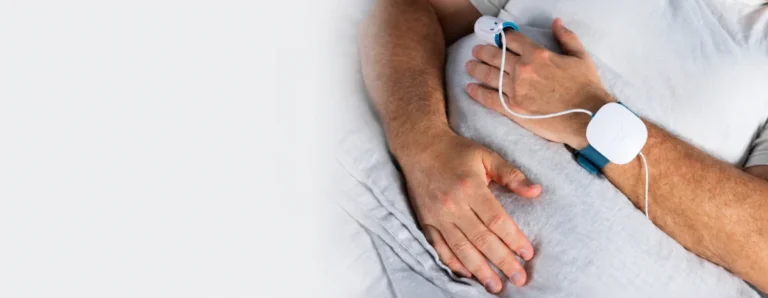
Unlike the standard finger-clip device, ChromaSense is a watch-sized wearable worn on the wrist. Rather than attempting to pass light through the digit, it utilizes reflectance technology. The device actively probes the user’s skin, measuring their specific reflectance profile before the primary reading begins. Once the device understands the user’s unique physiological "signature," it dynamically adjusts both the intensity of the emitted light and the signal-processing parameters.
This calibration happens in real-time, effectively "tuning" the device to the user. By accounting for the specific scattering and absorption properties of the individual’s skin, ChromaSense removes the guesswork that has plagued previous generations of wearable monitors.
Chronology of Development and Validation
The journey to the current prototype involved years of rigorous testing and interdisciplinary collaboration.
- Early Conceptualization: The project began with the identification of persistent bias in existing pulse oximetry datasets. The team recognized that machine-learning models, if trained on homogenous datasets, would inevitably produce biased outputs.
- Prototype Design: The engineering team at Tufts shifted focus from transmission-based finger sensors to reflection-based wrist sensors, integrating custom hardware capable of adjusting light emission intensity.
- The UCSF Clinical Trial: The pivotal validation occurred at the Hypoxia Research Laboratory at the University of California, San Francisco. In a controlled environment, researchers induced temporary, mild hypoxia in a diverse cohort of volunteers—including Black, Asian, Hispanic, White, and multiethnic participants—to see how the device handled oxygen saturation levels ranging from 70% to 100%.
- Performance Benchmarking: The results were compelling. ChromaSense demonstrated an accuracy within 2.87% of a "gold standard" arterial blood gas monitor (a device that draws blood directly from an artery for perfect accuracy). Crucially, this performance met stringent FDA accuracy requirements and, unlike its predecessors, showed no observable bias based on the participant’s skin tone.
The Role of Photoplethysmography (PPG)
At the heart of the ChromaSense system is photoplethysmography (PPG). This technique tracks the pulse-by-pulse waveform of blood volume in the microvasculature of the skin. While standard smartwatches use basic PPG for heart rate, the Tufts team has refined the signal processing to extract more granular information.
By measuring the pulsing waveform, the device can derive not just heart rate, but respiration and blood oxygenation levels. The challenge, which Koomson and her colleagues have addressed, is that the raw PPG signal is highly susceptible to "noise"—that is, the interference caused by skin pigments. By using machine learning to parse the signal and distinguish between blood flow and the background noise of skin pigmentation, the team has turned a noisy, unreliable signal into a high-fidelity diagnostic tool.
Official Perspectives: The Ethics of Algorithmic Data
The development of ChromaSense is not merely an engineering achievement; it is a response to a growing ethical crisis in medical technology. Valencia Koomson has been a vocal advocate for "demographic transparency" in health technology.
"If you train a model that converts light signals to blood oxygen, pulse, or pressure and you don’t ensure that the dataset that you’re training with is diverse enough in terms of age, race, and gender, it can affect the performance or accuracy of the model," Koomson explained in a press release. "An apparently high-performing model can look far less impressive once broken down into specific groups."
Koomson’s sentiment echoes a broader movement within the biomedical engineering community to audit existing algorithms for racial bias. Her team’s work underscores that technical accuracy is inextricably linked to social equity. If a device fails for a specific sub-group of the population, it is, by definition, a failed device.
Implications for the Future: Blood Pressure and Beyond
The current iteration of ChromaSense is a leap forward for oxygen monitoring, but the Tufts team is already looking toward the horizon. They are actively researching the integration of blood pressure monitoring into the same wearable platform.
By applying machine-learning models to analyze the morphology of PPG waveforms, the researchers have already successfully estimated systolic and diastolic blood pressure in retrospective studies. Using data from 2,315 adult patients in intensive care units, the team reported an accuracy rate of up to 90%.
"The blood-pressure work is not yet built into ChromaSense," Koomson noted, "but the goal is in the future to embed that machine learning model into the device."
The implications of this are vast. If a single, wrist-worn device could accurately monitor oxygen, heart rate, respiration, and blood pressure across all demographic groups, it would fundamentally change the landscape of remote patient monitoring. Such a device could provide clinicians with continuous, accurate data on chronic conditions like hypertension or COPD, allowing for proactive interventions rather than reactive emergency care.
A New Standard for Medical Devices
The success of the Tufts prototype serves as a blueprint for the next generation of medical hardware. The industry is currently at an inflection point where the inclusion of diverse data is no longer a "nice-to-have" feature but a regulatory and ethical necessity.
As ChromaSense moves toward further development and potential commercialization, the medical community will be watching closely. If this technology can successfully transition from the lab to the clinic, it will mark a significant milestone in the fight against healthcare disparities. It proves that with thoughtful engineering and a commitment to diverse data, the digital divide in medicine can be bridged, ensuring that the promise of wearable technology is accessible to everyone, regardless of the color of their skin.
Ultimately, the ChromaSense project reminds us that clinical diagnostics are only as objective as the data they are built upon. By addressing the physical properties of skin tone at the hardware level, Tufts researchers have provided a path forward for a more inclusive and equitable medical future.