In the evolving landscape of oncology, few challenges are as persistent as the treatment of aggressive, virus-associated malignancies. Among these, lymphomas linked to the Epstein-Barr virus (EBV) present a formidable clinical hurdle. While immunotherapy has revolutionized cancer care, many EBV-related lymphomas remain elusive, characterized by a lack of the specific viral markers necessary to trigger immune-based interventions.
Enter Dr. Herman Van Besien, an MD and the current Oliver W. Press, MD, PhD Memorial Fellow at Weill Medical College of Cornell University. Dr. Van Besien’s pioneering research seeks to fundamentally alter the way we interact with these cancer cells, moving toward a future where "reactivation" of viral signatures could turn once-resistant cancers into manageable—and perhaps curable—conditions.
The Clinical Challenge: Why EBV-Related Lymphomas Persist
To understand the significance of Dr. Van Besien’s work, one must first understand the biological mechanism of the Epstein-Barr virus in the context of malignancy. EBV is a common human virus, but in certain contexts, it can drive the transformation of B-cells into aggressive lymphoma.
Current gold-standard therapies, including CAR-T cell therapy and other checkpoint inhibitors, rely heavily on the immune system’s ability to "see" the tumor. In many EBV-positive lymphomas, the virus undergoes a form of latency where it minimizes its protein expression. By remaining "stealthy," the cancer cells evade the immune system’s detection.
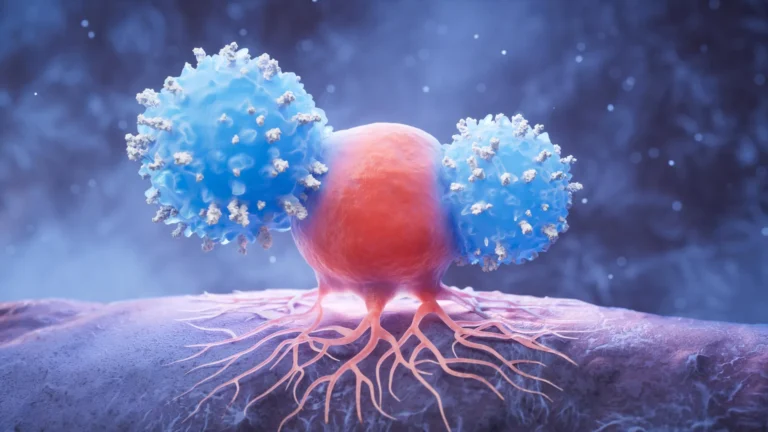
"Many EBV-related lymphomas do not express enough viral markers for immune-based therapies, which are currently one of the most effective treatment options," explains Dr. Van Besien. His research project is built on a bold hypothesis: if we can force these lymphoma cells to "reveal" their viral signatures, we can effectively tag them for destruction by the immune system.
A Legacy of Compassion: The Path to Physician-Scientist
Dr. Van Besien’s trajectory toward medical excellence is not merely an academic pursuit; it is a legacy. As a second-generation hematologist-oncologist, his childhood was defined by the observational lessons learned from his parents.
"I was inspired to pursue a medical career after witnessing my parents’ never-ending compassion for their patients," he reflects. This early exposure to the human side of medicine fostered an environment where scientific inquiry was deeply intertwined with patient care.
His transition into research was accelerated during his medical school and residency years, a period he describes as the "golden age" of immunotherapy. As he observed immunotherapy cementing itself as the fourth pillar of cancer treatment—joining surgery, chemotherapy, and radiation—Dr. Van Besien found his calling. He became particularly fascinated by adoptive T-cell therapy, a field that utilizes the patient’s own immune cells, modified or selected to target specific antigens. "My project on EBV-directed T-cell therapy marries my twin passions for cellular therapy and lymphoma," he notes.
Research Methodology: Reactivating the Viral Signature
The core of Dr. Van Besien’s current project involves a sophisticated methodology designed to bridge the gap between laboratory discovery and clinical application. His work focuses on the pharmacological "reactivation" of viral markers.
By utilizing specific compounds, Dr. Van Besien aims to induce the expression of viral proteins that are usually suppressed. Once these proteins are forced to the surface of the lymphoma cell, they act as beacons for the immune system. In the laboratory, his team is observing the interactions between these newly "visible" lymphoma cells and specialized T-cells designed to recognize those specific viral proteins.
The Potential Impact on Treatment
The implications of this research are twofold:
- Expanding Eligibility: By increasing the number of detectable markers, a larger cohort of patients who were previously ineligible for immunotherapy could suddenly qualify for life-saving treatments.
- De-escalating Toxicity: Conventional chemotherapy is notoriously toxic, often causing significant long-term side effects. By shifting the burden of treatment to the immune system, Dr. Van Besien hopes to reduce the reliance on harsh chemical agents, thereby improving the quality of life for survivors.
Chronology of Progress: From Mentorship to Innovation
Dr. Van Besien’s career has been supported by a structured approach to professional development, notably through the Lymphoma Scientific Research Mentoring Program (SRMP). This program served as a crucible for his ideas, allowing him to refine his research objectives under the guidance of senior leaders in the field.
- Foundation Phase: Initial training in hematology-oncology, focusing on the interface of immunology and clinical practice.
- Mentorship Phase: Engagement with the Lymphoma Scientific Research Mentoring Program, which solidified his commitment to the specific niche of EBV-related pathologies.
- Current Phase (Fellowship): Serving as the Oliver W. Press, MD, PhD Memorial Fellow, where he is currently executing his hypothesis-driven research at Weill Medical College.
- Future Outlook: The translation of lab-based findings into clinical trial protocols, focusing on combinatorial therapies that leverage both viral reactivation and cellular immune modulation.
Supporting Data and the Future of Cellular Therapy
While the research is in its active stages, the preliminary data regarding EBV-directed T-cell therapies suggests a high level of efficacy in controlled environments. The success of these therapies often hinges on the density of targetable antigens.
The scientific community has long theorized that if antigen density could be controlled, the T-cell response would be far more robust. Dr. Van Besien’s work provides the mechanism for that control. By turning the "volume" up on viral protein expression, he is effectively providing the T-cells with a brighter target, significantly increasing the probability of a complete remission.
Official Perspective: The Physician-Scientist’s Vision
When asked about the challenges of the physician-scientist path, Dr. Van Besien remains characteristically humble. He acknowledges the difficulty of balancing the rigorous demands of clinical work with the unpredictable nature of laboratory research.
"I feel very fortunate to have the continued support of the Foundation, and this support inspires me to continue along the challenging path of a physician-scientist," he says. He views his work not just as a project, but as a commitment to the patients who are currently facing limited options.
His vision for the future is clear: "I continue to be inspired by the clever and creative ways that we are using the immune system to fight lymphoma. I am confident that we will continue to refine these therapies in ways that will eventually lead to a cure."
Implications: A New Horizon for Oncology
The work being conducted at Weill Medical College represents a critical shift in oncology. We are moving away from "one-size-fits-all" chemotherapy and toward a bespoke, biological approach that treats the tumor based on its specific viral and genetic vulnerabilities.
If Dr. Van Besien’s research successfully moves from the laboratory bench to the bedside, the standard of care for EBV-associated lymphomas could undergo a total transformation. By turning off the cancer’s ability to "hide" and turning on the body’s ability to "see," Dr. Van Besien is contributing to a future where lymphoma is no longer defined by the severity of its treatment, but by the precision of its cure.
As the scientific community watches this project unfold, the focus remains on the synergy between innovation and empathy—a combination that defines the best of modern medicine. Dr. Van Besien’s career stands as a testament to the fact that while the challenges of cancer are great, the ingenuity of the clinicians fighting it is greater.