For many, the push-up is the gold standard of upper-body fitness. It is a fundamental movement pattern that tests the chest, shoulders, triceps, and core simultaneously. However, as we cross the threshold into our 60s and beyond, the realities of joint health, wrist mobility, and recovery capacity often demand a more strategic approach. While push-ups are effective, they can be unforgiving on the joints if not performed with perfect form.
As a Certified Strength and Conditioning Specialist (CSCS), I have found that the most effective way to build "real-world" strength after 60 isn’t by forcing complex movements, but by optimizing simple ones. By utilizing a sturdy chair, we can create a controlled environment that allows for safer, more effective muscle recruitment. This article explores a four-part training protocol designed to enhance your pressing and pulling power, ensuring your upper body remains capable, resilient, and pain-free.
The Philosophy of Controlled Strength
Upper-body training after 60 is not about how much weight you can move, but how much control you can maintain through a full range of motion. Traditional floor-based exercises often introduce variables—like balancing on the palms or stabilizing the entire body weight—that can detract from the primary goal: muscle hypertrophy and endurance.
Using a chair provides a stable base, allowing you to isolate specific muscle groups without the risk of losing your balance or overextending your joints. By shifting the focus to these "chair-anchored" movements, we can ensure that every repetition contributes to functional strength—the kind that makes carrying groceries, reaching for high shelves, or pushing yourself out of a seat feel effortless.
The Four Pillars of Chair-Based Training
To create a balanced physique, we must look beyond just "pushing." A well-rounded program must address both the anterior (front) and posterior (back) chains. The following exercises pair pressing movements with pulling work to ensure your shoulders remain healthy and your posture stays upright.
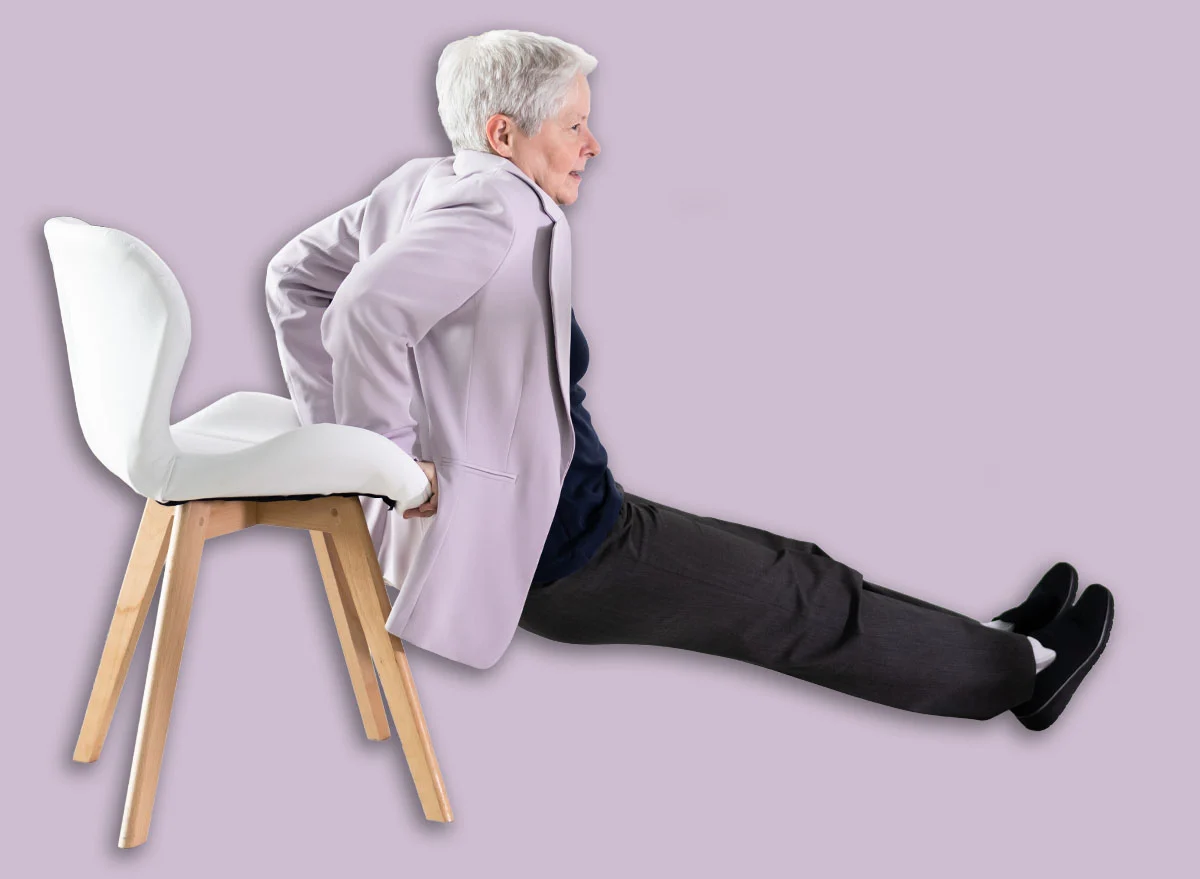
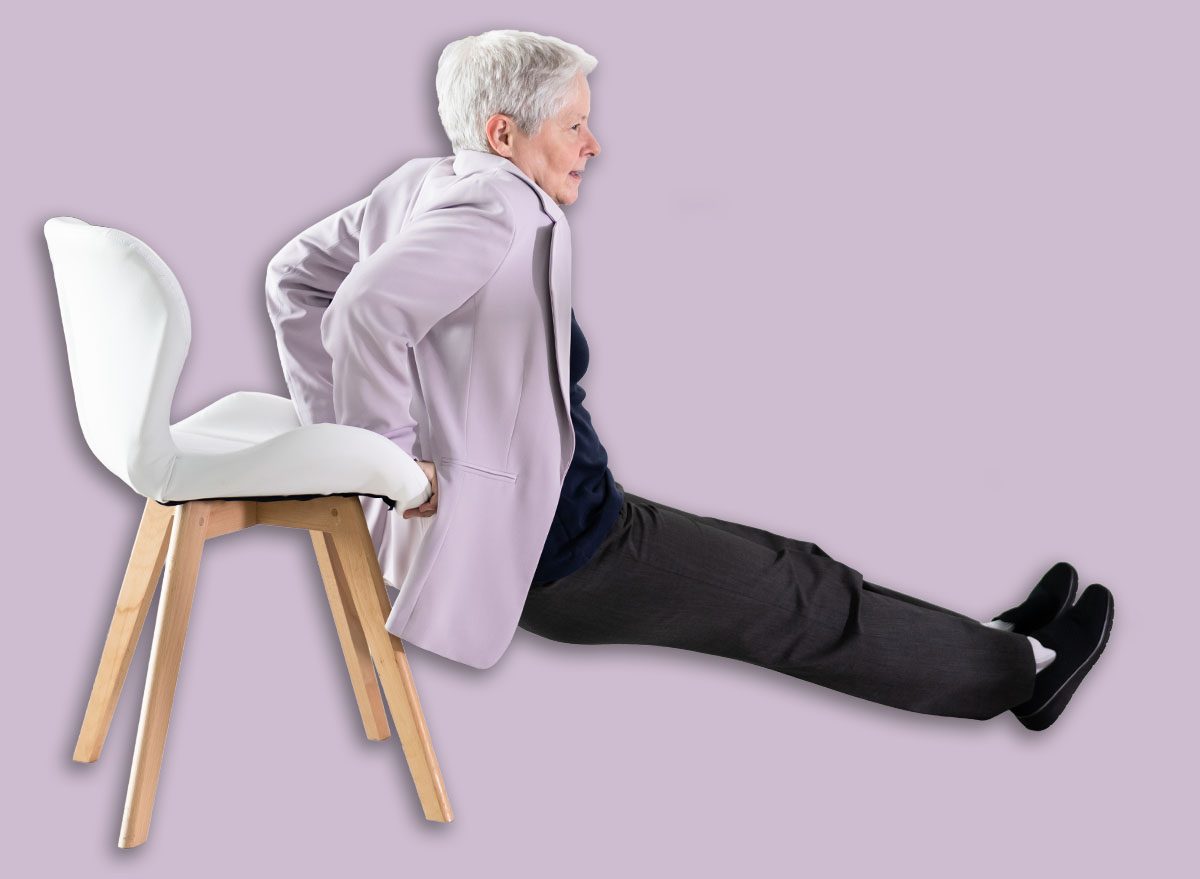
1. Chair Dips: Building Pushing Power
The chair dip is an essential exercise for maintaining independence. It directly mimics the motion required to push yourself up from a couch, a deep chair, or even a bathtub edge.
The Mechanics:
- Target: Triceps, anterior deltoids, and pectoral muscles.
- The Execution: Sit on the edge of a sturdy chair, placing your hands alongside your hips. Scoot forward until your glutes are off the seat, supporting your weight with your arms. Slowly lower your body by bending the elbows, keeping them pointed directly behind you. Push back up to the starting position.
- Pro-Tip: If your shoulders feel compromised, shorten the range of motion. A smaller, controlled dip is infinitely more beneficial than a deep one that causes joint impingement.
2. Seated Shoulder Press: Stability and Confidence
Overhead strength often declines with age due to a loss of mobility and fear of instability. By performing a shoulder press from a seated position, you remove the need to stabilize your core against gravity, allowing you to focus entirely on the vertical pressing pattern.
The Mechanics:
- Target: Deltoids, triceps, and upper back.
- The Execution: Sit upright with your feet planted firmly. Hold light dumbbells at shoulder height. Press them upward until your arms are nearly straight, ensuring your ribs stay "stacked" (not flared out). Return to the starting position with a slow, controlled tempo.
- Pro-Tip: If you struggle with coordination, try a single-arm press. This forces your core to engage to prevent you from leaning to one side, adding a layer of functional stability.
3. Seated Band Row: The Foundation of Posture
We spend a significant portion of our day in a hunched position—reading, typing, or driving. This leads to "forward shoulder" posture. The seated band row is the antidote, strengthening the muscles that pull your shoulder blades back and down.
The Mechanics:
- Target: Lats, rhomboids, rear delts, and biceps.
- The Execution: Sit with your legs extended, looping a resistance band around your feet. Grip the band firmly, sitting tall. Pull your elbows back past your torso, focusing on squeezing your shoulder blades together. Pause at the peak of the movement, then slowly release.
- Pro-Tip: Think of your hands as mere hooks. Do not "yank" with your wrists; the power should come from the contraction of your mid-back muscles.
4. Seated Band Pull-Apart: Shoulder Longevity
The rotator cuff is the unsung hero of the upper body. The band pull-apart is a classic physical therapy movement that, when integrated into a strength routine, promotes long-term shoulder health.
The Mechanics:
- Target: Posterior deltoids, rotator cuff, and upper traps.
- The Execution: Hold a light resistance band in front of you with straight arms. Maintaining a slight tension, pull the band apart until it touches your chest. Focus on moving from the shoulders rather than the wrists.
- Pro-Tip: If your shoulders begin to shrug toward your ears, the resistance is too high. Choose a lighter band; the goal here is precision, not exhaustion.
Chronology of Progress: How to Implement the Plan
Building strength is a marathon, not a sprint. To see results without risking injury, follow this recommended structure:
- Weeks 1–2 (Foundation): Focus solely on form. Use the lightest resistance possible. Ensure you can perform every rep with a steady 2-second count on the way down and a 1-second pause at the peak.
- Weeks 3–6 (Consistency): Introduce a second set for each exercise. Your goal is to reach the higher end of the recommended rep ranges (e.g., 15 reps for rows) with perfect form.
- Weeks 7+ (Progressive Overload): If the movements feel easy, you have two choices: increase the weight (or resistance band tension) or increase the volume by adding a third set.
Supporting Data and Clinical Context
Research consistently shows that after the age of 60, skeletal muscle mass declines at a rate of 3–8% per decade. This condition, known as sarcopenia, is the primary driver of frailty in older adults. However, studies published in journals such as The Journals of Gerontology indicate that progressive resistance training can reverse these markers of aging, even in sedentary populations.
By choosing movements that are safe to perform at home—such as the chair-based exercises outlined here—individuals are significantly more likely to adhere to a long-term training schedule. Consistency is the primary variable that dictates physiological change. When you remove the barriers to entry (the need for a gym, complex equipment, or high-impact stress), you lower the threshold for success.
Official Recommendations and Safety Implications
Before embarking on any new exercise program, it is vital to consult with a primary care physician or a physical therapist, especially if you have a history of rotator cuff tears, chronic neck pain, or severe osteoarthritis.
Key Safety Guidelines:
- Warm-up: Never start "cold." Spend 5 minutes performing light arm circles and marching in place to increase blood flow to the joints.
- Listen to the "Good" Pain: Muscle soreness is expected; sharp, shooting, or radiating joint pain is a red flag. If an exercise causes joint pain, stop immediately and assess your range of motion.
- Breathing: Avoid the "Valsalva maneuver" (holding your breath while lifting). Exhale during the exertion (the "push" or "pull") and inhale during the release.
Implications for Long-Term Health
The implications of maintaining upper-body strength extend far beyond aesthetics. A strong back and shoulder girdle provide the stability required to prevent falls, as they assist in your ability to recover your balance should you stumble. Furthermore, the engagement of the core and back muscles during these exercises improves spinal alignment, reducing the risk of chronic lower back pain.
By dedicating just 20 to 30 minutes, three to four days a week, to this routine, you are doing more than just building muscle; you are investing in your autonomy. As we age, our ability to perform daily tasks—reaching into a cupboard, lifting a heavy box, or pushing off a chair—becomes the ultimate metric of health. With these four movements, you are providing your body with the tools it needs to remain functional, strong, and independent for years to come.
About the Author: Jarrod Nobbe, MA, CSCS, is a USAW National Coach and Sports Performance Specialist with over 12 years of experience in the fitness industry. He specializes in creating sustainable, science-backed training protocols for aging populations.