







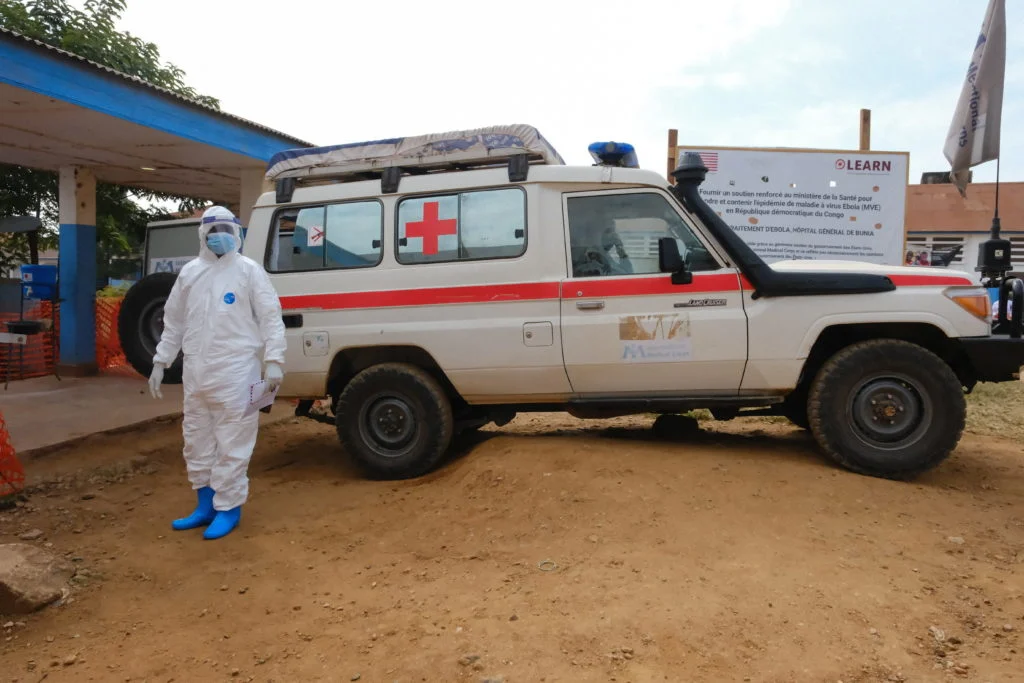
KISANGANI, Congo — In a race against time to contain the most devastating Ebola outbreak in its history, the Democratic Republic of the Congo (DRC) officially launched a massive vaccination campaign this Thursday. As the death toll continues to climb and the virus infiltrates vulnerable regions, health authorities are deploying the Ervebo vaccine as a critical, albeit experimental, shield for frontline workers and high-risk populations.
The rollout, centered in Kisangani—the bustling capital of Tshopo province—represents a desperate attempt to stabilize a healthcare landscape currently fractured by civil unrest, displacement, and systemic resource shortages.
Main Facts: A Virus Out of Control
The current outbreak, which is being driven by the Bundibugyo strain of the Ebola virus, has exhibited a lethal efficiency, claiming thousands of lives across six major provinces: Ituri, North Kivu, South Kivu, Tshopo, Haut-Uele, and Bas-Uele.
According to the latest figures provided by the Congolese government, the nation has documented 5,713 confirmed cases. With 2,744 deaths officially recorded, the case-fatality rate stands at a staggering 48%. These statistics, however, are widely considered conservative by public health experts, who fear that the actual number of infections may be significantly higher due to the difficulties in accessing remote, conflict-ridden areas where the virus thrives.
The World Health Organization (WHO) has issued grim warnings, suggesting that the current trajectory of the epidemic puts it on a path to surpass the 2014-2016 West Africa outbreak. That catastrophe, which devastated Guinea, Liberia, and Sierra Leone, remains the deadliest in the history of the disease, with a death toll exceeding 11,000.
A Chronology of the Crisis
The emergence of this outbreak did not happen in a vacuum. It has been exacerbated by a "perfect storm" of logistical and social challenges.
- Early Detection and Spread: As the virus began to move from rural pockets into more densely populated regions, the Congolese health infrastructure was already struggling under the weight of pre-existing health crises and limited investment.
- The Escalation: Throughout the current calendar year, the virus exploited the chaos of the eastern provinces, where intense population movements—largely due to armed conflict and internal displacement—allowed the pathogen to jump across provincial borders with alarming speed.
- Structural Failures: The crisis was further complicated by a prolonged health workers’ strike. The withdrawal of essential medical personnel from clinics left the population vulnerable and crippled the country’s early-warning systems.
- The Vaccine Arrival: Recognizing the existential threat posed by the outbreak, international partners mobilized. Congo successfully secured 70,000 doses of the Ervebo vaccine, a critical resource that has proven effective in previous outbreaks, though primarily against different strains.
- The Launch: This Thursday, the government initiated the first phase of the immunization campaign, prioritizing the safety of the men and women tasked with managing the outbreak at the clinical level.
Supporting Data and Scientific Challenges
The deployment of the Ervebo vaccine is a complex maneuver because of the specific nature of the current virus. Ervebo is globally recognized and approved for the Zaire ebolavirus. However, this specific Congolese outbreak is caused by the Bundibugyo strain.
The Compassionate-Use Strategy
Because no vaccine has been specifically approved for the Bundibugyo variant, health officials are operating under a "compassionate-use" framework. This allows medical teams to utilize the Ervebo vaccine despite the lack of a formal, targeted authorization for this specific strain.
The rationale is grounded in virology: while distinct, the Zaire and Bundibugyo viruses are genetically related. There is a scientific hypothesis that the vaccine may provide "cross-protection"—a degree of immunity that could be enough to save lives or mitigate the severity of illness.
Distribution Breakdown
The 70,000 doses currently held by the DRC are earmarked for two distinct, yet equally important, objectives:
- Frontline Protection: Approximately 50,000 doses are being distributed to healthcare providers, laboratory technicians, and burial teams—those most exposed to infected bodily fluids.
- Clinical Research: The remaining 20,000 doses are being funneled into a formal clinical trial. This study will be the first of its kind, designed to generate real-world data on whether the Ervebo vaccine offers measurable protection against the Bundibugyo strain.
"We will be collecting robust data throughout this campaign," noted Placide Mbala Kingebeni, Director for Research, Clinical Trials, and Innovation at the Africa CDC. "This is not just a vaccination effort; it is a clinical endeavor to understand if we can adapt existing tools to defeat new viral challenges."
Official Responses: A Call to Arms
Health Minister Roger Kamba has been the face of the government’s response, projecting a tone of urgent pragmatism. During the launch ceremony in Kisangani, he issued a direct appeal to the medical community.
"We have decided to use the Ervebo vaccine to protect, first and foremost, those who are on the front line," Kamba stated. "Our health care providers are the bedrock of this response. By vaccinating them, we not only protect their lives but also ensure that they do not become inadvertent vectors for the virus as they return to their families and communities."
The Minister acknowledged the risks involved but emphasized that inaction was not an option. He has strongly urged all eligible health workers to participate, framing vaccination as both a personal safety imperative and a civic duty.
Implications for Global Health
The situation in the Congo serves as a chilling reminder of how quickly an infectious disease can outpace public health efforts when coupled with regional instability. The implications of this outbreak extend far beyond the borders of the DRC:
1. The Burden of Insecurity
The fact that this outbreak is occurring in areas of active conflict highlights the "security-health nexus." When populations are forced to flee their homes, they often settle in overcrowded, unsanitary camps, which are ideal incubators for the Ebola virus. The inability of humanitarian workers to reach certain zones due to violence remains a significant barrier to eradication.
2. The Future of Vaccine Development
If the clinical trials for the Bundibugyo strain prove successful, it will change the landscape of future outbreak responses. It would demonstrate that existing vaccine platforms can be "repurposed" to fight evolving viral threats, saving precious time that would otherwise be spent developing new vaccines from scratch.
3. The Need for Sustained Support
The Congolese government’s appeal for international aid is not merely for vaccines, but for the fundamental infrastructure required to administer them—cold-chain logistics, trained personnel, and secure transport. The success of this campaign will depend heavily on the sustained commitment of the international community, including the WHO and the Africa CDC.
4. A Test of Trust
Public health officials are also contending with skepticism and fear among local populations. The history of the region and the complexities of the healthcare system have sometimes led to community resistance. The success of the vaccination campaign will therefore hinge on effective community engagement, clear communication, and the visible success of the vaccine in preventing transmission among the initial cohorts.
Looking Ahead
As the campaign moves into its second week, the focus will expand to 14 health zones across Tshopo, Bas-Uele, and Haut-Uele. The progress of the vaccination teams will be monitored with extreme care.
For the people of the Congo, this vaccination effort is a glimmer of hope in a dark chapter. For the global medical community, it is a high-stakes experiment that could redefine the capacity to contain Ebola in an increasingly volatile world. As the death toll approaches the 3,000-mark, the message from Kisangani is clear: the path to safety is narrow, but it is one that must be walked with science, resolve, and a collective commitment to human life.