









For decades, the pharmaceutical industry has looked to the natural world for inspiration, finding in the microscopic realm of bacteria some of the most potent chemical weapons against disease. Among these are the depsipeptides—complex, cyclic molecules that have proven highly effective as anti-cancer agents. Yet, despite knowing that bacteria could churn out multiple, slightly varied versions of these powerful drugs, the underlying biological mechanism remained a frustrating "black box."
A groundbreaking study published in Nature Communications has finally solved this long-standing mystery. Researchers have decoded the communication network that allows bacterial enzymes to coordinate their work, effectively performing a biological "mix and match" of chemical components. This discovery does more than satisfy scientific curiosity; it provides a high-resolution blueprint for synthetic biology, potentially accelerating the development of next-generation cancer therapies that are more potent, more selective, and less toxic.
The Mystery of Combinatorial Biosynthesis
To understand the significance of this discovery, one must look at the concept of combinatorial biosynthesis. In nature, certain bacteria produce secondary metabolites—compounds not strictly necessary for survival but highly useful in competitive environments—by utilizing massive, multi-enzyme assembly lines. These protein complexes, known as Polyketide Synthase (PKS) and Nonribosomal Peptide Synthetase (NRPS) hybrids, function like an automated factory floor.
For years, scientists have attempted to harness these systems to create new drug variants. The goal was to manipulate these "assembly lines" to produce customized molecules that could bypass drug resistance or improve patient outcomes. However, progress was repeatedly stifled by a fundamental lack of understanding regarding how these enzymes communicate. Researchers could see the final products, but they could not discern how the individual "workers" on the molecular line knew when to pass the product to the next station or how they maintained the precision required to assemble complex cyclic structures.
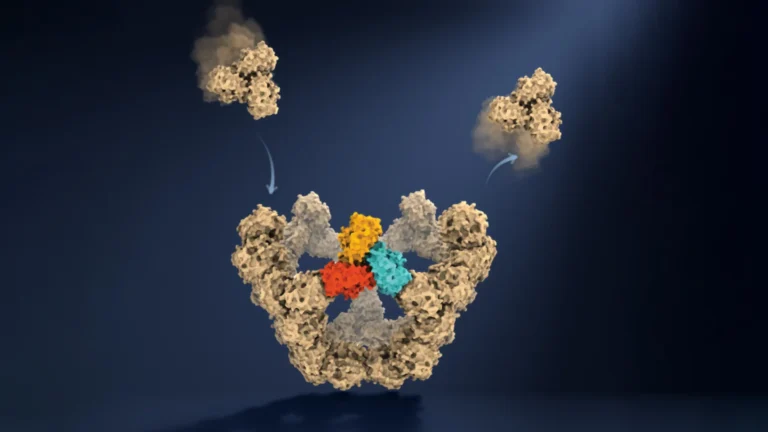
The breakthrough came when a multi-institutional team, led by researchers at the University of Warwick and Monash University, identified the "docking domains"—tiny, conserved molecular regions that act as the connectors between the core building machinery and the specialized enzymes tasked with modifying the drug.
Chronology of a Discovery
The journey to this discovery spanned decades, rooted in the observation of compounds like Romidepsin (Istodax), an FDA-approved HDAC inhibitor used to treat T-cell lymphomas. While Romidepsin was a clinical success, its close chemical relative, FR-901375, remained an enigma. Scientists knew FR-901375 was produced by bacteria, but the specific biological pathway remained elusive.
- The Observational Phase: Early research identified that bacteria were capable of producing "families" of depsipeptides. These compounds were assembled from amino acid building blocks and a conserved hydroxy acid pharmacophore.
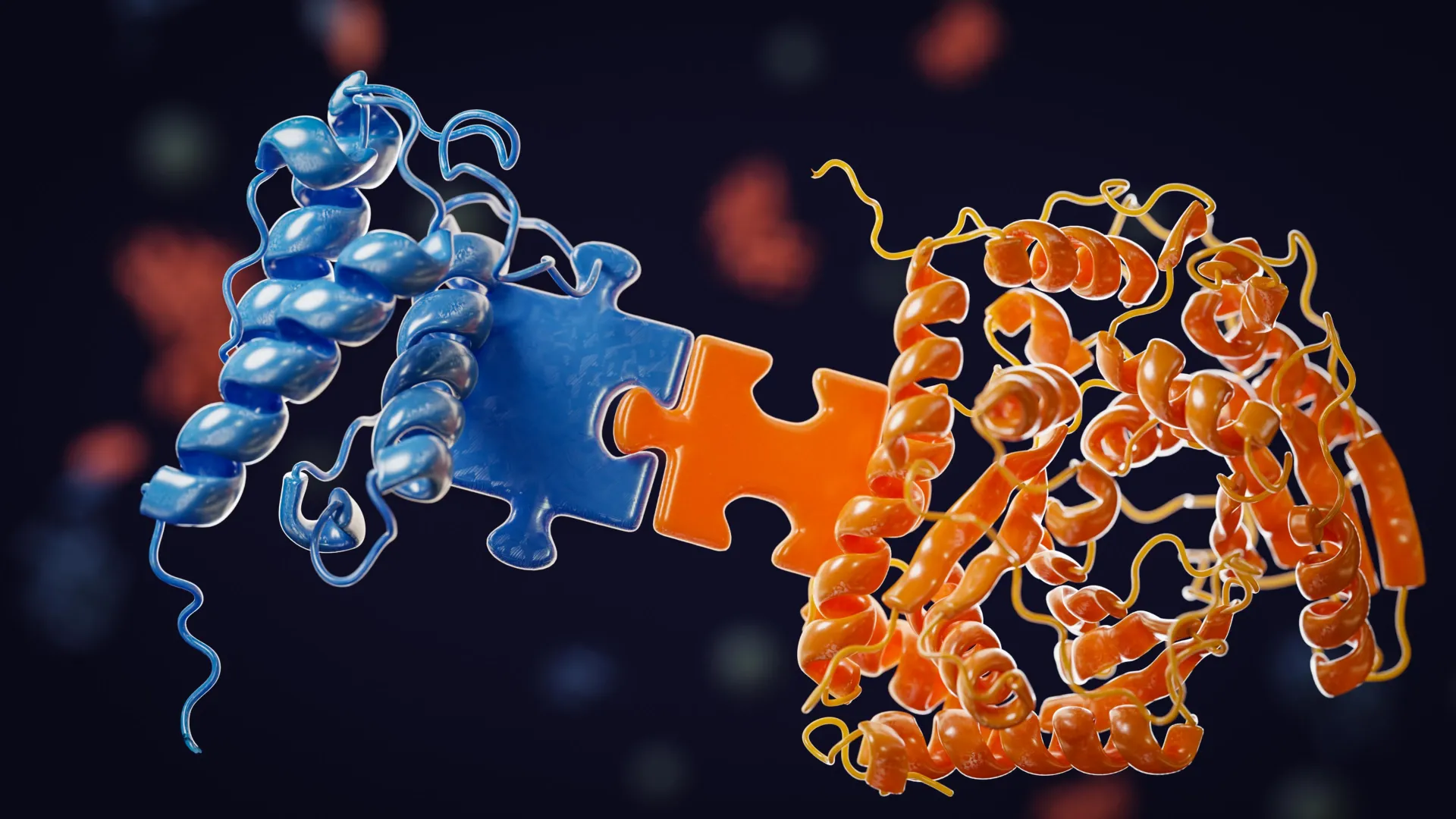
- The Structural Gap: Researchers struggled to explain how these assembly lines could be so flexible yet precise. The "missing piece" was the mechanism of interaction between the PKS-NRPS modules.
- The Integrative Approach: The research team, led by Dr. Munro Passmore, employed an interdisciplinary strategy. By combining structural biology (to visualize the enzymes), biochemistry (to observe the reaction kinetics), genetics (to identify the coding pathways), and computational modeling (to simulate the molecular interactions), the team was finally able to map the communication network.
- The "Aha!" Moment: The team discovered that docking domains act as universal adaptors. These domains share a conserved connection point that allows them to interact with multiple enzyme partners, effectively allowing the bacteria to swap components in and out of the assembly line without shutting down production.
Unlocking the Potential: The Role of HDAC Inhibitors
The study focuses heavily on HDAC inhibitors—a class of medicine that functions by blocking histone deacetylases. These enzymes are critical regulators of gene expression. In many cancer cells, HDACs are overactive, "silencing" genes that would otherwise act as tumor suppressors. By inhibiting these enzymes, researchers can "turn back on" the cell’s natural defenses against malignancy.
Romidepsin, the current gold standard in this class, is effective but chemically complex. The discovery of how bacteria synthesize this molecule—and how they iterate upon it to create variants like FR-901375—is transformative. By identifying the docking domains, the team has effectively mapped the "operating system" of the cell. If scientists can control which "modules" are docked into the assembly line, they can essentially program the bacteria to build bespoke cancer drugs that target specific molecular markers on a patient’s tumor.
Official Perspectives: From Understanding to Engineering
The implications of this discovery are profound, moving the field of drug development from a model of "discovery by screening" to one of "rational design."
Dr. Munro Passmore, the study’s first author, emphasized the elegance of the bacterial system. "For decades, we’ve known that bacteria can naturally produce multiple versions of powerful anti-cancer drugs, yet we had no idea how they achieved this," he stated. "This work finally cracks that code. We’ve identified how the different enzymes communicate and cooperate to produce these drug variants… It’s the breakthrough we needed to actually engineer these drugs ourselves."
Prof. Greg Challis, a key contributor from the Monash Warwick Alliance, views this as a shift in the philosophy of medicinal chemistry. "This research gives us a blueprint to do what nature does, but better and faster," Challis remarked. "By reverse-engineering nature’s evolutionary logic, we can now design synthetic pathways that generate new anti-cancer drug candidates with properties optimized for clinical use, such as superior potency, improved selectivity, and fewer side effects."
Challis noted that the immediate goal is to build an expanded library of candidate molecules. "This discovery is moving us from understanding how the systems work to building new ones," he added.
Implications for Future Cancer Therapies
The ability to manipulate PKS-NRPS hybrids represents a paradigm shift in oncology. Currently, many potent compounds identified in nature are abandoned during development because they are either too toxic to healthy cells or too difficult to synthesize at scale.
1. Precision Medicine
By "re-wiring" the docking domains, researchers could potentially create drugs that are highly selective, binding only to the mutated enzymes present in specific types of cancer cells. This would significantly reduce the side-effect profile, which is a major hurdle in chemotherapy today.
2. Overcoming Drug Resistance
Cancer cells are notoriously adept at developing resistance to standard therapies. By using the "mix and match" strategy revealed by this study, scientists can quickly generate hundreds of slight structural variations of a drug. If a cancer cell evolves to resist one variant, the library of "synthetic relatives" could provide an immediate alternative, effectively keeping the treatment one step ahead of the disease.
3. Sustainable and Scalable Production
Synthetic chemistry is often energy-intensive and produces significant chemical waste. Utilizing the bacteria’s natural machinery to perform the synthesis—essentially using the bacteria as a living chemical factory—could lead to more sustainable, greener pharmaceutical manufacturing processes.
Evolutionary Logic: The Key to Innovation
Perhaps the most fascinating aspect of the study is its insight into evolutionary biology. The researchers concluded that the compound pathway they investigated likely emerged through gene duplication and recombination over vast periods. Nature had effectively been running "experiments" for millions of years, using the docking domains to allow for the slow, iterative evolution of new, more effective compounds.
By reverse-engineering this evolutionary logic, the researchers are effectively fast-tracking the timeline of drug development. Where evolution takes millions of years to iterate, synthetic biology can now achieve similar advancements in a matter of months.
Conclusion: A New Frontier in Oncology
The study by the University of Warwick and Monash University represents a landmark achievement in the interface between structural biology and medicinal chemistry. By solving the riddle of how bacteria manufacture complex cancer drugs, the team has handed the scientific community a powerful new set of tools.
As we move forward, the challenge will be to translate these findings from the petri dish to the clinic. The construction of an "expanded library" of candidates is already underway, and the prospect of creating drugs with superior potency and fewer side effects is no longer a distant hope, but a tangible, near-term possibility. This discovery is a testament to the idea that the secrets to our most complex medical challenges are often hidden within the elegant, economical mechanisms of the simplest organisms on Earth.