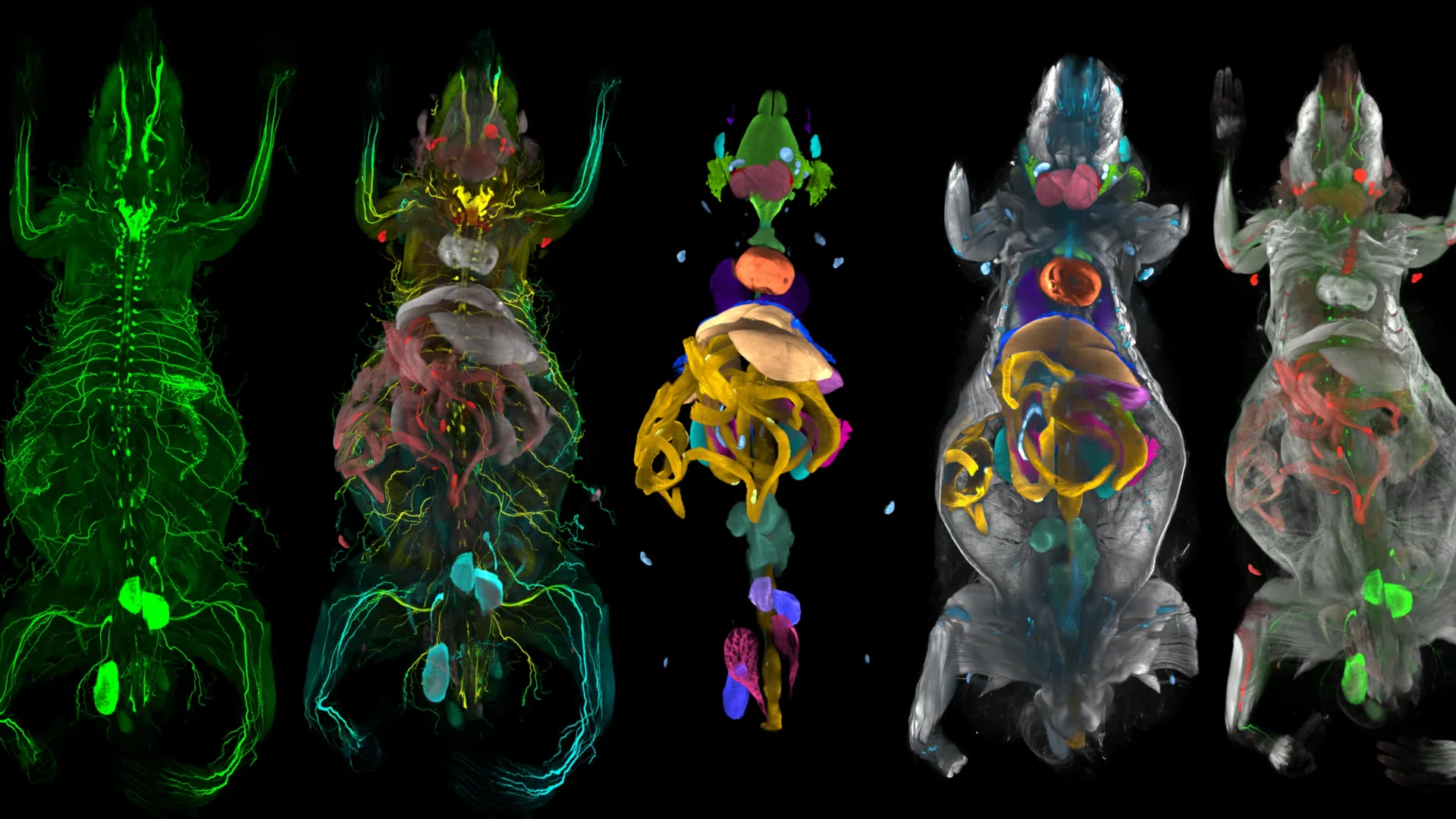
In a landmark advancement for medical science, researchers at Helmholtz Munich, in collaboration with Ludwig Maximilians University Munich (LMU) and an international consortium, have unveiled a sophisticated artificial intelligence platform capable of mapping disease-related physiological changes at cellular-level resolution across an entire mouse body. The platform, dubbed "MouseMapper," represents a paradigm shift in how scientists study systemic illnesses, moving away from traditional "siloed" organ-based research toward a holistic, whole-body perspective.
Using this technology, the research team has successfully uncovered previously unknown links between obesity and widespread nerve damage, a discovery that holds significant implications for human health. The findings, recently published in the prestigious journal Nature, offer a profound new lens through which to view the cascading, systemic damage caused by metabolic disorders.
The Challenge of Complexity: Why Whole-Body Mapping Matters
Obesity is a multifaceted systemic condition that extends far beyond simple weight gain. It acts as a catalyst for immune dysfunction, inflammatory responses, and structural degradation in tissues throughout the body. These systemic changes are primary drivers for a spectrum of chronic illnesses, including type 2 diabetes, cardiovascular disease, stroke, neuropathy, and various forms of cancer.
Historically, medical research has been hindered by the difficulty of studying these complex interactions simultaneously. Scientists have typically been forced to choose specific organs or tissues to analyze in isolation, often missing the broader, interconnected patterns of disease progression. As Prof. Ali Ertürk, Director of the Institute for Biological Intelligence (iBIO) at Helmholtz Munich and Professor at LMU, points out, the human body—and by extension, the mammalian body—is an integrated system. To understand the "why" and "how" of disease, one must be able to observe the body as a whole.
The Technological Breakthrough: How MouseMapper Works
The development of MouseMapper was predicated on the need to overcome the limitations of traditional histology. To build a comprehensive body map, the team utilized a multi-stage process that combines tissue-clearing techniques with advanced light-sheet microscopy and foundation-model-based AI.
The Chronology of Discovery
- Tissue Clearing: Researchers first tagged nerves and immune cells with fluorescent markers. They then employed tissue-clearing methods to render the mouse bodies transparent while preserving these signals, allowing for high-resolution imaging of the deep interior without the need for destructive physical dissection.
- Whole-Body Imaging: Using advanced light-sheet microscopy, the team captured massive, three-dimensional datasets consisting of tens of millions of cellular structures.
- AI Analysis: The MouseMapper AI, powered by deep learning algorithms, autonomously identified and segmented 31 distinct organs and tissue types. It mapped nerve networks and immune cell clusters across the entire organism simultaneously.
According to Ying Chen, co-first author of the study, the strength of the platform lies in its "foundation model" architecture. Unlike specialized algorithms trained for a single task, MouseMapper generalizes beyond its original training data, allowing it to adapt to diverse biological environments and identify patterns that researchers might not have been looking for initially.
Unmasking the Effects of Obesity: The Trigeminal Nerve Connection
To demonstrate the efficacy of the system, the research team placed mice on a high-fat diet to induce obesity and metabolic syndrome, mimicking the conditions of human obesity.
The results were immediate and striking. MouseMapper revealed a systemic reorganization of immune cells and extensive degradation of nerve structures. Perhaps the most significant and surprising finding was the impact on the trigeminal nerve—the primary nerve responsible for facial sensation and motor functions.
In the obese mice, the researchers observed a marked reduction in nerve branches and endings within the facial region. Behavioral testing corroborated these anatomical findings, as the obese mice exhibited significantly lower responsiveness to sensory stimuli compared to their lean counterparts. Further investigation into the trigeminal ganglion—the hub of facial sensory neurons—revealed molecular patterns of inflammation and nerve remodeling.
Bridging the Gap: From Mice to Humans
The clinical relevance of these findings was bolstered by comparing the molecular signatures found in the mice to human tissue. The researchers discovered that the same molecular markers associated with nerve inflammation in the obese mice were present in human trigeminal tissue from obese donors.
"We revealed previously unknown structural and molecular changes in the trigeminal ganglion and its facial branches, and the same molecular signature was conserved in human tissue," says Dr. Doris Kaltenecker, senior scientist at the Institute for Diabetes and Cancer (IDC) at Helmholtz Munich and lead author of the study. This correlation suggests that the neurological degradation observed in the mice is not merely a species-specific quirk, but a fundamental biological response to obesity that may have profound implications for human neurological health.
Implications for Future Medical Discovery
The introduction of MouseMapper changes the trajectory of medical research in several key ways:
1. Moving Beyond "Siloed" Medicine
By providing a platform that views the organism as an interconnected network, MouseMapper allows researchers to identify "disease hotspots" that appear across multiple organ systems simultaneously. This is essential for studying conditions like neurodegenerative disease, autoimmune disorders, and cancer, where the site of origin and the site of systemic impact may be physically distant.
2. The Rise of "Digital Twins"
Prof. Ertürk’s long-term vision for the project is the creation of "digital twins" of mice—high-fidelity, cell-level digital atlases that can be queried and perturbed in silico. This computational approach would allow scientists to simulate disease progression and test potential interventions without the need for constant physical experimentation. Not only does this accelerate the pace of drug discovery, but it also adheres to the principles of the "3Rs" in animal research: Replacement, Reduction, and Refinement.
3. Open Science and Global Collaboration
Recognizing the immense potential of this tool, the research team has made their whole-body datasets publicly available. This open-access approach invites the global scientific community to interrogate the data, fostering a collaborative environment where researchers can uncover further insights into how metabolic stress ripples through the body.
Official Responses and Scientific Consensus
The project has received significant backing from an array of prestigious European and international institutions, underscoring the perceived importance of this technology. Funding bodies such as the European Research Council, the German Research Foundation (DFG), and the Novo Nordisk A/S Programme for Diabetes Research have all invested in the work.
The consensus among the research community is that MouseMapper represents a "holy grail" of sorts for systems biology. By automating the identification of anatomical regions and cellular-level clusters, the platform removes the human bias inherent in choosing specific, pre-defined regions of interest. This "unbiased" scanning approach ensures that novel pathological changes—such as the facial nerve damage identified in this study—are caught, even when they occur in unexpected locations.
Conclusion: A New Era for Biological Mapping
As we move further into the age of AI-driven medicine, tools like MouseMapper will likely become standard in high-impact research. By mapping the body’s hidden blueprint, we are gaining a clearer understanding of how systemic diseases like obesity alter our physical reality at the most granular level.
The discovery of facial nerve damage in obese subjects serves as a poignant reminder that the consequences of metabolic disease are far-reaching and deeply personal. With the ability to visualize these changes in such exquisite detail, scientists are now better equipped than ever to design precise, early-stage interventions. As the team at Helmholtz Munich continues to refine their digital twin models, the potential to not only treat but prevent the systemic destruction caused by chronic disease seems increasingly within our grasp.
The work published in Nature is more than just a successful study; it is a roadmap for the future of biomedical research, promising a future where we can finally see, understand, and mend the body as the complex, interconnected ecosystem that it truly is.