In the ongoing war against cancer, one of the most formidable adversaries is the tumor’s innate ability to adapt. For decades, oncologists have utilized PARP inhibitors—a class of drugs designed to sabotage the DNA repair mechanisms of cancer cells, forcing them to succumb to their own genetic instability. However, many tumors eventually develop "acquired resistance," essentially rebuilding their repair machinery to bypass the blockade and continue their unchecked proliferation.
Now, a groundbreaking study led by researchers at the Institute for Basic Science (IBS) in South Korea, in collaboration with Chungnam National University, has unveiled a sophisticated strategy to strip cancer cells of their defensive armor. By identifying a small molecule capable of destabilizing the very proteins cancer cells rely on to survive, the team has opened a new frontier in the effort to turn drug-resistant tumors back into vulnerable targets.
The Resilience of Malignancy: Why Cancer Survives
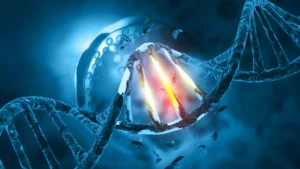
To understand the significance of this discovery, one must first look at the mechanics of DNA repair. Healthy cells and cancer cells alike face constant genetic damage from environmental stressors, metabolic byproducts, and replication errors. To manage this, cells employ a highly accurate repair system known as "homologous recombination."
This process acts as a biological "undo" button, utilizing proteins such as RAD51 and CHK1 to patch up double-strand breaks in DNA. PARP inhibitors work by preventing cells from fixing single-strand DNA breaks; when these breaks accumulate, they transform into lethal double-strand breaks. In a healthy scenario, the cancer cell’s repair systems would be overwhelmed, leading to cell death (apoptosis).
The clinical problem arises when tumors evolve. Through secondary mutations or metabolic shifts, resistant cancer cells manage to upregulate their repair proteins, effectively "fixing" the repair pathway that the PARP inhibitors were meant to disable. This restored resilience has long been a "glass ceiling" in cancer therapeutics.
The Strategy: Destabilizing the Machinery
Rather than chasing the shifting landscape of genetic mutations—a game of "whack-a-mole" that cancer often wins—the research team, directed by Kyungjae Myung of the IBS Center for Genomic Integrity, pivoted to a different tactic: protein homeostasis.
Every cell maintains a precarious balance of protein production and destruction. The team hypothesized that if they could force the cell to destroy its own repair proteins, the cancer would lose its ability to mend its DNA, regardless of its genetic profile.
Using a high-throughput cell-based screening system designed to identify regulators of replication stress, the researchers identified a potent small molecule dubbed UNI418. Upon exposure to this compound, the levels of RAD51 and CHK1 in cancer cells plummeted. The cells were suddenly stripped of their defensive capability, rendered unable to cope with the very DNA damage they had previously learned to repair.
Chronology of Discovery: From Screening to Mechanism
The path to identifying UNI418 involved several critical phases of investigation:
- The Screening Phase: Researchers deployed a cell-based assay to monitor how specific molecules influenced the DNA repair response. UNI418 emerged as a standout candidate for its ability to selectively deplete repair proteins.
- Identifying the "Executioner": The team discovered that UNI418 works by activating the Cul4A ubiquitin ligase complex. In cellular biology, the "ubiquitin" system acts as a molecular "kiss of death," tagging specific proteins for degradation by the cell’s internal disposal system, the proteasome.
- Connecting Metabolism to Genetics: The researchers traced the activation of Cul4A back to inositol phosphate metabolism. They found that a molecule called IP6 acts as a brake on the Cul4A complex. UNI418 interferes with this signaling, lowering IP6 levels and effectively releasing the brake. With the brake gone, Cul4A—aided by the adaptor protein WDR5—systematically dismantles the cell’s repair infrastructure.
- In Vivo Validation: Following successful cell-based trials, the team moved to tumor xenograft models. The administration of UNI418, particularly when combined with the PARP inhibitor Olaparib, significantly suppressed tumor growth, even in models specifically engineered to mimic treatment-resistant cancers.
Supporting Data: Resensitizing the Resistant
The data provided in the study, published in Nature Communications, offers compelling evidence for the efficacy of this "destabilization" approach.
In laboratory settings, the researchers observed a synergistic effect between UNI418 and PARP inhibitors. While PARP inhibitors alone failed to stop the growth of resistant cell lines, the addition of UNI418 restored the cells’ sensitivity. Essentially, the combination therapy created a "synthetic lethality"—a condition where the cancer cell is deprived of its last remaining survival pathways.
Furthermore, the research demonstrated that this vulnerability is not merely a transient effect. By attacking the protein stability network, the treatment imposes a metabolic burden that the cancer cell struggles to overcome. Even as the cells attempted to compensate for the loss of RAD51 and CHK1, the constant degradation triggered by the Cul4A complex kept the repair machinery in a state of perpetual collapse.
Official Responses and Perspectives
The implications of this research were underscored by the lead investigators, who view this as a paradigm shift in how we approach oncology.
Director Kyungjae Myung noted the broader impact of the discovery during the project’s summary: "By weakening the DNA repair system, we can re-sensitize tumors that have become resistant to existing therapies. This suggests a new strategy for expanding the effectiveness of PARP inhibitors."
Professor Joo-Yong Lee, co-corresponding author from Chungnam National University, emphasized the novelty of the mechanism: "We identified a mechanism in which key DNA repair proteins are actively degraded inside the cell. This provides a new way to regulate homologous recombination beyond the traditional focus on genetic mutations."
The researchers believe that this discovery provides a blueprint for a new class of "protein-destabilizing" therapies that could be combined with traditional chemotherapy or targeted agents to prevent the onset of resistance before it even begins.
Implications for Future Cancer Care
The discovery of the link between IP6 metabolism and genome stability is perhaps the most unexpected finding of the study. It suggests that the metabolic state of a tumor is intrinsically tied to its ability to survive genomic damage. By manipulating this metabolism, clinicians may eventually be able to "prime" a tumor, making it susceptible to therapies that would otherwise be ineffective.
Clinical Potential
- Overcoming PARP Resistance: The most immediate application is in the treatment of cancers such as BRCA-mutated breast and ovarian cancers, where PARP inhibitors are standard but often face resistance.
- Combination Therapy: UNI418 or similar molecules could serve as "sensitizing agents," administered alongside existing treatments to increase efficacy and reduce the need for higher, more toxic doses of primary drugs.
- Targeting the Undruggable: Because this approach targets protein degradation pathways rather than the structural mutations of the proteins themselves, it may be effective against a wider array of tumors, including those that have developed complex, multi-gene resistance profiles.
Challenges Ahead
Despite the promising results, the transition from lab-based discovery to clinical application is significant. UNI418 must undergo rigorous pharmacokinetic and safety testing. Researchers must determine whether targeting the Cul4A complex causes off-target effects in healthy tissues, as protein degradation is a fundamental process in all cells. However, the study suggests that cancer cells, which are often "addicted" to high rates of DNA repair to survive their own replication stress, may be uniquely susceptible to this destabilization compared to healthy, non-replicating cells.
Conclusion: A New Framework for Survival
The research published in Nature Communications represents a shift in focus from the what (the genetic mutation) to the how (the protein machinery). By demonstrating that resistant cancers remain tethered to their DNA repair systems, the IBS team has identified a fatal dependency.
The strategy of dismantling the cell’s repair infrastructure offers a glimmer of hope for patients facing the daunting reality of treatment-resistant disease. As the medical community continues to explore the intersection of metabolic signaling and genome stability, the prospect of turning "untreatable" cancers into manageable conditions feels increasingly within reach. While UNI418 is still in the developmental pipeline, the mechanism it reveals—the active destruction of repair proteins—provides a powerful new weapon in the arsenal against the most resilient of human diseases.