







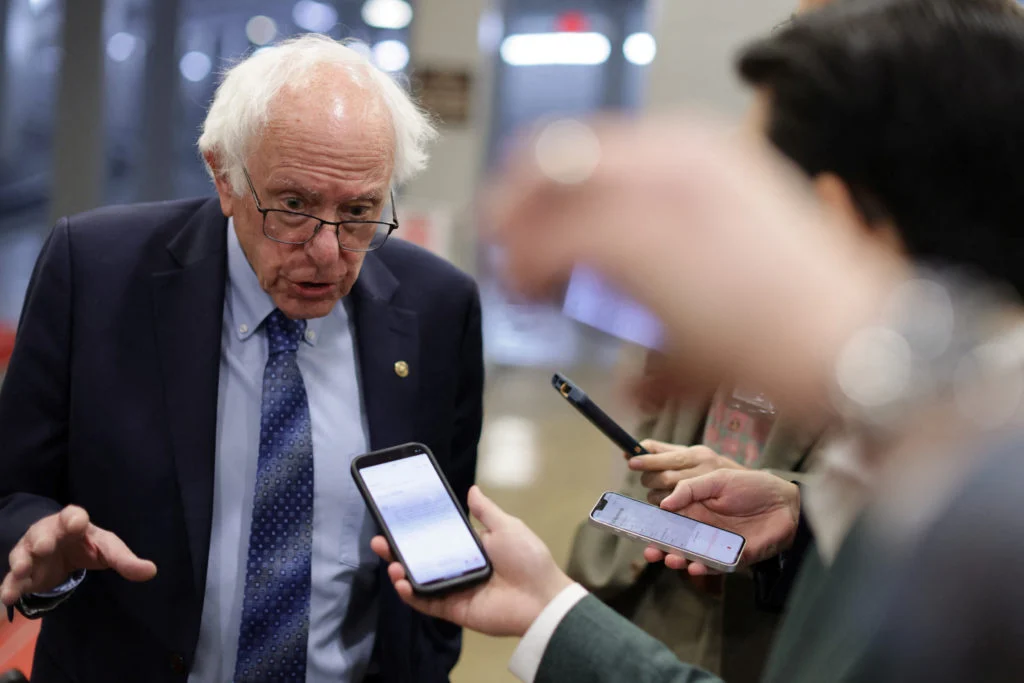
WASHINGTON — As the Senate prepares to transition to Democratic control this January, Senator Bernie Sanders, the Vermont independent who caucuses with the Democratic Party, is poised to assume the chairmanship of the Senate Health, Education, Labor and Pensions (HELP) Committee. In an exclusive preview provided to The Associated Press, Sanders has signaled his intention to use this powerful platform to launch an aggressive, multi-front legislative campaign, challenging the traditional boundaries of American healthcare and labor policy.
Sanders’ proposed agenda represents more than just a policy wish list; it serves as a high-stakes test of the Democratic Party’s ideological trajectory. Following an election cycle that solidified the party’s control of Congress but exposed deep internal divisions regarding the pace and scope of reform, Sanders is betting that the American electorate is ready for a fundamental restructuring of the social safety net.
The "Medicare for All" Roadmap: A Four-Year Transition
At the heart of Sanders’ legislative package is his long-standing ambition for "Medicare for All," a single-payer system that would effectively phase out the majority of private health insurance in favor of a federally administered universal plan. Acknowledging that such a massive systemic transformation—representing nearly 18% of the U.S. Gross Domestic Product—cannot be achieved overnight, Sanders has proposed a structured, four-year implementation timeline.
The Chronology of Coverage
The proposed transition is designed to incrementally lower the eligibility age for Medicare, ensuring a steady expansion of the federal program until universal coverage is achieved:
- Year One: The eligibility age for Medicare would be lowered from 65 to 55. Simultaneously, the program would be expanded to cover dental, vision, and hearing services—benefits currently missing from traditional Medicare. Additionally, the plan mandates guaranteed healthcare coverage for all children through age 18.
- Year Two: The eligibility age would decrease further to 45.
- Year Three: The threshold would drop to 35.
- Year Four: The system would achieve full universality, extending coverage to every American regardless of age.
"This is no longer a utopian vision," Sanders asserted in an interview with the AP. "This is where the American people are. The election was a crying out for fundamental change in the way the government does business and the absolute need to protect a struggling working class."
Economic Realities and the Deficit Debate
While the proposal is popular with the progressive wing of the party, it faces steep hurdles, most notably the nation’s fiscal climate. With the federal deficit currently hovering at approximately $2 trillion—or 6.2% of GDP—critics are already sounding the alarm over the cost of such an expansion.
Data from the Congressional Budget Office (CBO), based on 2022 projections, suggests that lowering the Medicare eligibility age even to 60 would increase the federal deficit by $155 billion over the 2026–2031 period. Sanders, however, maintains that the system would be financed by shifting the burden away from private premiums and onto a combination of payroll contributions, higher tax rates for the ultra-wealthy, and new levies on Wall Street and large corporations.
To bypass the typical 60-vote filibuster threshold in the Senate, Sanders is looking toward the budget reconciliation process. With Democrats holding a 56-44 majority in the new Congress—the party’s strongest position in 16 years—the pathway for passing at least the initial stages of this legislation appears more plausible than at any point in the recent past.
Aligning with Party Leadership
Perhaps the most significant development in the political landscape is the apparent alignment between Sanders’ agenda and that of House Democratic Leader Hakeem Jeffries. Despite the common perception of a rift between the progressive and establishment wings of the party, Jeffries has publicly committed to immediate action on healthcare, specifically promising to restore Affordable Care Act subsidies and reverse Medicaid cuts implemented during the previous administration.
Jeffries’ stated goals—expanding Medicare, adding dental/vision coverage, and covering all children—closely mirror the first year of Sanders’ proposed Medicare for All transition. "Jeffries basically supported the first year of Medicare for All," Sanders noted, viewing this as a sign that the mainstream of the party is moving toward his populist economic vision.
Navigating the Trump Presidency
Perhaps the most provocative element of Sanders’ strategy is his assessment of how to secure the signature of President Donald Trump on these transformative bills. While the political polarization in Washington suggests a total deadlock, Sanders argues that Trump’s populist instincts could override partisan loyalty.
"Donald Trump may be crazy, but he is not stupid," Sanders remarked. "He’s a smart guy, and he’s a very good politician." Sanders believes that if the legislative package is framed correctly as a benefit to the working-class base that helped elect Trump, the President might be incentivized to sign the legislation to solidify his own populist legacy.
Beyond Healthcare: Labor and Technology
Sanders’ vision for the HELP Committee extends well beyond the healthcare sector. He has unveiled an ambitious economic agenda that includes:
Raising the Minimum Wage
Sanders plans to push for a federal minimum wage increase to $20 an hour, up from the current $7.25. This would nearly triple the national floor, which has remained stagnant since 2009. Aware of the pushback from the business lobby, Sanders proposes a four-year phase-in to allow the economy to adjust.
Strengthening Labor Rights
The Senator intends to champion the PRO Act, which would significantly expand the power of labor unions by making it easier for workers to organize and engage in collective bargaining. This is a central component of his effort to reverse decades of wage stagnation for the American working class.
Regulating Artificial Intelligence
In a forward-looking move, Sanders has included strict regulations on Artificial Intelligence. His agenda calls for a moratorium on the construction of new AI data centers, a pause in the development of advanced AI models, and an outright ban on the development of "artificial superintelligence," citing concerns regarding labor displacement and the long-term safety of the technology.
Implications for the Future of Governance
The upcoming term for the Senate HELP Committee is set to be a defining period for the Democratic Party. By pushing for such an expansive agenda, Sanders is forcing a direct confrontation with the economic status quo.
For proponents, this is the long-awaited moment to address systemic inequities in American life—from the high cost of life-saving drugs to the erosion of worker protections. For skeptics, the agenda is seen as an inflationary risk that could exacerbate the national debt and create friction with the private sector.
As the 2028 presidential election looms in the background, the success or failure of Sanders’ legislative initiatives will likely serve as a barometer for the party’s future. Whether Democrats can balance their internal ideological demands with the realities of a divided government will determine not just the fate of the Medicare for All bill, but the broader political identity of the party for the next decade.
Ultimately, Sanders remains undeterred by the immense challenges ahead. Having previously demonstrated a capacity for pragmatic negotiation—such as his work with Republicans on prescription drug pricing during his 2023–2025 HELP committee tenure—he remains a seasoned tactician. However, this time, his objectives are grander. Whether the political landscape of 2025 is as receptive to his "fundamental change" as he believes remains the central question of the incoming Congress.