










For the estimated 30 million Americans living with obstructive sleep apnea (OSA), the necessity of Continuous Positive Airway Pressure (CPAP) therapy is not merely a lifestyle preference—it is a critical medical requirement. Yet, for years, the CPAP community has been underserved by the portable power market, often forced to rely on bulky, inefficient, or unreliable generic camping batteries.
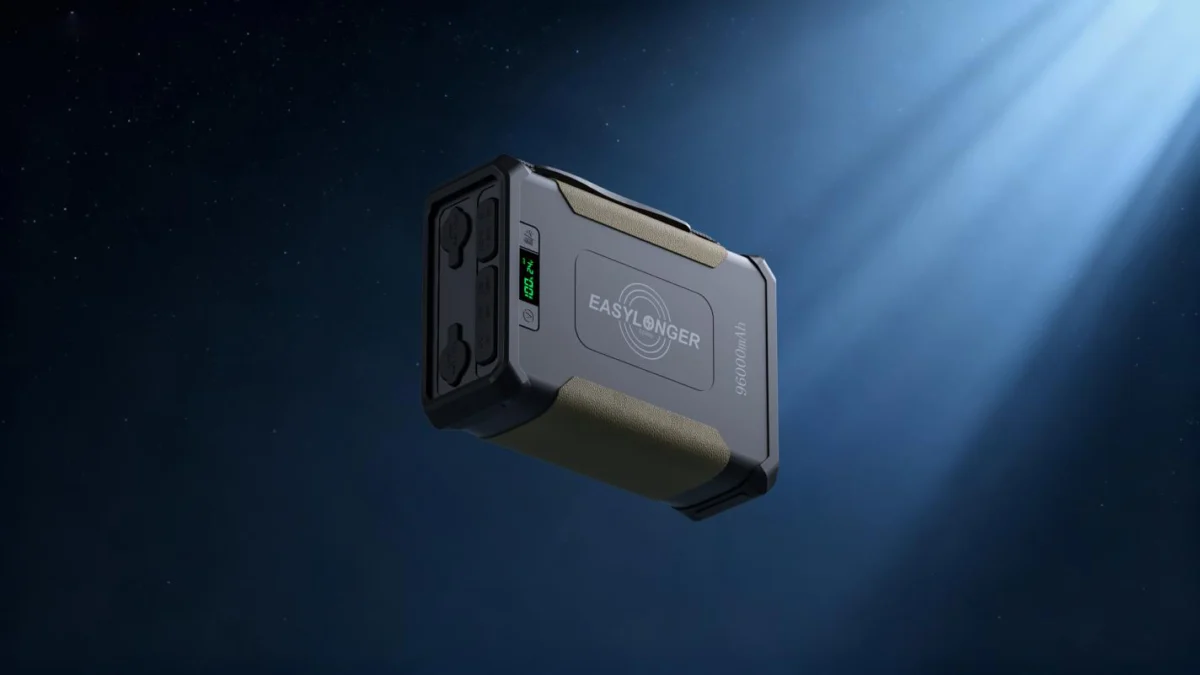
EASYLONGER, a manufacturer specializing in portable energy solutions, is looking to disrupt this status quo with the official launch of the ES960 PRO. Engineered from the ground up as a dedicated medical-grade backup, the ES960 PRO represents a significant leap forward in battery technology, safety, and energy efficiency for those who rely on nightly respiratory support.
Core Specifications: The Tech Under the Hood
At the heart of the ES960 PRO lies a robust 297.6-watt-hour battery pack constructed from automotive-grade lithium iron phosphate (LiFePO4) cells. While many portable power stations on the market still utilize traditional lithium-ion (NMC) chemistries, EASYLONGER has opted for LiFePO4 for several strategic reasons.
LiFePO4 cells are widely recognized for their superior thermal stability and safety profile, a non-negotiable factor when the device is intended to sit bedside. Perhaps more importantly, these cells offer a significantly longer lifespan. The ES960 PRO is rated for over 3,000 charge cycles. To put this in perspective, this lifespan is roughly six to ten times longer than standard NMC lithium-ion units. For a patient using the device daily, this means the battery could theoretically last for nearly a decade before experiencing significant degradation.
The unit’s capacity is specifically optimized for CPAP usage. For a standard user operating a ResMed AirSense 11 at a pressure setting requiring 13W (with the humidifier disabled), the ES960 PRO provides approximately 17 hours of continuous operation. This effectively guarantees over two full nights of therapy on a single charge, providing a crucial safety net during unexpected power outages.
Chronology of Development: A User-Centric Approach
The development of the ES960 PRO did not occur in a vacuum. It was the result of a deliberate, multi-year shift in the portable power industry toward specialized medical applications.
- Initial Research Phase: EASYLONGER conducted surveys among CPAP users, identifying a major pain point: the reliance on AC-to-DC "power bricks." Most users were forced to plug their CPAP’s wall adapter into an inverter on a power station, which wasted massive amounts of energy through heat loss during the conversion process.
- Engineering Prototype Phase: The design team focused on "Direct DC" integration. By creating a suite of cables compatible with major brands—including ResMed (AirSense 10/11, AirMini), Philips (DreamStation), Fisher & Paykel, and the BMC Luna G3—the company eliminated the need for AC adapters entirely.
- Testing and Refinement: Field tests were conducted to ensure that the device could handle the specific surge requirements of CPAP motors during the ramp-up phase. The finalized ES960 PRO was then put through rigorous durability testing, resulting in a splash- and dust-resistant chassis designed for both bedroom stability and rugged off-grid environments.
- Official Launch: Following months of consumer feedback and iterative refinements, the ES960 PRO was brought to market as a definitive solution, specifically categorized for its suitability for HSA and FSA fund usage.
Supporting Data: Efficiency and Performance Metrics
The most compelling argument for the ES960 PRO is its energy efficiency. In traditional setups, a power station converts stored DC energy into 110V AC power, which the CPAP machine then converts back into 24V DC to run the motor. This double-conversion process is notoriously inefficient, resulting in 25% to 30% of the battery’s capacity being lost as heat.
By utilizing proprietary direct DC connection cables, the ES960 PRO bypasses the inverter entirely. This "straight-to-device" power delivery allows the battery to run at maximum efficiency, extending the duration of therapy without requiring a larger, heavier battery pack.
Furthermore, the unit’s power management system includes a pass-through Uninterruptible Power Supply (UPS) capability. When plugged into a wall outlet, the unit acts as a buffer. In the event of a blackout, the ES960 PRO switches to internal battery power instantaneously, ensuring the CPAP machine never loses pressure—a vital feature for preventing the sleep disruptions and oxygen desaturation events associated with OSA.
Charging and Sustainability
For those heading off-grid, the device supports solar charging via an optional 110W foldable solar panel. Under optimal conditions, this allows for sustainable, independent therapy in remote locations. For urban users, the device is equally versatile, featuring:
- AC Wall Charging: A 72W adapter that brings the unit to full capacity in approximately five hours.
- USB-C Flexibility: 60W USB-C input, allowing for rapid topping up via vehicle chargers or travel power bricks.
Official Responses and Philosophy
Brooks Anderson, the founder of EASYLONGER, has been vocal about the company’s intent to move away from the "camping-first" mentality that has dominated the power station market.
"Most battery backup products treat sleep apnea like an afterthought," Anderson stated in the product’s launch press release. "We started this company because no CPAP user should have to choose between travel, camping, or peace of mind during a storm. The ES960 PRO exists because sleep apnea patients deserve a battery designed around their lives—not adapted from generic camping gear."
The company’s decision to pursue HSA (Health Savings Account) and FSA (Flexible Spending Account) eligibility is a testament to this philosophy. By positioning the product as a medical necessity rather than a recreational gadget, EASYLONGER is attempting to lower the financial barrier to entry for patients who may otherwise find it difficult to justify the expense of a dedicated backup system.
Implications for the Sleep Apnea Community
The launch of the ES960 PRO carries significant implications for the broader landscape of respiratory care.
1. Enhanced Patient Autonomy
For many CPAP users, the fear of power loss acts as a psychological barrier to travel. By providing a reliable, portable, and efficient energy source, EASYLONGER is effectively expanding the mobility of the sleep apnea community. Users can now engage in camping, long-distance travel, and remote work without the anxiety of potential power failures.
2. Clinical Health Outcomes
Obstructive sleep apnea is linked to cardiovascular issues, stroke, and hypertension. Consistency in CPAP therapy is the primary mechanism for mitigating these risks. By ensuring that therapy is not interrupted by power grid failures, the ES960 PRO supports long-term clinical health, protecting the user from the physiological stresses of a night without respiratory assistance.
3. Industry Standardization
The ES960 PRO sets a new benchmark for what CPAP users should expect from power providers. The industry is now moving toward a standard where "efficiency" is measured not just in watt-hours, but in the intelligent application of power delivery. The inclusion of on-board expansion ports, which allow users to chain units for multi-week runtimes, suggests that EASYLONGER is thinking about the future of modular, scalable energy.
4. Financial Accessibility
The fact that the device qualifies for HSA/FSA funds is a game-changer. It categorizes the power station as a medical device, which allows many consumers to purchase the unit using pre-tax dollars. This strategic alignment with healthcare financing models is likely to be a blueprint for other manufacturers entering the medical-power space.
Final Considerations: A New Era for Sleep Therapy
The EASYLONGER ES960 PRO is more than just a battery; it is a critical tool for the modern CPAP user. By prioritizing efficiency through direct DC connections, longevity through LiFePO4 chemistry, and accessibility through HSA/FSA compliance, the company has addressed the core requirements of a patient population that has long been forced to "make do" with inferior products.
As the demand for remote, resilient, and reliable medical technology continues to grow, the ES960 PRO stands as a clear indicator of where the industry is headed: toward purpose-built hardware that respects the gravity of the user’s condition. For the millions of individuals who wake up every morning feeling refreshed because of their CPAP, this new, dedicated power solution offers something that standard lithium-ion batteries cannot: true peace of mind.