











ALTADENA, CA — In a landmark move to address the escalating complexities of adolescent mental health in the age of artificial intelligence, Active Minds, the nation’s premier nonprofit for youth mental health advocacy, has announced a massive national expansion of its digital wellbeing programming. Bolstered by a $5 million grant from Google.org, Google’s philanthropic arm, the initiative seeks to empower 100,000 youth and young adults by 2028, providing them with the tools to navigate an increasingly digitized world while fostering community resilience.
The announcement, made on June 12, 2026, marks a pivotal shift in how mental health organizations and tech giants collaborate. Rather than focusing solely on reactive crisis intervention, this partnership emphasizes "proactive empowerment," placing students at the helm of creating digital safety solutions. The initiative is set to catalyze teen-led advocacy and engagement across 154 high schools nationwide, with a specific focus on closing the gap between youth voices and the decision-makers who shape technology policy.
Main Facts: A New Paradigm for Digital Safety
The core of the Active Minds expansion is the belief that youth and young adults are not merely passive consumers of technology but are the most vital stakeholders in its evolution. As Gen Z and Gen Alpha navigate a landscape where AI and social media are deeply woven into the fabric of daily life—affecting how they learn, socialize, and form identities—the need for specialized "digital literacy" has never been greater.
The $5 Million Commitment
The funding provided by Google.org is designated for the long-term scaling of Active Minds’ mental health and digital wellbeing curriculum. This includes:
- National Scaling: Reaching 154 high schools in its initial phase to establish student-led chapters focused on mental health advocacy.
- The 100,000 Goal: A strategic roadmap to equip 100,000 young people with foundational digital safety skills, personal agency, and peer support networks within the next two years.
- The Active Minds Program Fund: A dedicated resource to ensure that under-resourced schools, rural communities, and communities of color can access these evidence-informed experiences without financial barriers.
Bridging the Digital Divide
Beyond traditional safety, the program focuses on "Responsible Mental Health Video Creation" and "Responsible AI Engagement." By teaching students how to use emerging digital tools effectively, the initiative aims to transform the internet from a source of stress into a platform for innovation and community connection.
Chronology: From Local Tragedy to National Action
The launch of this national initiative was intentionally grounded in a local context that illustrates the compounding pressures on today’s youth. The official announcement took place in Altadena, California, a community still grappling with the aftermath of the devastating 2025 Eaton Fire.
The 2025 Catalyst
In 2025, the Eaton Fire ravaged parts of Southern California, leaving a trail of physical destruction and deep-seated psychological trauma. For the students of the Pasadena Unified School District (PUSD), the disaster was a dual crisis: they faced the physical loss of homes and community spaces, while simultaneously navigating the "digital echo chamber" of the disaster—where misinformation and the constant stream of traumatic imagery on social media exacerbated their anxiety.
June 12, 2026: The Altadena Launch
The launch event was designed to be more than a press conference; it was a demonstration of the program’s student-centered methodology.
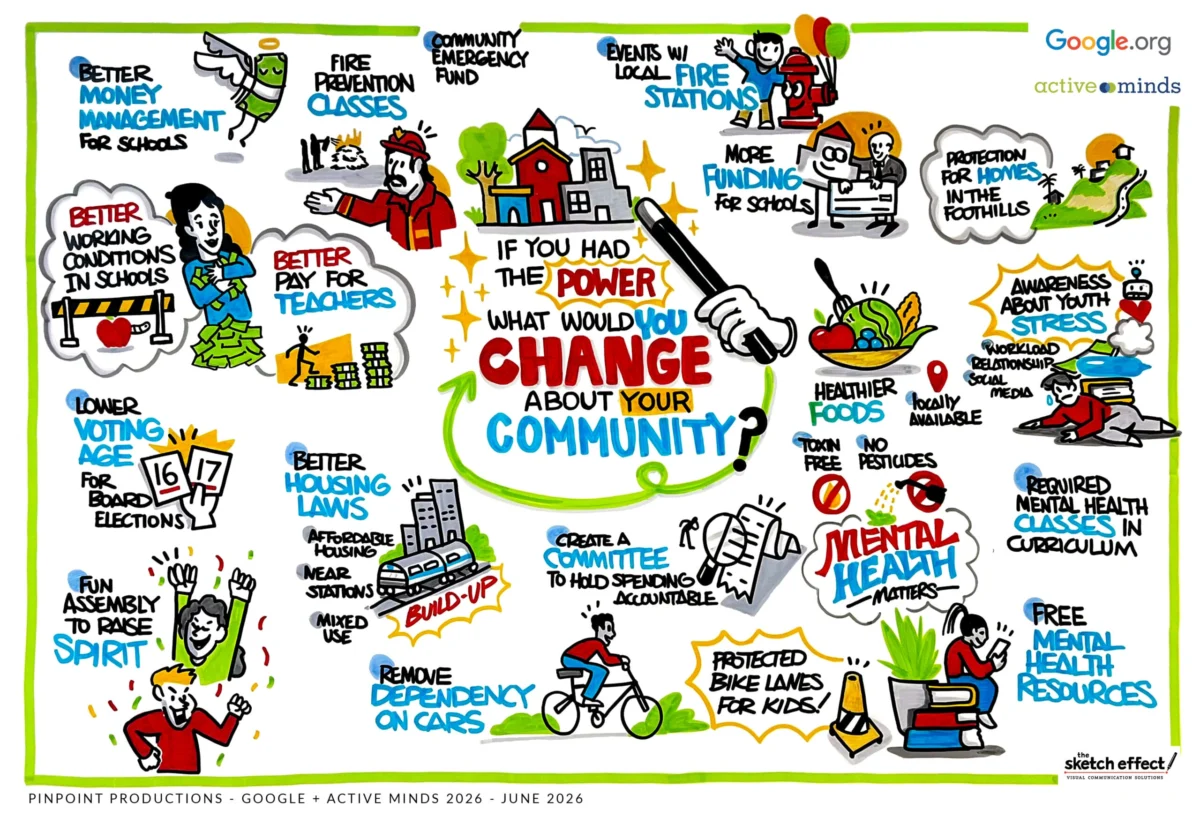
- The Workshop: High school students participated in an interactive self-advocacy session. They were asked to brainstorm the specific needs of their community in the wake of the fire and the rise of digital stressors.
- Live Visualization: As students spoke, a local artist translated their ideas into a live mural. This "Event Sketch" captured themes of fire safety, housing security, healthier food access, and the urgent need for mental health resources.
- The Panel Discussion: The student-generated mural then served as the agenda for a panel discussion featuring community leaders, California Assemblymembers, and Google executives. This structure ensured that the "expert" conversation was directly informed by the "youth" experience.
Supporting Data: Targeting the Most Vulnerable
Mental health statistics in the mid-2020s have highlighted a growing disparity in access to care. While urban and affluent districts often have robust counseling services, rural and under-resourced schools frequently fall behind.
Expanding the Program Fund
The Active Minds Program Fund is the engine behind the initiative’s equity goals. According to Active Minds, the fund will prioritize:
- Rural Resilience: Communities where geographical isolation limits access to traditional therapy.
- Communities of Color: Addressing the unique cultural stigmas and systemic barriers that prevent minority youth from seeking mental health support.
- Under-Resourced Schools: Providing "turn-key" mental health programs that do not require schools to divert funds from their existing academic budgets.
The Impact of Peer Support
Internal data from Active Minds suggests that students are 67% more likely to seek help for mental health challenges when the suggestion comes from a peer rather than an adult. By building peer support networks in 154 high schools, the program leverages this social dynamic to create a "safety net" that is always present, both in the hallways and in the digital sphere.

Official Responses: Voices of Leadership
The partnership has drawn praise from political, non-profit, and corporate sectors, each emphasizing a different facet of the program’s potential impact.
Alison Malmon, Founder and Executive Director of Active Minds, highlighted the intersectional nature of the modern youth experience. "Youth and young adults are navigating an increasingly complex world where mental health, technology, and connection are deeply intertwined," Malmon stated. "This support from Google.org allows us to significantly expand our work, ensuring that more young people have access to the stories, resources, and peer connections that help them feel seen and supported."
Assemblymember John Harabedian (D-Pasadena) spoke to the resilience of his constituents and the necessity of such programs in disaster recovery. "The youth of Pasadena Unified School District have shown immense resilience in the wake of last year’s devastating Eaton Fire," Harabedian noted. "But we cannot overlook the compounding pressures they face. This program empowers them to play an active, vital role in building community resilience, using their voices to inform the policies that govern our state."
Representing the tech sector, Dr. Megan Jones Bell, Senior Director of Clinical at Google, emphasized the company’s responsibility toward the next generation. "At Google, we believe that child safety and digital wellbeing warrant unique, proactive protections," Dr. Jones Bell said. "By putting youth at the center of this movement, we are championing student-led leadership that shifts the paradigm toward long-term resilience."
Implications: Shaping the Future of Digital Citizenship
The implications of the Active Minds and Google.org partnership extend far beyond the immediate $5 million investment. This initiative represents a "reproducible blueprint" for how society can address the "loneliness epidemic" and the "anxiety of the digital age."
Redefining Digital Citizenship
In the past, digital citizenship was often taught as a list of "don’ts"—don’t post personal info, don’t talk to strangers, don’t bully. The Active Minds curriculum shifts this to a "do" model:
- Do advocate for your community’s needs.
- Do use AI to bridge educational gaps.
- Do create content that promotes mental wellbeing.
- Do hold tech companies and policy-makers accountable for the digital environment.
The AI Factor
As AI becomes more sophisticated, its impact on adolescent brain development and social interaction is a subject of intense study. This program ensures that students are not just using AI, but are critically analyzing its role in their lives. By fostering "personal agency," Active Minds is helping youth develop a "digital internal compass" that allows them to maintain their mental health even as technology continues to change at a breakneck pace.
A Model for Corporate Social Responsibility
Google’s involvement via Google.org and its "digital wellbeing fund" sets a precedent for other tech giants. By funding a nonprofit that is often critical of how technology impacts mental health, Google is signaling a move toward a more "holistic" approach to product development and community support. This includes offering robust parental controls and intentionally building products that prioritize safety and confidence.
Long-Term Community Resilience
Finally, the focus on the Eaton Fire recovery illustrates that digital wellbeing is not separate from physical wellbeing. In a world where climate-related disasters are becoming more frequent, the ability of a community to maintain a healthy, supportive digital communication network is essential for survival and recovery. The 100,000 leaders trained by 2028 will be the ones leading these efforts in the decades to come.
As the initiative rolls out across the 154 designated high schools, the eyes of the nation will be on these young leaders. They are no longer just the "future"—they are the active architects of a healthier, safer, and more connected world, both online and off.