ALTADENA, CA — In a landmark move to address the intersection of technology, community resilience, and adolescent mental health, the national nonprofit Active Minds has announced a major $5 million expansion of its digital wellbeing programming. Supported by Google.org, Google’s philanthropic arm, the initiative aims to equip 100,000 youth and young adults across the United States with the tools necessary to navigate an increasingly complex digital landscape while advocating for their own mental health and community wellbeing.
The announcement, made on June 12, 2026, marks a pivotal moment in the movement to prioritize mental health literacy among "digital natives." By focusing on co-creation and student-led advocacy, the program seeks to bridge the gap between youth experiences and the decision-makers who shape the policies governing digital spaces and educational environments.
Main Facts: A Strategic Investment in the Future of Mental Health
At the heart of this initiative is a $5 million grant from Google.org, which will catalyze teen engagement and advocacy in 154 high schools nationwide. This funding is part of a broader strategic goal by Active Minds to reach 100,000 youth and young adults by 2028, fostering a culture where mental health is valued, prioritized, and openly discussed.
The program is designed to address three primary pillars:
- Mental Health Literacy: Providing students with evidence-informed resources to understand and manage their psychological wellbeing.
- Digital Safety and Agency: Teaching foundational skills to navigate AI-driven environments, responsible content creation, and digital safety.
- Peer Support Networks: Building robust, localized systems where students can support one another, ensuring that no young person feels isolated in their struggles.
A critical component of this expansion is the Active Minds Program Fund. This fund is specifically earmarked to ensure that under-resourced schools, rural communities, and communities of color have access to these high-quality mental health experiences. By removing budget constraints, the initiative ensures that the most vulnerable populations are not left behind in the digital and mental health revolution.
Chronology: From National Vision to Local Impact
The journey toward this expansion has been years in the making, reflecting a growing recognition of the unique pressures faced by Generation Z and Generation Alpha.
Early 2025: Active Minds identifies a critical need for localized, peer-led mental health support following a series of national discussions on the impact of social media and AI on youth development.
Late 2025: The "Eaton Fire" devastates parts of California, including the Pasadena area. This event serves as a tragic case study in how environmental disasters compound the existing mental health pressures on youth, highlighting the need for community-specific resilience programs.
Spring 2026: Google.org and Active Minds finalize a partnership to scale existing digital safety programs, integrating them with Active Minds’ proven peer-to-peer advocacy model.
June 12, 2026: The official launch event takes place in Altadena, California. The event is not merely a press conference but a working session involving students from the Pasadena Unified School District (PUSD), local legislators, and industry leaders.
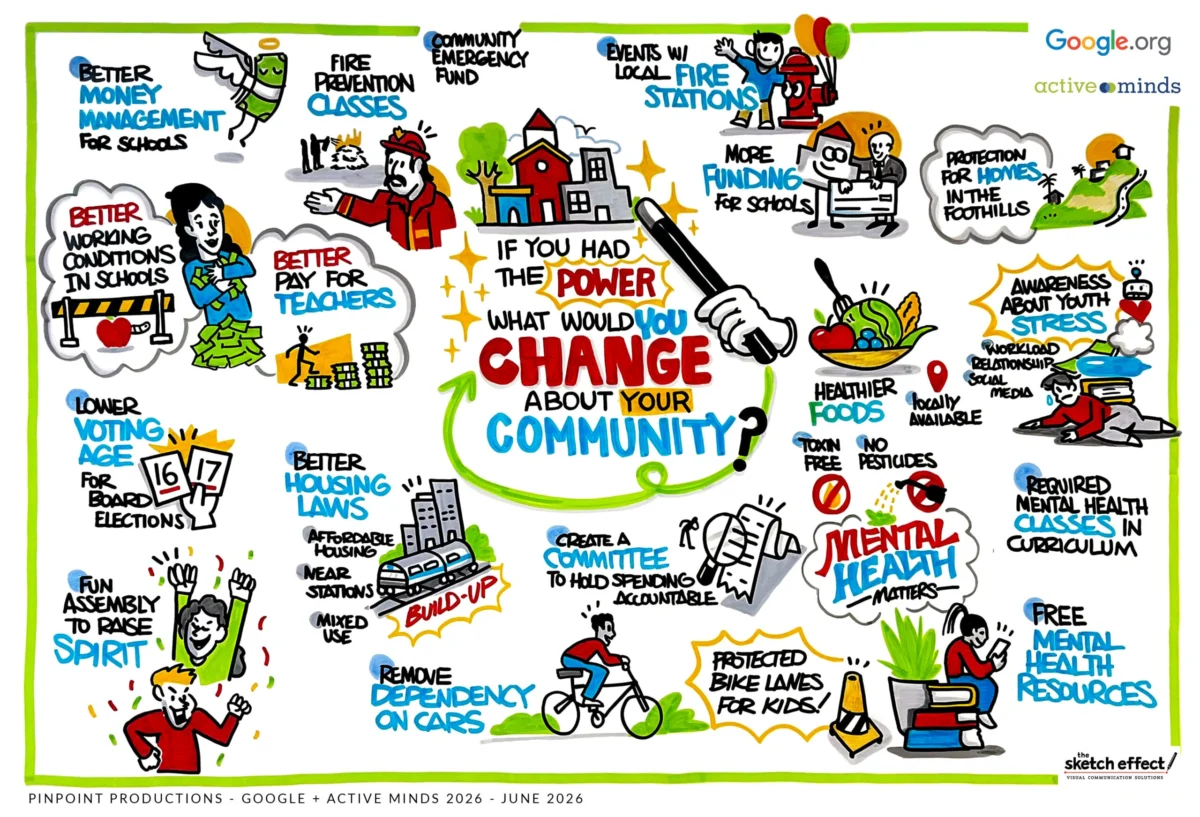
During the launch, high school students participated in interactive workshops. A live muralist translated students’ brainstormed ideas regarding community needs—ranging from fire safety to healthier school environments—into a visual roadmap. This "live-sketching" of student voices directly informed a panel discussion that followed, ensuring that the "experts" were responding to the lived realities of the youth they serve.
Supporting Data: The Digital and Mental Health Landscape
The necessity of this $5 million investment is underscored by emerging data regarding youth mental health and technology. As AI becomes more deeply woven into the fabric of education and social connection, the risks of misinformation, digital fatigue, and isolation have climbed.
- Reach and Scale: By targeting 154 high schools, the program creates a "multiplier effect." Each student leader trained through the initiative is estimated to influence dozens of their peers, creating a ripple effect of mental health awareness.
- The 100,000 Goal: Active Minds’ "100,000 by 2028" campaign is a response to the surgeon general’s warnings regarding a "youth mental health crisis."
- The Digital Divide: Data from the Active Minds Program Fund indicates that students in under-resourced schools are 40% less likely to have access to formal mental health literacy programs. This grant specifically targets that disparity.
- AI Integration: With nearly 80% of teens reporting regular interaction with AI-driven platforms, the "Responsible Mental Health Video Creation" and "Being Young in the Age of AI" resources provided by Active Minds fill a critical educational void.
Official Responses: Leadership on the Front Lines
The leadership behind the initiative emphasizes that this is not a top-down approach, but a movement led by the youth themselves.

Alison Malmon, Founder and Executive Director of Active Minds, highlighted the intersectional nature of the modern youth experience. "Youth and young adults are navigating an increasingly complex world where mental health, technology, and connection are deeply intertwined," Malmon stated. "This support from Google.org allows us to significantly expand our work, ensuring that more young people have access to the stories, resources, and peer connections that help them feel seen and supported."
Assemblymember John Harabedian (D-Pasadena), who was present at the launch, spoke to the resilience of the local community. "The youth of Pasadena Unified School District have shown immense resilience in the wake of last year’s devastating Eaton Fire," Harabedian said. "Through this long-term programming, Active Minds and Google.org provide students with the skills to navigate digital pressures and advocate for their own wellbeing. I am proud to see the future leaders of California at the forefront of this movement."
Representing the tech sector’s responsibility, Dr. Megan Jones Bell, Senior Director of Clinical at Google, emphasized the importance of proactive protection. "At Google, we believe that child safety and digital wellbeing warrant unique, proactive protections," said Dr. Bell. "By supporting Active Minds to put youth at the center of this movement, we are championing student-led leadership that shifts the paradigm toward proactive empowerment and long-term resilience."
Implications: A New Blueprint for Community Resilience
The implications of the Active Minds and Google.org partnership extend far beyond the 154 schools initially targeted. This initiative represents a shift in how society approaches both digital safety and mental health.
1. From Reactive to Proactive
Historically, mental health interventions in schools have been reactive—occurring only after a crisis has manifested. This program flips the script, providing "foundational safety tools" and "literacy" before issues escalate. By treating mental health as a skill set rather than just a medical concern, the program empowers students to manage their wellbeing as a part of their daily lives.
2. The Democratization of Mental Health Resources
By focusing on the Active Minds Program Fund, the initiative challenges the "zip code destiny" of mental health care. Ensuring that rural and under-resourced schools have the same access to high-quality, evidence-informed programming as affluent private schools is a significant step toward health equity.
3. Shaping Policy Through Youth Voice
One of the most profound implications is the program’s focus on advocacy. Students are not just being taught to "be safe" online; they are being trained to "inform the policies that govern our state." This suggests a future where digital platforms and school curricula are designed with direct input from the youth who use them, potentially leading to more ethical AI and safer social media algorithms.
4. A Reproducible Model for Crisis Recovery
The integration of the program into the post-Eaton Fire recovery in Pasadena provides a blueprint for other communities facing environmental or social trauma. It demonstrates how national resources can be tailored to meet localized stressors, creating a "reproducible blueprint" for building emotional resilience in the face of disaster.
5. Redefining Digital Wellbeing
In the age of AI, "digital wellbeing" is no longer just about limiting screen time. It is about "personal agency"—the ability to understand how algorithms work, how to create content responsibly, and how to maintain human connection in a virtual world. This initiative positions these skills as essential life skills, on par with traditional literacy.
Conclusion
The $5 million expansion of Active Minds’ programming, backed by Google.org, is more than a philanthropic gesture; it is a strategic investment in the social fabric of the next generation. As the initiative rolls out across 154 schools, it carries the promise of a future where youth are not just passive consumers of technology, but active, empowered architects of their own mental health and community safety.
By bridging the gap between digital innovation and emotional intelligence, Active Minds and Google.org are ensuring that as technology evolves, the human element—the wellbeing of the youth—remains the central priority.
For more information on Active Minds and their digital wellbeing resources, visit activeminds.org.