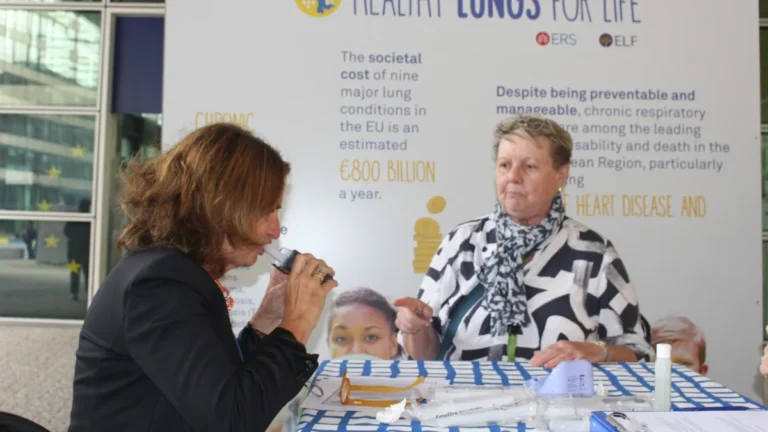
BARCELONA, Spain — A breakthrough in geriatric respiratory care was unveiled on Tuesday, 8 September 2026, at the European Respiratory Society (ERS) Congress. New research suggests that a pivotal shift in vaccination strategy—transitioning from standard-dose to high-dose influenza vaccines—could drastically reduce the burden of severe illness among the elderly population living with chronic lung conditions.
The findings, presented by Dr. Lisa Steen Duus of Gentofte Hospital in Copenhagen, Denmark, offer a compelling argument for public health policymakers to rethink how they protect the most vulnerable segments of the aging population. By pooling data from two massive, "gold-standard" randomized controlled trials, researchers have demonstrated that a higher concentration of vaccine antigens provides a robust, measurable shield against the complications of influenza and pneumonia.
Main Facts: The Efficacy of Higher Dosages
At the core of this research is the clinical comparison between standard-dose and high-dose flu vaccines. While standard vaccines have long been the bedrock of public health, their efficacy in the elderly is often hindered by "immunosenescence"—the natural decline of the immune system that accompanies aging.
The high-dose vaccine, which contains four times the concentration of the active antigen compared to its standard counterpart, is designed to elicit a more vigorous immune response. The study’s results are striking:
- Hospitalization Reduction: Patients with chronic lung disease who received the high-dose vaccine saw an 8.8% reduction in hospital admissions specifically linked to flu or pneumonia.
- Broader Health Benefits: The protection extended beyond just respiratory infections, showing a notable decrease in hospitalizations for cardiorespiratory conditions and all-cause hospitalizations.
- Target Population: The research focused on a cohort of 31,976 individuals with pre-existing conditions, including COPD, asthma, bronchitis, bronchiectasis, cystic fibrosis, emphysema, interstitial pulmonary disease, lung transplantation, respiratory tuberculosis, and sarcoidosis.
Chronology of the Research
The data presented in Barcelona is not the result of a single, isolated experiment, but rather a culmination of years of rigorous scientific inquiry across Europe.
The Danish Trial (2022–2025)
The research began in Denmark, where investigators monitored participants over three consecutive flu seasons (2022–23, 2023–24, and 2024–25). This longitudinal approach allowed for the observation of vaccine performance across varying strains of the virus and changing environmental conditions.
The Spanish Trial (2023–2025)
Concurrently, a second trial was conducted in the Galicia region of Spain, covering two flu seasons (2023–24 and 2024–25). By running these studies in different geographical locations with diverse climates and healthcare systems, the researchers were able to bolster the reliability of their findings.
The Meta-Analysis (2026)
In the lead-up to the ERS Congress, the teams merged their datasets. With a combined participant pool of 466,320 people aged 65 and older, the study became one of the most comprehensive investigations of vaccine efficacy in the history of geriatric respiratory medicine. Analysis of this massive dataset concluded in mid-2026, setting the stage for the presentation at the Barcelona congress.
Supporting Data: Understanding the Vulnerability
To understand the magnitude of this breakthrough, one must first understand the precarious position of seniors with chronic lung disease. During the flu season, these individuals are not merely at risk of "the sniffles"; they are at high risk of rapid deterioration.
The "Double-Threat" Phenomenon
For a patient with Chronic Obstructive Pulmonary Disease (COPD) or asthma, a flu infection acts as a catalyst. The viral inflammation often triggers an "exacerbation"—a sudden worsening of the underlying condition. This often leads to a cycle of oxygen deprivation, secondary bacterial pneumonia, and prolonged hospital stays.
Study Demographics
The study’s demographic breakdown highlights the scale of the challenge:
- Total Participants: 466,320.
- Sub-group of Interest: 31,976 participants (roughly 6.8%) identified with chronic respiratory diseases.
- The Methodology: Participants were randomized on a 50/50 basis to receive either the standard or high-dose formulation. The primary endpoint—hospitalization—was tracked from 14 days post-vaccination through the following May, covering the peak and tail ends of the influenza season in Europe.
Official Responses and Expert Commentary
The medical community has greeted the results with cautious optimism, viewing them as a clear directive for future clinical guidelines.
The Researcher’s Perspective
Dr. Lisa Steen Duus emphasized that the goal was to provide concrete evidence where only anecdotal or limited data previously existed. "Although high-dose flu vaccines are designed to produce a stronger immune response, there has been limited randomized evidence specifically showing whether they provide better protection against serious illness in this group," she stated. "These findings provide reassurance that high-dose flu vaccination can offer better protection against serious illness requiring hospital treatment."
Independent Expert Validation
Professor Thomas Wilkinson, Chair of the European Respiratory Society’s Group on Respiratory Infections and Immunology, underscored the clinical significance of the study.
"Older people with lung disease have a greater risk of severe illness, hospitalization, and death from flu," Professor Wilkinson noted. "This research combines the results of two large and well-run studies. Their analysis shows that a high-dose flu vaccine could be even more beneficial in this group, which is precisely why the ERS strongly recommends annual vaccination."
Implications for Public Health and Policy
The implications of this research are far-reaching, touching on everything from hospital bed occupancy to the quality of life for the elderly.
Reducing the Burden on Healthcare Systems
Hospitalizations are not just a personal ordeal for patients and their families; they represent a significant drain on healthcare resources. In an era where many European hospitals are operating at or near capacity, an 8.8% reduction in flu-related admissions for this high-risk group could represent thousands of saved bed-days annually.
A Shift in Vaccination Strategy
For years, the debate surrounding high-dose vaccines centered on cost-effectiveness. Critics argued that the higher price point of the vaccine might not justify the outcomes. However, when factoring in the cost of treating severe pneumonia, intensive care unit (ICU) admissions, and the management of long-term post-viral complications, the high-dose vaccine presents a compelling economic case.
Recommendations for Clinical Practice
The researchers hope these findings will influence national vaccination committees. By specifically identifying "chronic lung disease" as a high-priority category for high-dose administration, health authorities can ensure that the vaccines reach those who need them most.
As healthcare providers move toward more personalized medicine, this study serves as a blueprint for targeting interventions based on pre-existing risk profiles. The evidence presented in Barcelona is not just a statistical victory; it is a potential life-saving shift in how the medical community approaches the seasonal threat of influenza.
Conclusion: The Path Forward
The data presented at the ERS Congress leaves little room for ambiguity. For the elderly patient living with the daily challenges of asthma, COPD, or other respiratory ailments, the influenza season is no longer just an inevitability to be endured—it is a risk that can be actively managed.
As global populations continue to age, the prevalence of chronic lung conditions is expected to rise. Integrating high-dose vaccines into standard clinical practice will be essential in preventing the avoidable hospitalizations that currently plague this demographic. With the support of this robust clinical evidence, the medical community is now better equipped than ever to advocate for a more proactive, high-dose approach to seasonal influenza prevention.
References:
[1] Abstract details regarding the comparative efficacy of high-dose versus standard-dose influenza vaccines in elderly patients with chronic respiratory conditions, European Respiratory Society Congress, 2026.
[2] Preceding analysis of high-dose vaccine efficacy in the general elderly population (65+), confirming broad-spectrum benefits observed in prior 2022–2025 cohorts.