






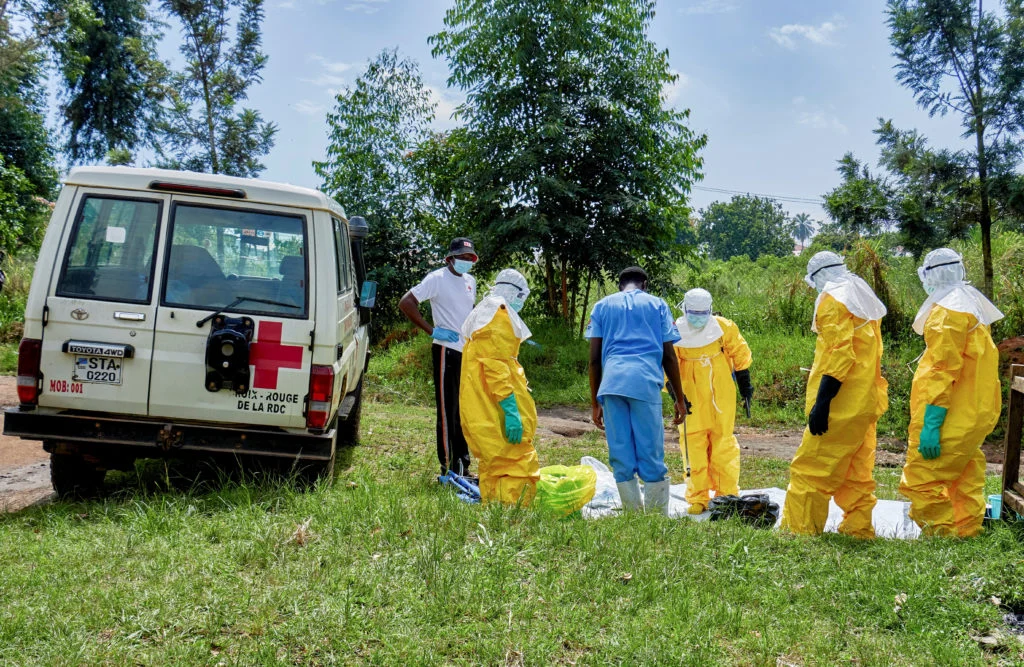
GENEVA — The World Health Organization (WHO) issued a stark warning on Friday, declaring that the Ebola outbreak currently ravaging the Democratic Republic of Congo (DRC) is “spreading rapidly.” In a move that underscores the gravity of the public health emergency, WHO Director-General Tedros Adhanom Ghebreyesus announced that the organization has officially upgraded its risk assessment for the DRC from “high” to “very high.”
While the risk of regional transmission remains categorized as “high” and the threat to the global community is currently deemed “low,” the escalation in risk level within the DRC signals a critical juncture in efforts to contain one of the most volatile health crises in the region’s recent history.
Main Facts: A Situation in Flux
The latest data provided by the WHO paint a grim picture of the epidemic’s trajectory. While official confirmed case counts stand at 82 with seven fatalities, health authorities emphasize that these numbers fail to capture the true scale of the crisis.
Dr. Tedros noted that the epidemic in the DRC is “much larger” than confirmed lab reports suggest. Current estimates indicate nearly 750 suspected cases and 177 suspected deaths. The disparity between confirmed cases and suspected cases highlights the immense challenges of surveillance, testing, and data collection in remote, conflict-affected, and often inaccessible regions of the Congo.
The virus, which causes severe hemorrhagic fever and is often fatal, continues to move through communities, exploiting gaps in infrastructure and overcoming the limitations of local health systems.
Chronology: The Evolution of the Outbreak
The current crisis did not emerge in a vacuum. It is the latest in a series of Ebola outbreaks that have tested the resilience of Central African nations.
- Initial Detection: The outbreak was identified following a cluster of unexplained deaths in rural communities, triggering immediate protocols by local health ministries and the WHO.
- Rapid Expansion: Within weeks of the initial reports, the virus moved from localized pockets into larger population centers, complicating contact tracing efforts.
- The Spillover: The virus crossed borders into neighboring Uganda, sparking fears of a regional epidemic. While Uganda’s current situation is described as “stable”—with two confirmed cases involving individuals who traveled from the DRC and one associated death—the presence of the virus across international lines has forced a shift in global health strategy.
- Civil Unrest: As the medical response intensified, so did local resistance. Recent reports of residents burning an Ebola treatment center in the DRC underscore the growing frustration, fear, and misinformation plaguing the affected regions. This hostility towards health workers has become a significant barrier to containment.
Supporting Data: The Scale of the Emergency
To understand the severity of the crisis, one must look at the numbers beyond the infection rates. The WHO’s risk assessment is based on a complex matrix of factors, including population density, the mobility of the affected population, and the efficacy of current diagnostic tools.
The jump to a "very high" risk assessment in the DRC is driven by:
- Transmission Velocity: The rate at which the virus is moving through previously unaffected villages.
- Health System Fragility: The lack of personal protective equipment (PPE), trained personnel, and specialized isolation wards in remote areas.
- Community Mistrust: The burning of treatment centers indicates a breakdown in communication between responders and the public, which is essential for successful epidemiological control.
- Geographic Reach: The distance between current hotspots, which requires a massive, multi-pronged logistical operation that is currently outpacing the available resources.
Official Responses: International Mobilization
The international community has begun to respond with significant financial and logistical commitments, though the speed of deployment remains a point of contention.
The United Nations’ Role
Earlier this Friday, the United Nations announced the release of $60 million from its Central Emergency Response Fund (CERF). This funding is specifically earmarked to accelerate the response in the DRC and to fortify neighboring countries against potential cross-border spread. The UN’s intervention is intended to bridge the funding gap for essential services, including vaccination campaigns and the procurement of medical supplies.
The United States’ Commitment
The United States government has pledged $23 million in direct funding to support the response in both the DRC and Uganda. A primary component of the U.S. strategy involves the establishment of up to 50 Ebola treatment clinics.
However, the response has not been without its logistical frictions. In a concerning development, Ugandan authorities stated they were not aware of any specific plans by the U.S. to set up these facilities within their borders. This lack of coordination points to a broader challenge: the struggle to align the goals of international donors with the administrative realities on the ground in host nations.
Implications: The Long Road Ahead
The "very high" risk designation carries significant geopolitical and public health implications.
The Crisis of Trust
Perhaps the most daunting challenge is not the virus itself, but the human element. The destruction of treatment facilities by local residents is a symptom of a deeper crisis of confidence. Years of instability and insufficient investment in public health have left many in the region skeptical of foreign intervention. Without a concerted effort to engage local leaders and community stakeholders, medical interventions—no matter how well-funded—risk being rejected by those they are intended to save.
Regional Security and Stability
The stability of the Great Lakes region is inextricably linked to the success of this outbreak response. If the virus continues to migrate, the economic and social consequences could be devastating. Trade routes, cross-border commerce, and the movement of refugees are all at risk of being halted, which would exacerbate existing humanitarian crises in the region.
The Global Perspective
While the WHO maintains that the global risk is “low,” the history of modern epidemics has taught the international community that localized outbreaks can rapidly become global threats in an interconnected world. The investment of $60 million from the UN and $23 million from the U.S. is a preemptive strike against the possibility of a larger, more difficult-to-contain scenario.
A Call for Sustained Support
As the crisis unfolds, the WHO and its partners are calling for sustained, long-term support. A "very high" risk assessment means that the status quo is insufficient. It demands:
- Enhanced Surveillance: Scaling up lab capacity to ensure that suspected cases are tested and isolated immediately.
- Community Engagement: Shifting from a purely medical response to one that prioritizes cultural sensitivity and community partnership.
- Logistical Integration: Ensuring that international donors, local governments, and NGOs are on the same page regarding the deployment of resources, such as the promised treatment clinics.
Conclusion
The situation in the Democratic Republic of Congo is at a precarious tipping point. With the WHO’s warning of a rapidly spreading virus, the international response must be as swift as it is coordinated. The commitment of millions in funding is a necessary start, but the ultimate success of the mission rests on the ability to translate those funds into effective, trusted, and accessible care for the people most affected by this lethal pathogen.
As the world watches, the priority remains clear: stop the transmission at its source, stabilize the regional border, and restore the trust of the communities caught in the crossfire of this unfolding tragedy. The coming weeks will be decisive in determining whether the outbreak can be contained or if it will continue its aggressive expansion across Central Africa.