Originally published in the January-February 1986 issue of Yoga Journal, this archival feature explores the intersection of physical equilibrium and mental presence.
In the vast lexicon of yoga asanas, few poses demand as much from the practitioner as Virabhadrasana III, or Warrior 3. It is a posture that serves as a crucible for balance, strength, and endurance. While it is often reserved for those who have moved past the introductory phases of their practice, the pose offers a profound lesson that transcends the yoga mat: the art of centering. As we revisit this teaching from the 1986 Yoga Journal archives, we find that the mechanics of the pose remain as relevant today as they were four decades ago.
The Anatomy of Equilibrium: Understanding Warrior 3
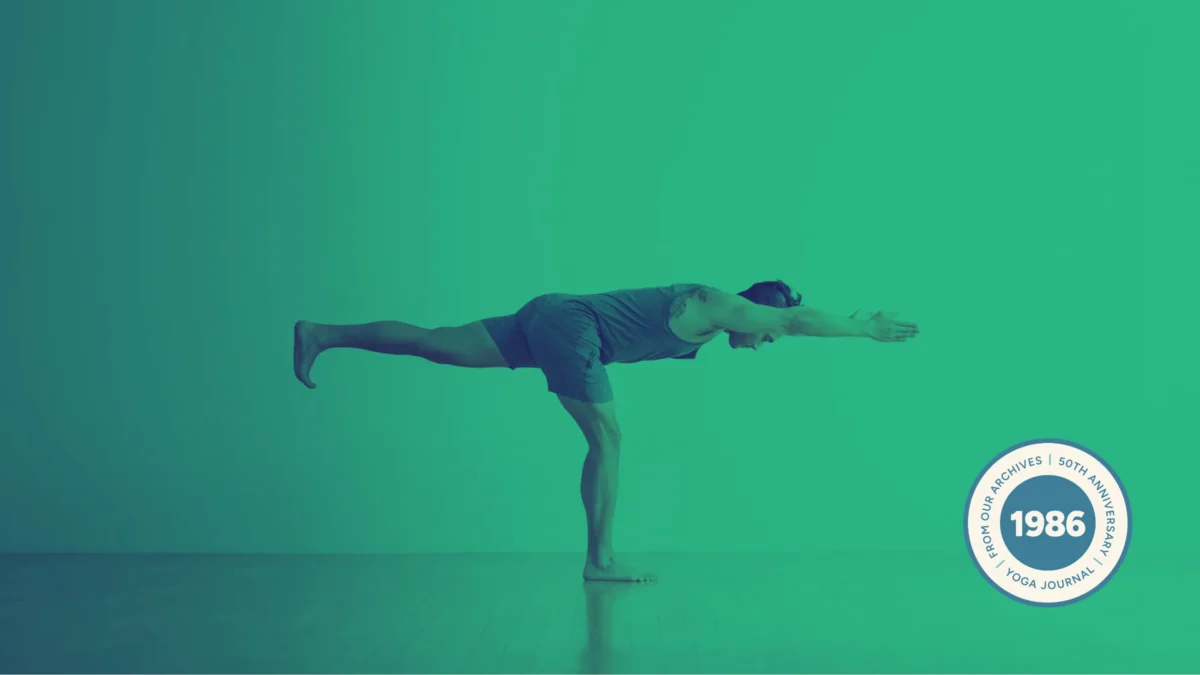
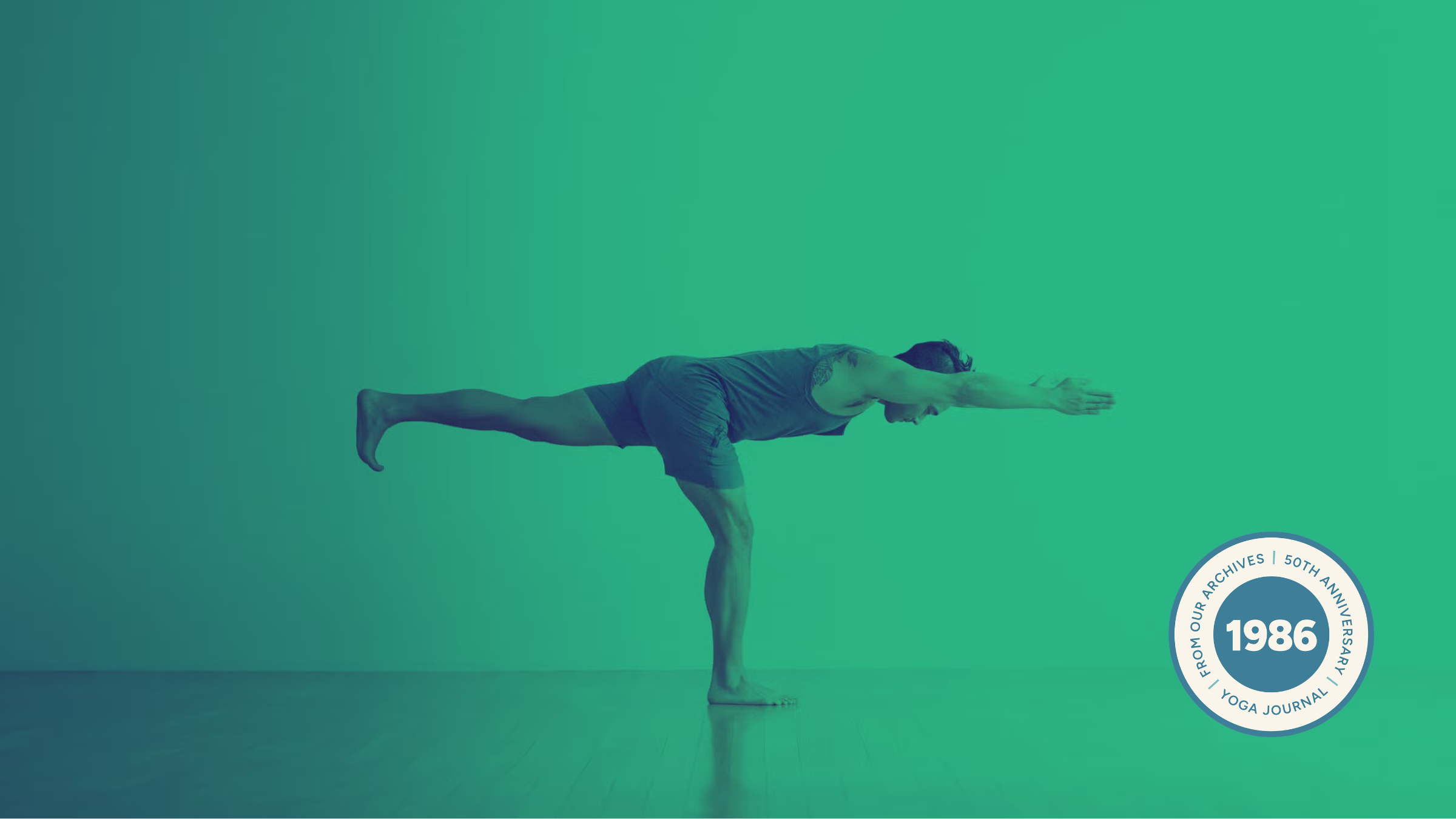
Warrior 3 is a standing balance posture that engages virtually every muscle group in the trunk, gluteals, and legs, while providing a significant challenge to the stabilizing muscles of the shoulders. Unlike passive stretches, this pose requires a dynamic, full-body activation.
From a physiological perspective, the pose requires the practitioner to maintain a perfectly horizontal line from the fingers to the heel of the lifted leg. The primary challenge for most students is the maintenance of pelvic alignment. To achieve true balance, the hips must remain level; any tilting to one side immediately compromises the integrity of the line and the stability of the posture.
The Role of the Core
Modern practitioners often make the mistake of attempting to "tilt" their way into balance by dropping the pelvis toward the floor. Instead, the 1986 guidance emphasizes the importance of abdominal engagement. By tightening the abdominal muscles, the practitioner creates a structural anchor. The pose becomes "lighter" when the practitioner shifts their focus upward, visualizing a lift from the back of the shoulders, the skin of the upper back, and the posterior of the raised thigh.
A Chronological Perspective: From 1986 to 2026
When Yoga Journal first featured this breakdown in 1986, the yoga landscape in the West was transitioning from a niche pursuit to a mainstream wellness phenomenon. The instructions provided then—centering the heels, focusing on the tibia-to-floor angle, and the fluid movement from the bent-knee position—remain the gold standard for proper alignment.
The progression of the pose is a study in controlled movement:
- The Foundation: Starting with a wide stance, the right foot turns out 90 degrees, while the back foot angles inward at 75 degrees.
- The Elevation: Arms reach toward the ceiling, creating vertical space before the transition.
- The Pivot: By shifting the weight onto the standing leg, the practitioner moves diagonally forward and upward, effectively "launching" into the balancing phase.
- The Resolution: Returning to the starting position requires as much control as entering the pose, ensuring the muscles remain engaged throughout the transition.
Supporting Data: The Physics of the Center
The most significant takeaway from the original article is the concept of "originating from the center." In biomechanical terms, if the stretch begins in the periphery—the hands or the feet—the center of gravity is easily lost. If the stretch moves outward from the abdomen, the limbs become extensions of a stable core.
This principle is echoed in modern sports science, where core stability is recognized as the prerequisite for distal mobility. Whether one is a professional athlete or a novice yoga student, the ability to maintain balance is directly proportional to one’s awareness of their center of gravity. When we are centered, the limbs are free to stretch and reach without pulling the torso out of alignment.
Philosophical Implications: Beyond the Mat
The brilliance of Virabhadrasana III lies in its metaphor for the human condition. In everyday life, we are often distracted by the "periphery"—the external noise, the demands of others, and the surface-level stresses of our environment. We feel as though life passes over and around us, while our core remains untouched.
Yoga teaches that to achieve balance in life, one must remain present. By practicing the physical act of finding one’s center in a precarious position like Warrior 3, we train the mind to recognize the same stillness in the midst of daily chaos. As the spider web moves from its center outward, so too must our actions and intentions move from a place of conscious awareness.
The Necessity of Awareness
To pursue balance without awareness is, as the 1986 article noted, a "fruitless endeavor." Awareness is cultivated through a tripartite approach:
- Body: Through the precision of asana.
- Breath: Through the regulation of pranayama.
- Mind: Through the stillness of meditation.
When these three elements align, the "demanding physical position" of Warrior 3 transforms. The struggle fades, and a sense of silence prevails. This silence is not merely the absence of sound; it is the presence of total, focused engagement.
Official Guidance: How to Practice Safely
For those looking to refine their practice of Warrior 3, the following steps, distilled from decades of instructional wisdom, should be followed with care:
Technical Execution
- Alignment: Ensure your heels are in line. This creates a solid geometric base for the weight shift.
- The Pelvic Check: Keep your pelvis parallel to the floor. If you find yourself tipping, use a wall or a chair back for support until your stabilizing muscles strengthen.
- Breath Control: Avoid holding your breath. A soft, rhythmic breath is the best indicator that you are not straining. If the breath becomes jagged or forced, come out of the pose and reset.
- The Transition: The transition out of the pose is where most injuries occur. Avoid "dropping" the lifted leg. Instead, move with the same intentionality used to enter the pose, reaching back slowly until the foot finds the floor.
The Lasting Legacy of the Warrior
The endurance of Warrior 3 in the yoga repertoire is a testament to its efficacy. It is a pose that does not allow for shortcuts. It demands honesty about one’s current state of balance and patience as one builds the strength to sustain it.
As we look back at the 1986 archives, the message is clear: the goal of yoga is not merely to perform a pose, but to use the pose as a mirror for our own existence. When we stand on one leg, arms stretched, breath steady, we are not just strengthening our glutes or our shoulders. We are practicing the art of living—learning how to remain centered when the world asks us to tilt, and how to find silence when the world demands we be loud.
Whether you are a newcomer to the practice or a seasoned practitioner, returning to the fundamentals of Virabhadrasana III serves as a reminder that balance is not a static destination. It is an active, ongoing process of returning to the center, again and again, until the balance becomes as natural as the breath itself.