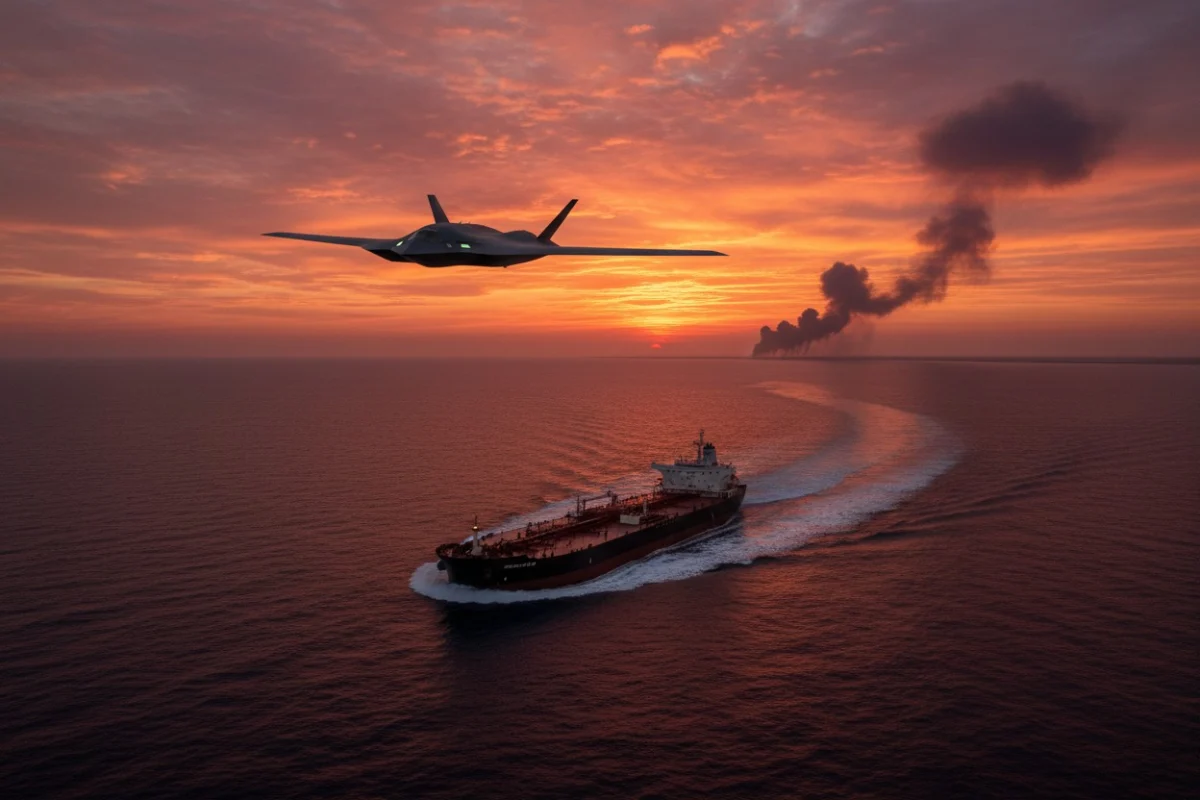
Saudi Arabia, a nation that has spent the better part of a decade investing hundreds of billions of dollars in state-of-the-art missile defense systems and high-end military hardware, finds itself facing a sobering reality. Despite its immense oil wealth and formidable foreign military partnerships, the Kingdom is proving increasingly vulnerable to a new, asymmetric style of warfare. This week, the Saudi facade of total security was punctured by a dual-threat: a barrage of ballistic missiles and drones launched by Yemen’s Houthi rebels against a southern military base, and a mysterious, highly sophisticated drone strike against a critical oil artery originating from Iraqi soil.
These events are not merely isolated security breaches; they represent a fundamental shift in the Middle Eastern power balance. As proxy actors leverage low-cost, high-impact technology to circumvent traditional defenses, the rules of regional engagement are being rewritten, leaving Riyadh in the precarious position of defending its borders and its economic lifelines against an invisible, multifaceted adversary.
The Chronology of Escalation: A Two-Front Crisis
The recent surge in hostilities did not occur in a vacuum. It is the culmination of months of simmering tension across the Arabian Peninsula.
The Southern Front: Houthi Resilience
The Houthi movement, officially known as Ansar Allah, has demonstrated a persistent capacity to project power well beyond its territorial strongholds in northern Yemen. According to Houthi military spokesman Yahya Saree, the recent operation against the Sharurah military base was a direct response to the "aggression" of the Saudi-led coalition. Saree claimed the strike targeted weapons depots and vital command-and-control centers.
This attack followed a period of intense battlefield maneuvering in Yemen. After seizing the Red Sea port of Mokha and pushing through Taiz, the Houthis now exert significant influence over the approaches to the Bab el-Mandeb Strait—one of the world’s most critical maritime chokepoints. While the Saudi-led coalition has attempted to regain ground in Al-Jawf, the war remains a grinding, multi-front conflict with no clear end in sight. The wounding of civilians in Jazan, resulting from a projectile strike on a mosque and residential areas, underscores the reality that the war’s "costs" are no longer confined to Yemeni soil.
The Northern Front: The Pipeline Strike
Perhaps more alarming than the recurring Yemeni conflict is the strike on the East-West Pipeline. This infrastructure is the crown jewel of Saudi energy logistics, allowing the Kingdom to bypass the Strait of Hormuz—a narrow passage frequently threatened by Iranian naval blockade rhetoric—to export crude oil to the Red Sea.
Analysts suggest the strike required sophisticated, long-range drone technology capable of navigating over 800 kilometers from the Iraqi border. Unlike the tactical, short-range quadcopters used by insurgents, this attack demonstrated a level of precision and distance that suggests state-level or high-end proxy capability. Saudi authorities immediately suspended operations on the pipeline as a precautionary measure, highlighting the fragility of global energy markets when faced with asymmetric sabotage.
Supporting Data: The Asymmetric Disadvantage
The shift in Middle Eastern warfare is best quantified by the disparity between the cost of defense and the cost of offense.
- The Cost of Defense: Saudi Arabia’s military budget consistently ranks among the top in the world. Much of this expenditure is dedicated to the maintenance of Patriot and THAAD missile defense batteries. These systems are highly effective against traditional ballistic missiles, but they are economically and operationally inefficient when deployed against swarms of low-cost drones.
- The Cost of Offense: A sophisticated, long-range "kamikaze" drone can cost a fraction of a single interceptor missile. When an adversary launches a dozen of these at a target, they can overwhelm the sensor-to-shooter loop of a sophisticated air defense battery simply by saturating the system’s targeting capacity.
- Geopolitical Geography: The distance of the strikes—ranging from 800 to 1,100 kilometers—indicates that the "front lines" have effectively vanished. Whether the drones originate from the Houthi-controlled mountains of Saada or the vast desert reaches of western Iraq, the Kingdom’s "strategic depth" has been rendered obsolete by advancements in range and guidance technology.
Official Responses: Navigating the Diplomatic Minefield
The response from Riyadh has been characterized by a strategic, albeit tense, silence. Official state media has provided only minimal reporting on the Sharurah incident, a move likely designed to prevent panic and avoid an immediate, public escalation that would require a kinetic response.
Conversely, the Iraqi government has been vocal, scrambling to contain the fallout of the pipeline attack. Baghdad is acutely aware that if the drones were launched from Iraqi territory, the Kingdom might view it as an act of war.
- Baghdad’s Stance: Lieutenant General Saad Maan, head of Iraq’s Security Media Cell, has been aggressive in his messaging. He has invoked the principle of "preventive sovereignty," arguing that Iraq cannot be allowed to serve as a launchpad for regional proxy wars.
- The Iranian Connection: In a gesture that has raised eyebrows in Washington and Riyadh, the Iraqi leadership approved an Iranian request to participate in the investigation into the pipeline strike. This move is being interpreted by many as an attempt to "manage" the narrative, ensuring that if Iranian fingerprints are found, they are negotiated through established diplomatic channels rather than military retaliation.
Implications: The New Rules of Gulf Security
The implications of these events are profound, suggesting that the regional order is moving away from the era of conventional, army-to-army warfare toward an age of persistent, deniable proxy conflict.
1. The Erosion of Strategic Deterrence
For years, Saudi Arabia relied on the assumption that its wealth and technological edge would deter direct attacks. The current situation suggests that deterrence is failing. Because the attackers utilize "proxy" labels, it is often difficult to determine who to strike in retaliation. If the architect of a drone strike is a state entity in Tehran, but the trigger is pulled by a militia in Iraq or a rebel group in Yemen, the traditional calculus of "proportional response" becomes dangerously complex.
2. Economic Vulnerability
The attack on the East-West Pipeline sends a chilling message to global energy markets. If a critical energy corridor can be shuttered by a single drone strike, the premium on Middle Eastern oil will necessarily rise. Investors and energy firms will be forced to account for a new "drone risk premium," which could have long-term consequences for Saudi Arabia’s ambitious Vision 2030 economic transformation program.
3. A Shift in Military Strategy
The Saudi military establishment is now at a crossroads. It must decide whether to continue investing in increasingly expensive "silver bullet" missile defense systems or to pivot toward a more decentralized, agile defense architecture. This would likely involve electronic warfare, signal jamming, and perhaps a massive deployment of short-range kinetic interceptors designed specifically to neutralize drones.
4. The Regional Web
The coordination—or at least the synchronization—of these attacks suggests a high degree of regional integration among non-state actors. The ability to launch multi-vector strikes from different countries indicates that the "Axis of Resistance" (as Iran and its regional allies are often called) has developed a sophisticated, cross-border network that can operate independently of traditional diplomatic constraints.
Conclusion: A Kingdom Under Pressure
The cracks in Saudi Arabia’s shield are no longer hairline fractures; they are structural. The Kingdom is facing an adversary that does not need to win a conventional war to achieve its strategic objectives. By simply making the cost of maintaining the status quo prohibitively high, the Houthis and their backers are forcing Riyadh to reconsider its regional footprint.
As the smoke clears from the latest round of strikes, the message remains clear: the era of relying solely on high-tech defenses to secure borders and pipelines is over. In the new Middle East, power is increasingly defined not by the size of one’s military, but by the ability to endure, adapt, and navigate a landscape where a few thousand dollars worth of hardware can disrupt a global superpower’s energy lifeline. Whether this leads to a broader regional conflict or a new, uneasy paradigm of negotiation remains the most pressing question of the coming decade.