







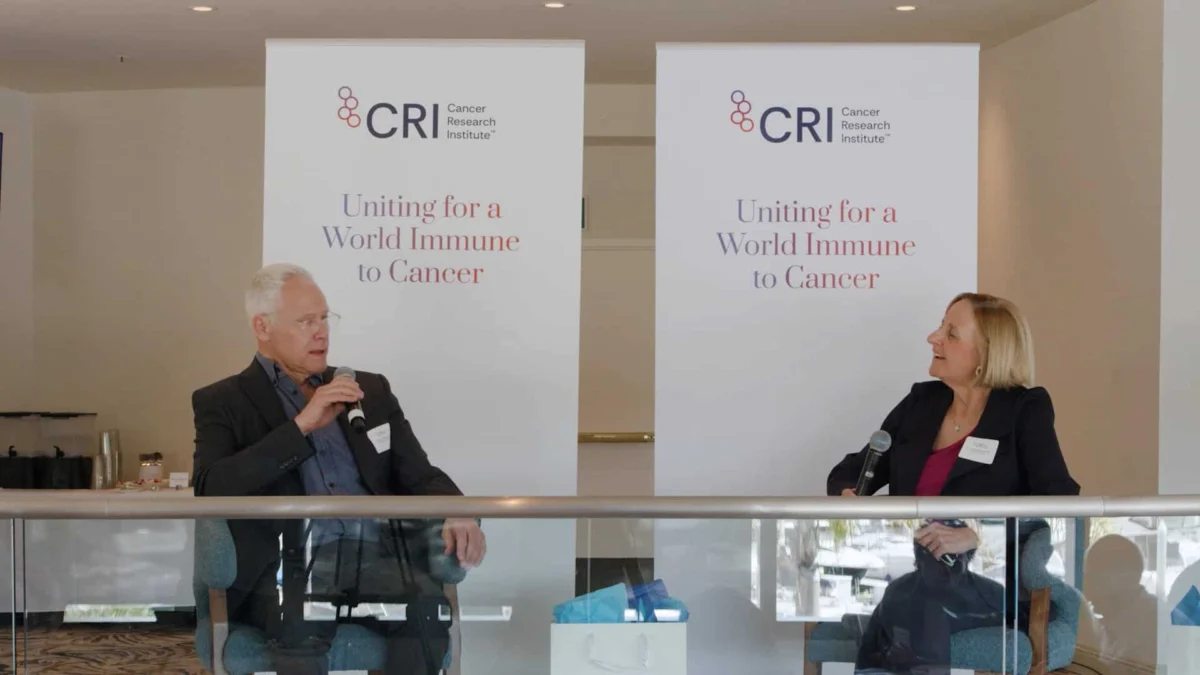
At the 2026 American Association for Cancer Research (AACR) Annual Meeting, the global scientific community turned its focus to the fundamental mechanisms of the immune system. The Cancer Research Institute (CRI) and the AACR jointly bestowed the prestigious AACR-CRI Lloyd J. Old Award in Cancer Immunology upon Kenneth M. Murphy, MD, PhD, a luminary whose decades of research have fundamentally rewritten our understanding of how the body recognizes and fights cancer.
The award ceremony served as more than a recognition of past achievements; it acted as a catalyst for a high-level dialogue on the future of immunotherapy. In a departure from traditional lecture formats, the CRI introduced a fireside-style conversation between Dr. Murphy and the 2025 award recipient, Crystal L. Mackall, MD. This exchange provided a rare, candid glimpse into the non-linear, often unpredictable journey of scientific discovery that defines the frontier of oncology.
The Genesis of an Immunological Paradigm
To understand the significance of Dr. Murphy’s work, one must look at the landscape of immunology as it existed prior to his seminal contributions. For years, the role of dendritic cells (DCs)—the "sentinels" of the immune system—was recognized, but their specific functional subsets remained a subject of intense debate.
Dr. Murphy’s career has been defined by his insistence on following the biology rather than adhering to convenient hypotheses. His work identifying the cDC1 subset of dendritic cells as the unique, indispensable architects of CD8+ T cell priming has become a cornerstone of modern immunology. By proving that these specific cells are essential for orchestrating an effective anti-tumor response, Murphy provided the missing link that explained why certain patients respond to immune checkpoint inhibitors while others remain resistant.
His research effectively bridged the gap between basic cellular biology and clinical application. Today, the "Murphy model" of immune orchestration is the blueprint used by drug developers to design more effective vaccines and adoptive cell therapies.
Chronology: A Career Built on Incremental Truths
Dr. Murphy’s trajectory offers a masterclass in the patience required for transformative science. Reflecting on his career during the AACR session, he characterized his work not as a series of planned leaps, but as an iterative process of questioning.
- The Early Years (Foundational Inquiry): Dr. Murphy began his career asking fundamental questions about how the immune system distinguishes between threats. His early work focused on the signaling pathways that dictate immune cell lineage, providing the tools necessary to isolate specific immune populations.
- The DC Breakthrough: Through the 2000s and 2010s, Murphy’s laboratory at Washington University School of Medicine in St. Louis delineated the transcriptional regulation of dendritic cells. This period saw the formal identification of cDC1 and cDC2 subsets, clarifying how these cells cross-present antigens to CD8+ T cells.
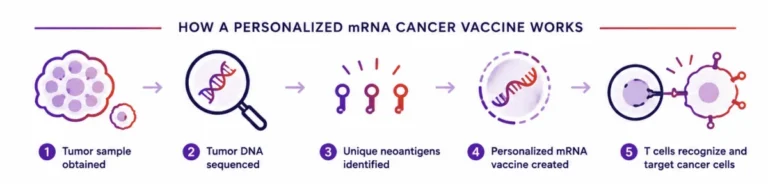
- Clinical Integration: In recent years, Murphy has shifted his focus toward applying these findings to human cancer therapy, demonstrating that the efficacy of mRNA and cDNA vaccine platforms is inextricably linked to the recruitment and activation of these specific DC subsets.
"We are still asking the same fundamental question we started with," Dr. Murphy remarked during his award address. "How does the immune system make these binary decisions between activation and tolerance?" This humility, despite his massive impact, serves as a hallmark of his approach to science.
Supporting Data: The Mechanics of Immune Efficacy
The discussion between Dr. Murphy and Dr. Mackall delved deep into the data that currently underpins the field. A primary focus was the "durability" of the immune response.
The DC-T Cell Axis
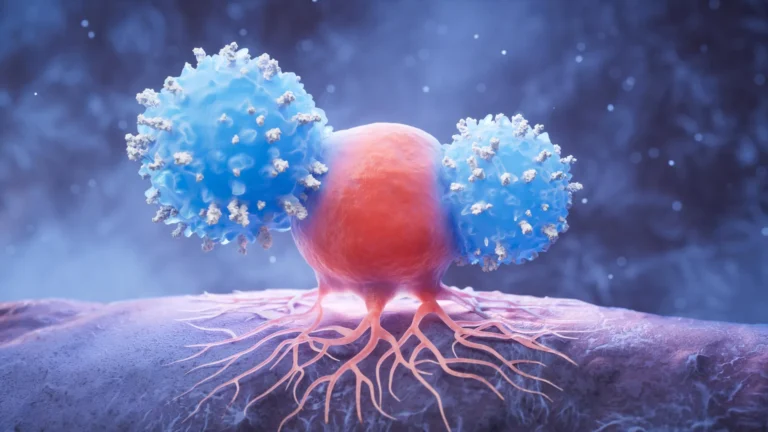
Data presented by Dr. Murphy suggests that the failure of many experimental vaccines is not necessarily due to the antigens chosen, but the failure to engage the right "presenter." The cDC1 subset is unique in its ability to produce IL-12 and cross-present antigens, which in turn leads to the development of memory T cells. Without this specific interaction, the immune response is often short-lived and unable to prevent tumor recurrence.
The Stem-Like T Cell Transition
A critical area of current research highlighted by Dr. Murphy is the transition between stem-like T cells (which provide long-term persistence) and short-lived effector cells (which provide the immediate "kill" signal). The ability to modulate this transition—essentially "reprogramming" the immune system to maintain a pool of stem-like T cells—could be the key to overcoming the exhaustion observed in many cancer patients treated with current therapies.
Official Responses and Perspectives
The academic community has hailed the award as a timely recognition of basic science in an era dominated by rapid, high-throughput clinical trials.
Dr. Crystal L. Mackall, reflecting on the partnership with Dr. Murphy, noted: "Ken’s work is the bedrock upon which many of us are building the next generation of CAR-T and vaccine therapies. His ability to strip away the complexity of the immune system to find the core, functional truth is unparalleled."
CRI leadership emphasized that the decision to pair the current and previous winners was intentional. By creating a dialogue between the "discoverer" (Murphy) and the "clinical implementer" (Mackall), the CRI aims to foster a culture of mentorship that is vital for the next generation of researchers.
Implications for the Future of Cancer Research
The dialogue at the 2026 AACR meeting highlighted several critical shifts in the research landscape, particularly concerning technology and the philosophy of discovery.
The Role of Artificial Intelligence
Both Murphy and Mackall addressed the elephant in the room: AI. While acknowledged as a powerful tool for managing the massive datasets generated by single-cell RNA sequencing and spatial transcriptomics, Dr. Murphy issued a cautionary note. "AI is an incredible tool for finding patterns," he said, "but it does not replace the scientific intuition required to decide which patterns matter. The bottleneck in science is rarely the data; it is the question."
The "Volume" Problem
Dr. Mackall raised a concern shared by many principal investigators: the sheer volume of scientific literature published daily is making it increasingly difficult for early-career scientists to synthesize knowledge. The implications for the future are clear: the next generation of breakthroughs will require not just technical proficiency, but an improved capacity for interdisciplinary synthesis.
The Return to Basics
Perhaps the most significant takeaway from the session was the reinforcement of basic science as the ultimate driver of clinical progress. As cancer immunology moves toward more personalized, multi-modal treatments, the principles defined by Dr. Murphy—the role of specific DC subsets, the nuances of T cell differentiation, and the importance of antigen presentation—remain the most reliable compass for researchers navigating the field.
Conclusion: A Philosophy of Inquiry
As the 2026 AACR Annual Meeting concluded, the consensus among attendees was clear: the future of cancer immunotherapy lies in a return to the fundamentals. Dr. Murphy’s career stands as a testament to the fact that while technology changes, the necessity of rigorous, hypothesis-driven exploration remains constant.
For the young scientist watching the proceedings, the message was one of encouragement. The "breakthrough" is not a singular event; it is the cumulative result of asking the right question, being willing to follow the biology where it leads, and possessing the patience to see the answer through. As we look toward the next decade of cancer research, it is evident that the lessons learned from Dr. Murphy’s study of the dendritic cell will continue to inform, inspire, and eventually, save lives.
To watch the full fireside conversation between Dr. Kenneth M. Murphy and Dr. Crystal L. Mackall, please refer to the official archives on the Cancer Research Institute’s website.