




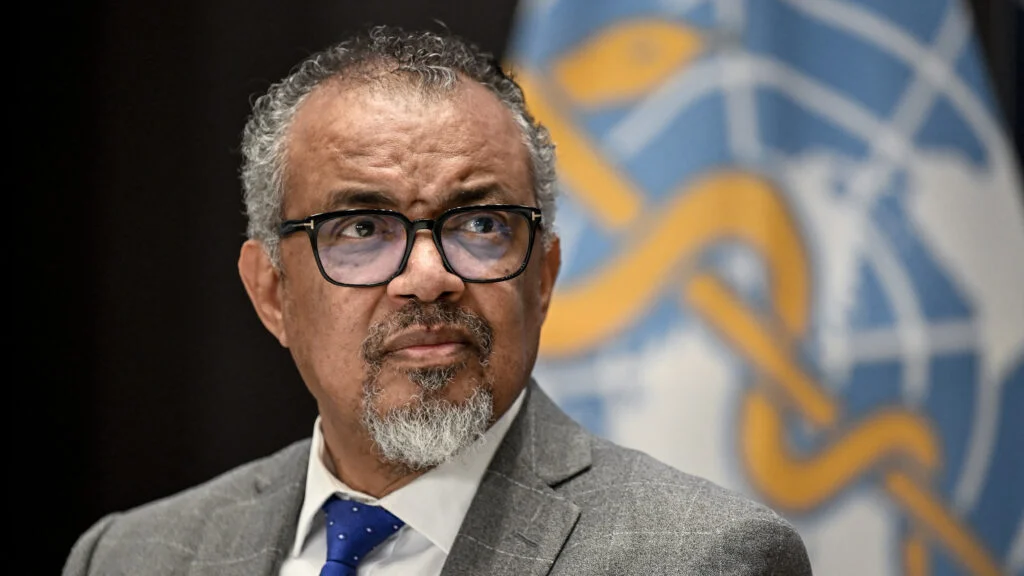
In an unprecedented move that signals the gravity of a brewing health crisis, the World Health Organization (WHO) late Saturday declared the Ebola outbreak currently unfolding in the Democratic Republic of the Congo (DRC) a Public Health Emergency of International Concern (PHEIC). The declaration, issued by Director-General Tedros Adhanom Ghebreyesus, comes amid rising fears that the highly lethal virus has already breached international borders, with travel-related cases surfacing in Kampala, the capital of Uganda.
The declaration marks a historic deviation from standard operating procedure. For the first time since the PHEIC mechanism was established, the WHO Director-General bypassed the traditional step of convening an expert Emergency Committee before issuing the designation. This move underscores the urgency felt at the highest levels of global health governance regarding the containment of this specific, little-understood strain of the virus.
The Chronology of an Emerging Crisis
The rapid escalation of this outbreak has left health authorities scrambling to catch up. While the official confirmation of the outbreak was only announced by African health officials on Friday, May 15, 2026, the underlying reality on the ground suggests the virus may have been circulating undetected for several weeks.
- April 24, 2026: The first suspected case, a health care worker in the city of Bunia, presents with symptoms of viral hemorrhagic fever. The individual subsequently dies, but the connection to Ebola is not immediately identified.
- Late April – Mid-May 2026: A cluster of deaths occurs, including at least four health care workers, within a four-day window. Surveillance gaps and a "low clinical index of suspicion" among local providers allow the virus to circulate unchecked for three weeks before the official diagnosis is confirmed.
- May 15, 2026: Regional health authorities confirm the presence of the Bundibugyo ebolavirus in the Ituri province of the DRC.
- May 16, 2026: Reports emerge of suspected travel-related cases in Kampala, Uganda, involving individuals who had recently transited from the DRC.
- May 16–17, 2026: In the early morning hours of Sunday in Geneva, the WHO officially declares a PHEIC, citing the high risk of cross-border transmission and the need for immediate, coordinated international intervention.
A Formidable Foe: The Bundibugyo Strain
The current outbreak is caused by the Bundibugyo species of the ebolavirus. While the name may be less familiar to the public than the Zaire strain—which was responsible for the devastating 2018–2020 epidemic in the same region—it presents a unique and dangerous challenge to medical teams.
There have only been two documented outbreaks of the Bundibugyo strain in history. Consequently, the medical community lacks the robust cache of licensed vaccines and therapeutics that have been developed for other Ebola variants. The absence of proven medical countermeasures means that containment relies almost entirely on "old-school" public health measures: rapid contact tracing, strict infection prevention and control (IPC) in clinical settings, and community engagement to safely manage burials and reduce transmission.
Data and Dissemination: Assessing the Scale
As of Saturday, May 16, the data provided by the WHO paint a grim picture of the situation in the DRC’s remote Ituri province. The region, which shares porous borders with South Sudan and Uganda, is reporting:
- 8 confirmed cases
- 246 suspected cases
- 80 suspected deaths
The geographic context adds a layer of extreme complexity. The Ituri province is not only a logistical challenge due to its topography but is also a theater for long-standing armed conflict. Ongoing instability hampers the ability of surveillance teams to move freely, complicates the delivery of supplies, and increases the likelihood of population displacement, which acts as a primary vector for the virus.
Furthermore, the WHO has moved to correct early, erroneous reports regarding a case in Kinshasa, the DRC’s capital. Rigorous testing confirmed that the individual in question was negative for Ebola, sparing the nation the additional logistical nightmare of managing an outbreak in a dense, multi-million-person urban center. However, the confirmed presence of two independent cases in Kampala—with no apparent link between the two patients—suggests that the virus has been introduced into Uganda via multiple routes, highlighting the high risk of regional dissemination.
Official Responses and Global Coordination
The decision by Dr. Tedros to declare a PHEIC without an emergency committee was met with broad, if cautious, support from the global health community. The International Panel for Pandemic Preparedness and Response, co-chaired by former Liberian President Ellen Johnson Sirleaf and former New Zealand Prime Minister Helen Clark, issued a statement praising the swift action.
"His decision to proceed ahead of convening a formal Emergency Committee reflects the gravity of the situation and the need for immediate global mobilization," the Panel stated. They emphasized that in the face of an unpredictable pathogen, bureaucratic delays could be measured in lives lost.
The WHO is currently moving to convene an emergency committee to provide technical advice on containment strategies. However, the agency finds itself in a precarious position. The WHO is currently navigating a significant budget crisis, exacerbated by the withdrawal of the United States under the Trump administration. This loss of funding has constrained the agency’s ability to surge resources into conflict zones, making the international mobilization of funds and personnel more critical than ever.
Implications: The "PHEIC" Designation
A "Public Health Emergency of International Concern" is the highest level of alert that the WHO can issue. The term, often abbreviated as PHEIC and colloquially pronounced "fake" by some in the medical community, is far from an empty label. It is a powerful legal and political instrument.
When a PHEIC is declared:
- Mandatory Reporting: Countries are obligated to report on the outbreak to the WHO, ensuring that data flows across borders.
- Temporary Recommendations: The Director-General gains the authority to issue evidence-based guidance on trade, travel, and surveillance that member nations are expected to implement.
- Global Prioritization: The declaration signals to donor nations, NGOs, and global financial institutions that this event requires immediate budgetary attention and resource allocation.
For the people of the DRC and Uganda, the declaration is a desperate call for the world to pay attention. The current situation, described by the WHO as having signs of "a potentially much larger outbreak than what is currently being detected," indicates that the window for containment is narrow.
The combination of the Bundibugyo strain’s lethality, the lack of vaccines, the regional conflict, and the porous borders creates a perfect storm. As global health authorities descend upon East Africa, the primary focus will be on correcting the "dangerous gaps" in infection control that allowed the virus to claim the lives of healthcare workers—the very people meant to stop the spread.
The world now watches to see if the global community can overcome the logistical, political, and financial hurdles necessary to contain an outbreak that, if left unchecked, has the potential to spiral into a regional catastrophe. With the WHO having staked its credibility on this swift declaration, the burden of success now rests on the speed and efficacy of the international response.