ROTTERDAM, Netherlands — The MV Hondius, a vessel synonymous with adventure travel, arrived at the Port of Rotterdam on Monday morning under a somber cloud of medical uncertainty. The cruise ship, which recently became the epicenter of a rare and lethal hantavirus outbreak, docked in Europe’s largest port to undergo an exhaustive decontamination process. This arrival marks the conclusion of a harrowing maritime ordeal that has spanned continents and placed international health authorities on high alert.
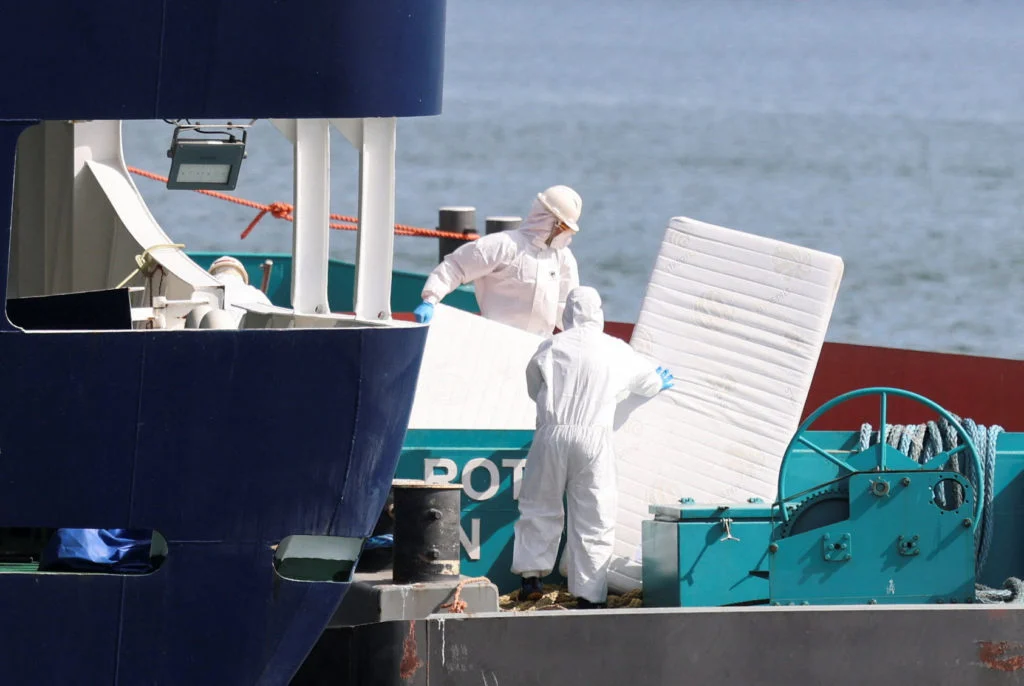
While the vessel is now largely empty of its original passenger manifest—having disembarked travelers in Tenerife last week—the presence of 25 crew members and two medical personnel onboard necessitates a rigorous quarantine and sanitation protocol. The sight of personnel in white hazardous materials (hazmat) suits boarding the ship served as a stark visual reminder of the severity of the pathogen currently under investigation.
A Chronology of a Crisis
The emergence of hantavirus on a commercial cruise ship is an unprecedented medical event. Unlike common respiratory illnesses that frequently disrupt cruise travel, hantavirus is primarily transmitted to humans through contact with rodent excreta or saliva. Its appearance on the Hondius has triggered a complex international response involving multiple nations and the World Health Organization (WHO).
The timeline of the crisis began several weeks ago during a voyage that included stops in South America. Health officials believe the initial exposure occurred when passengers visited areas in the region, where the virus is endemic. As the voyage progressed, the first symptoms began to manifest among the passengers. By the time the vessel reached international waters, it had become a floating quarantine zone.
As cases mounted, the Hondius became a focal point for global surveillance. To date, at least 11 confirmed cases have been identified, with the WHO verifying nine. The human toll has been tragic, with three passengers losing their lives to the infection. Among the deceased were a Dutch couple, whom officials believe were among the first to be exposed to the virus during their time ashore in South America.
The Operational Response in Rotterdam
The decision to allow the Hondius to dock in Rotterdam was not taken lightly, but it was viewed as a moral and logistical necessity. René de Vries, the port’s harbormaster, emphasized the importance of international cooperation during health crises. "I think it’s unacceptable to say no, you’re not welcome in the biggest port of Europe," de Vries stated, acknowledging the duty of care the port owes to seafarers.
Upon arrival, the ship was met with a specialized containment infrastructure. Authorities have erected white containers along the waterfront, situated between a line of industrial windmills, to house crew members who cannot be immediately repatriated.
Yvonne van Duijnhoven, the director of public health in Rotterdam, provided reassurance regarding the current state of the crew. "Luckily, so far, the crew has suffered no symptoms," she noted. However, the protocol remains stringent: all crew members are subject to immediate testing upon arrival, followed by mandatory weekly testing for the duration of their quarantine.
The decontamination of the vessel itself is expected to be a comprehensive, three-day operation conducted under strict Dutch public health guidelines. Officials have assured the public that the risk of transmission to the outside world is "very low," citing robust protocols designed to isolate the ship’s internal environment. The vessel will remain under inspection by health authorities and will not be permitted to resume service until it is cleared of all potential biological hazards.
Global Implications and Medical Data
The Hondius incident has reverberated far beyond the Netherlands. As the ship traveled, passengers dispersed to their home countries, triggering contact tracing and isolation efforts across the globe.
In the United States, 18 individuals are currently under observation in specialized healthcare facilities equipped to manage highly infectious diseases. In Canada, the Public Health Agency confirmed that one of four Canadians in isolation tested positive for the virus on Sunday, prompting the agency to coordinate directly with the WHO.
In France, the situation remains fluid. A French passenger is currently receiving intensive care for the virus. While early reports suggested the patient was being treated with an artificial lung (ECMO), the Paris public hospital authority clarified on Monday that while the patient’s condition is grave, they are not currently on that specific life-support system. However, the hospital noted that the severity of the infection could necessitate such intervention in the future.
Genetic analysis of the virus has provided some relief to epidemiologists. The Pasteur Institute in France announced that it has successfully sequenced the Andes virus strain found in a passenger. The analysis revealed that the virus matches known strains from South America, showing no evidence of mutations that would increase its transmissibility or virulence. This discovery suggests that the outbreak is a result of localized exposure rather than a novel, more dangerous variant of the pathogen.
The Future of Cruise Operations
The owner of the Hondius has maintained a stance of continuity, stating that they do not foresee any long-term changes to their operational model. With an Arctic cruise scheduled to depart from Keflavik, Iceland, on May 29, the company is under pressure to prove that the Hondius outbreak was a singular, manageable event rather than a systemic failure in their sanitary protocols.
However, the medical community is watching closely. The Hondius outbreak is the first known case of hantavirus occurring on a cruise ship, raising questions about how the maritime industry screens for zoonotic diseases—illnesses that jump from animals to humans. Traditionally, cruise health protocols have focused on enteric illnesses like norovirus or respiratory viruses like COVID-19. The Hondius case highlights a blind spot: the potential for rare, regionally-specific zoonotic pathogens to be brought onboard by passengers or crew.
Lessons from the Sea
This crisis serves as a reminder of the historical role that maritime vessels play in the spread of infectious diseases. From the bubonic plague to the 1918 influenza pandemic, ships have long been the primary vectors for global health shifts.
The integration of modern public health surveillance—such as the rapid genetic sequencing performed by the Pasteur Institute—with established maritime quarantine procedures represents the front line of modern defense. The coordination between the WHO, the Port of Rotterdam, and national health agencies demonstrates a more robust response system than in previous decades.
As the crew of the Hondius settles into their temporary quarters in Rotterdam, the world remains observant. The successful containment of this outbreak will be a test case for how the cruise industry and global health authorities handle future encounters with rare, lethal viruses. For now, the focus remains on the recovery of the patients, the safety of the crew, and the thorough sanitation of the vessel, ensuring that the Hondius does not become a catalyst for further tragedy.
In the face of such uncertainty, the words of health officials echo a cautious optimism. With rigorous testing, strict quarantine, and a transparent flow of information, the international community hopes to close the book on this troubled journey, ensuring that the lessons learned at sea are applied to keep the global population safe on land.