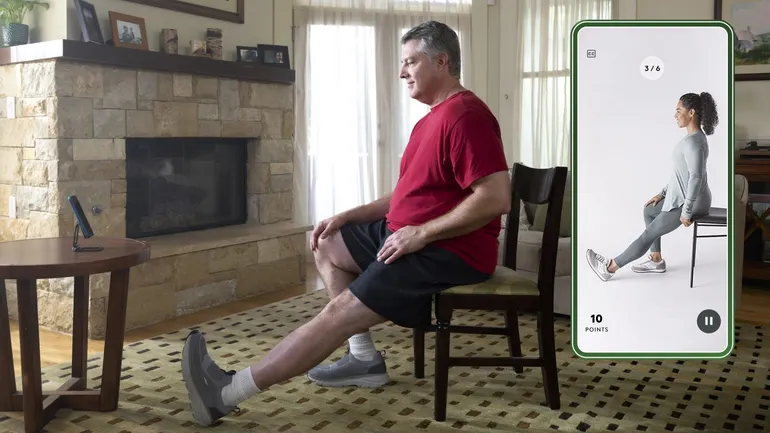
In a decisive move to consolidate its position as a comprehensive digital health powerhouse, San Francisco-based Hinge Health has announced the acquisition of Cylinder, a rising star in the digestive health sector. This strategic merger marks a significant milestone for Hinge, which has spent the last decade building an integrated musculoskeletal (MSK) and pain management platform. By absorbing Cylinder’s specialized digestive care model, Hinge is effectively pivoting from a condition-specific provider to a multi-disciplinary virtual health enterprise, directly addressing the growing demand from employers and health plans for more holistic, consolidated health benefits.
The acquisition arrives at a time of renewed vitality in the digital health market. After a period of industry consolidation and investor caution, digital health deals are heating up again as providers move to diversify their service portfolios. The move also highlights an industry-wide push to leverage artificial intelligence to manage chronic conditions more effectively—a technological cornerstone of Hinge’s future roadmap.
The Strategic Rationale: Why GI Care?
The decision to enter the gastrointestinal (GI) space is far from arbitrary. Hinge Health, founded in 2014, has built its reputation on treating chronic MSK issues, pelvic floor health, and migraines. However, its clients—which include some of the largest self-insured employers and health plans in the United States—have increasingly identified digestive health as a critical, high-cost, and underserved area of benefit coverage.
GI conditions are pervasive, affecting one in four U.S. adults. Beyond the physical toll, these conditions represent a massive financial burden, accounting for approximately $135 billion in annual medical spending. Despite this, access to care remains fragmented. Hinge points to data indicating that nearly 70% of U.S. counties lack a practicing gastroenterologist, creating a significant "care gap" that digital health solutions are uniquely positioned to fill.
"We’re entering GI care because of member and client demand," said Daniel Perez, co-founder and CEO of Hinge Health. "Many people we already serve for back, joint, pelvic, and migraine care also have chronic digestive conditions. This acquisition gives us a strong foundation to build from in GI; it is a natural extension of our care model."
Chronology of a Digital Health Expansion
To understand the scale of this acquisition, one must look at the trajectory of both companies over the past several years:
- 2014: Hinge Health is founded, initially focusing on physical therapy and coaching for musculoskeletal conditions.
- 2019: Cylinder is launched, positioning itself as a digital-first provider for digestive health, offering everything from bloating and gas management to treatment plans for Irritable Bowel Syndrome (IBS) and Inflammatory Bowel Disease (IBD).
- Spring 2026: Hinge Health goes public, signaling its maturation as a cornerstone of the digital health landscape.
- August 2026: Hinge reports record-breaking second-quarter financial results, including a 53% year-over-year revenue increase to $213 million and a significant swing to profitability.
- August 2026: Simultaneous with its quarterly earnings report, Hinge announces the definitive agreement to acquire Cylinder.
- 2027 (Projected): Hinge plans to launch a unified, AI-driven app that integrates its existing MSK programs with the new comprehensive GI care suite.
The Intersection of GLP-1s and Digestive Health
A primary driver of this acquisition is the rapid rise of glucagon-like peptide-1 (GLP-1) medications. While these drugs have revolutionized weight loss and diabetes management, they come with well-documented gastrointestinal side effects. Because these medications slow down gastric emptying, patients frequently experience nausea, vomiting, and abdominal pain.
As GLP-1 utilization surges among the employee populations Hinge serves, employers are struggling to manage the downstream clinical consequences. Hinge’s acquisition of Cylinder allows them to offer a "wraparound" support system for patients on these medications. By providing diet, lifestyle, and clinical guidance to mitigate GI side effects, Hinge hopes to improve adherence to weight-loss treatments while reducing the costs associated with acute GI-related medical interventions.
Supporting Data: Why Cylinder?
Cylinder’s attractiveness to Hinge was not merely based on its clinical offerings but on its deep-rooted infrastructure and market penetration. Over its five-year history, Cylinder has built a robust ecosystem that mimics Hinge’s own go-to-market strategy:
- Market Reach: Cylinder currently holds contracts with nearly 100 clients, covering approximately two million lives.
- Strategic Partnerships: The company has successfully integrated with two of the three largest pharmacy benefit managers (PBMs) in the country.
- Insurance Integration: Cylinder maintains active agreements with three of the five largest self-insured health plans in the U.S.
According to CEO Daniel Perez, the overlap in customer base and distribution channels is extensive. "They’re selling to the same customers, have the same go-to-market motion, and share the same distribution partners that we do," Perez noted during a call with investors. This operational synergy is expected to lead to a seamless integration process, avoiding the common pitfalls that plague many health-tech M&A activities.
Implications for the Future: The AI-Driven Platform
The long-term vision for the acquisition is the creation of a "super-app" for chronic condition management. By 2027, Hinge intends to merge Cylinder’s digital platform with its own, creating a single interface for members.
This platform will be heavily reliant on artificial intelligence. Hinge plans to use AI to track dietary intake and analyze how a member’s body responds to specific triggers. By combining this data with real-time access to GI specialists, clinicians, and health coaches, Hinge aims to provide highly personalized diet and lifestyle modification plans.
For the industry at large, this signals a move away from "point solutions"—single-purpose apps that address only one health issue—toward "platform solutions." Clients are increasingly "fed up" with managing dozens of individual vendors and are gravitating toward partners who can offer a unified experience across multiple chronic conditions.
Analyst Sentiment and Financial Outlook
Financial analysts have responded favorably to the move. William Blair analyst Ryan Daniels described the acquisition as a "logical extension of the business" in a note to investors.
The financial math also supports the move. Hinge anticipates that the inclusion of Cylinder will provide a modest boost to sales in the immediate term—estimated between $7 million and $8 million for the remainder of the year—with significant growth projections for 2027 and beyond as the product is cross-sold to Hinge’s existing client base.
This acquisition follows a period of impressive financial maturation for Hinge. Having moved from a loss of $575.7 million in the previous year to a net income of $43.7 million in the most recent quarter, the company is demonstrating that it has the fiscal discipline to handle expansionary growth. On the back of these strong results and the acquisition announcement, Hinge has officially raised its financial outlook for the remainder of 2026.
Conclusion: A New Standard for Digital Health
The acquisition of Cylinder is more than a simple expansion of service offerings; it represents the maturation of the digital health sector. As Hinge Health moves to dominate both the musculoskeletal and gastrointestinal spaces, it sets a new benchmark for what employers should expect from their digital benefits partners.
By addressing the intersection of chronic condition management, the growing popularity of GLP-1 medications, and the demand for AI-integrated clinical support, Hinge is positioning itself to be a permanent fixture in the modern healthcare landscape. As the company works toward its 2027 goal of a unified platform, the industry will be watching closely to see if this "platform-first" approach can deliver the long-term cost savings and clinical outcomes that both employers and patients so desperately need.