By Medical Editorial Staff
Inflammation has long been considered a "silent accomplice" in the progression of cardiovascular disease, yet its role across the diverse spectrum of heart failure (HF) has remained a subject of intense debate. For years, clinicians operated under the assumption that inflammation was primarily a hallmark of heart failure with preserved ejection fraction (HFpEF)—driven largely by systemic comorbidities—while heart failure with reduced ejection fraction (HFrEF) was viewed through the lens of myocardial damage.
New, large-scale data from the international POSEIDON study, presented at the European Society of Cardiology’s Heart Failure 2026 conference in Barcelona, is fundamentally shifting this perspective. The findings suggest that systemic inflammation is not a condition-specific outlier but a pervasive, common factor across all heart failure phenotypes, regardless of ejection fraction (EF).
Main Facts: A Universal Inflammatory Risk
The POSEIDON study, which analyzed data from nearly 12,000 patients across 317 centers in 18 countries, revealed that approximately 40% of all heart failure patients carry a high inflammatory risk. This risk, defined by elevated levels of high-sensitivity C-reactive protein (hs-CRP) of 2 mg/L or higher, was distributed almost uniformly across the three major heart failure subtypes:
- HFpEF (Preserved Ejection Fraction): 38.8% prevalence of high inflammatory risk.
- HFmrEF (Mildly Reduced Ejection Fraction): 38.1% prevalence of high inflammatory risk.
- HFrEF (Reduced Ejection Fraction): 38.2% prevalence of high inflammatory risk.
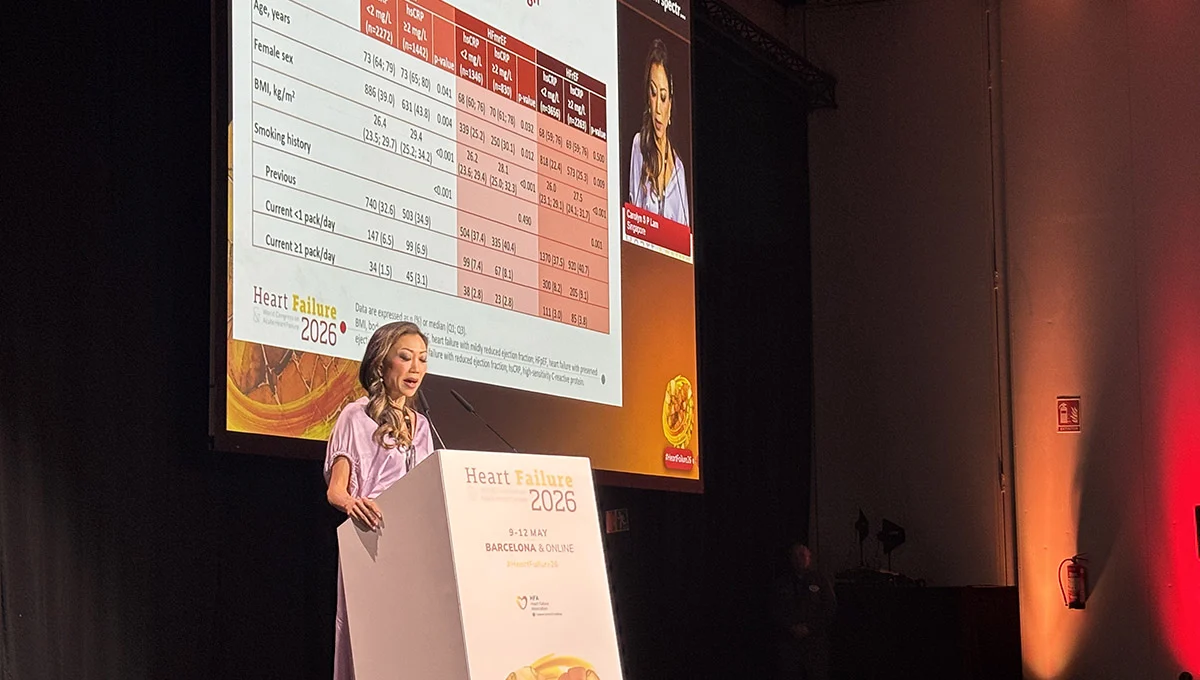
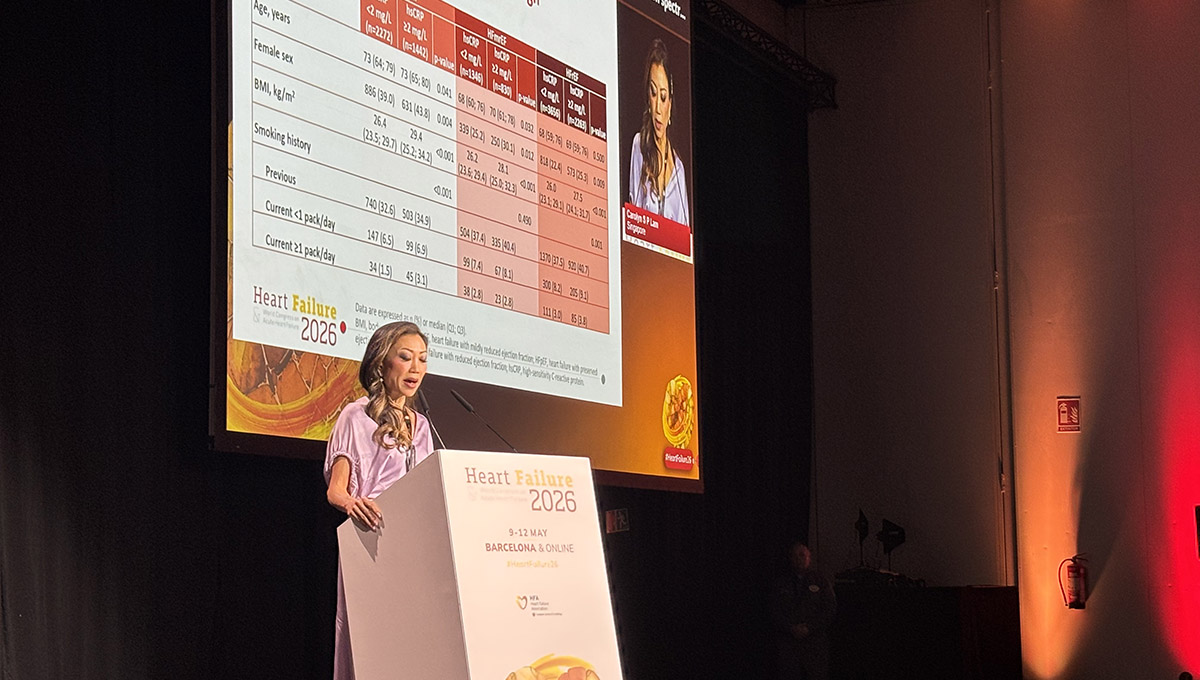
Presented by Dr. Carolyn Lam of the National Heart Centre, Singapore, and simultaneously published in the European Journal of Heart Failure, the study highlights that inflammation is a ubiquitous, rather than specialized, feature of the disease. This data challenges the long-standing clinical dogma that inflammation is "more HFpEF-centric" and suggests that the cardio-kidney-metabolic phenotype is a unifying thread connecting these patients.
Chronology of the Research
The journey toward these findings began with the need to move beyond regional or ethnically homogeneous datasets that characterized earlier research. Between 2023 and 2025, the POSEIDON study investigators enrolled nearly 19,000 participants during routine clinical encounters.
The researchers established strict inclusion criteria to ensure that the inflammatory markers reflected the patients’ baseline disease state rather than acute stressors. Specifically, the 11,809 individuals included in the final analysis were required to be free of hospitalizations, unplanned clinical visits, or active infections for at least 60 days prior to their enrollment.
By filtering for "clean" clinical snapshots, the research team was able to capture a more accurate representation of chronic, systemic inflammation. Following the data collection, the findings were analyzed and peer-reviewed, leading to the presentation at the ESC Heart Failure 2026 conference and the simultaneous publication of the results.
Supporting Data and Patient Demographics
The demographic breakdown of the POSEIDON cohort provided critical context for how these inflammatory signatures manifest in different patient groups. While the prevalence of high hs-CRP was uniform, the underlying patient characteristics differed by phenotype:
- HFpEF Patients: Generally older, more likely to be female, and more frequently diagnosed with atrial fibrillation.
- HFrEF/HFmrEF Patients: Exhibited a higher prevalence of coronary artery disease compared to their HFpEF counterparts.
Despite these phenotypic differences, the predictors of high hs-CRP remained strikingly consistent across the board. Multivariable analyses identified several independent drivers of elevated inflammation:
- Lifestyle Factors: Smoking history and obesity (with BMI showing the strongest association in the HFpEF subgroup).
- Metabolic and Systemic Health: Dyslipidemia, diabetes, hypertension, and reduced estimated glomerular filtration rate (eGFR).
- Clinical Severity: Worse New York Heart Association (NYHA) functional class and higher NT-proBNP levels.
Furthermore, the researchers investigated the interleukin-6 (IL-6) signaling cascade, of which CRP is a downstream marker. They found that IL-6 levels were not only elevated but were "remarkably similar" across all EF types, showing a moderate correlation with hs-CRP in every subgroup. This consistency provides a biochemical validation of the clinical observations.
Expert Perspectives and Official Responses
The implications of these findings have sparked a significant dialogue among the cardiology community. Dr. Charalambos Antoniades, a professor at the University of Oxford and a senior author of a recent study on epicardial adipose tissue, emphasized that while the POSEIDON data is groundbreaking, the "timeline" of inflammation is the next major hurdle for researchers.
"Local inflammation can cause or worsen HF by impacting either blood vessels or the myocardium, but the relationship can also move in the other direction, with heart failure giving rise to systemic inflammation," Dr. Antoniades explained. He noted that while hs-CRP is an excellent marker for systemic inflammation, it acts as a "blind" biomarker—it confirms the presence of the fire but does not identify where the fire started.
Dr. Lam echoed this sentiment, cautioning that because the POSEIDON study is cross-sectional, it cannot definitively prove causality. "The study provides a real-world estimate of the potentially eligible population for therapies directly targeting inflammation," she stated, while noting that the inability to assess temporal changes limits our understanding of whether the inflammation is the cause of the disease or a consequence of it.
Clinical and Research Implications
The primary question now facing the medical community is how to intervene. If 40% of the heart failure population is living with high inflammatory risk, are they candidates for anti-inflammatory therapy?
1. Identifying Potential Therapeutic Targets
There is growing interest in whether existing cardiovascular therapies, such as SGLT2 inhibitors, may exert some of their beneficial effects by modulating inflammatory pathways. Researchers are now looking to see if patients with high hs-CRP levels might benefit from more aggressive, targeted anti-inflammatory interventions, though it remains to be seen if this strategy will improve long-term outcomes like mortality or hospitalization rates.
2. Preventive Screening
Dr. Antoniades suggested that the future of heart failure management may involve using inflammation biomarkers as a predictive tool. By identifying individuals with high systemic inflammation before they develop symptomatic heart failure, clinicians might be able to intervene earlier with lifestyle modifications or pharmacotherapy to prevent the transition to overt disease.
3. The Need for Longitudinal Data
While POSEIDON provides a massive, high-quality "snapshot," the consensus among experts is that longitudinal, prospective studies are now mandatory. Such studies will need to track hs-CRP levels over time to determine if lowering inflammation correlates with reduced disease progression.
Conclusion: A New Frontier
The POSEIDON study has dismantled the notion that inflammation is a compartmentalized problem within heart failure. By proving that high inflammatory risk is a universal reality for four out of every ten heart failure patients—regardless of their ejection fraction—the study has effectively widened the scope for potential therapeutic interventions.
While the medical community waits for more data on whether direct anti-inflammatory treatments can successfully move the needle on clinical outcomes, the POSEIDON findings offer a clear mandate: the cardio-kidney-metabolic nature of heart failure must be treated with an eye toward the systemic inflammation that drives it. For the clinician, this means that patient management is no longer just about the mechanics of the pump, but about addressing the underlying, systemic inflammatory burden that compromises the heart’s ability to function.
As research moves forward, the focus will undoubtedly shift from simply monitoring this inflammatory risk to finding the most effective ways to mitigate it, potentially ushering in a new era of precision medicine for heart failure patients worldwide.