









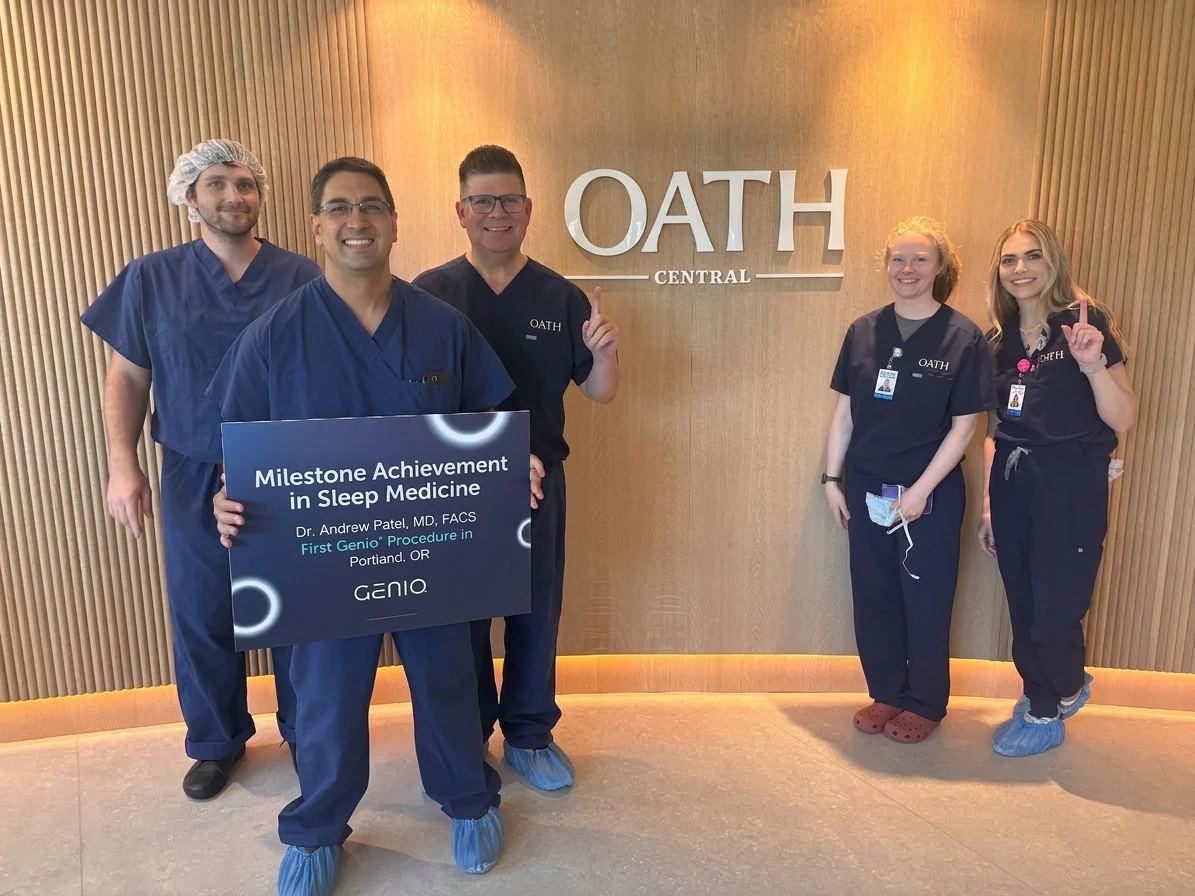
In a landmark development for sleep medicine in the Pacific Northwest, Oath Surgical, a Portland-based, AI-native ambulatory surgery center, has successfully performed the region’s first bilateral hypoglossal nerve stimulation (HGNS) implant procedure in an outpatient setting. This milestone, led by Dr. Andrew Patel, signals a transformative shift in how moderate to severe obstructive sleep apnea (OSA) is treated, moving high-acuity care out of traditional hospital environments and into specialized, technologically advanced surgical centers.
The Evolution of Sleep Apnea Treatment
Obstructive sleep apnea (OSA) affects millions of adults worldwide, yet treatment options have historically been binary: the use of Continuous Positive Airway Pressure (CPAP) machines or traditional, often invasive, surgical interventions. For many patients, CPAP—while effective—proves difficult to tolerate due to discomfort, mask leaks, or lifestyle incompatibility.
The introduction of hypoglossal nerve stimulation has revolutionized this space. By delivering mild electrical pulses to the nerves that control the tongue and airway muscles, these devices prevent the airway from collapsing during sleep. The specific device utilized in this recent procedure, the Genio system by Nyxoah, represents the next generation of neurostimulation. Unlike previous iterations of nerve stimulation therapy, the Genio system is the first FDA-approved, battery-free, bilateral neurostimulator. Its design—which uses a single incision and integrates with the body’s natural airway control—offers a minimally invasive path for patients who have exhausted or failed CPAP therapy.
Chronology of the Milestone
The successful operation at Oath Surgical did not happen in a vacuum; it was the result of meticulous integration between advanced surgical technique and clinical intelligence systems.
- Pre-Operative Preparation: The surgical team at Oath Surgical, led by Dr. Andrew Patel, utilized the center’s proprietary clinical intelligence system, OathOS. This platform allowed for the seamless synchronization of patient referral data, imaging, and logistical scheduling, ensuring that the patient was an ideal candidate for the specific bilateral technology.
- The Procedure: The surgery itself, conducted at the downtown Portland facility, marks the first time this specific bilateral technology has been deployed in an ambulatory setting within the Pacific Northwest. By performing the procedure in an outpatient facility, the team demonstrated that the complexity of bilateral stimulation could be managed outside the traditional hospital footprint.
- Post-Operative Integration: Following the implant, the patient entered a structured recovery and monitoring program facilitated by the OathOS system. This ensures that the device activation and long-term titration—the process of fine-tuning the electrical stimulation levels to match the patient’s physiological needs—are tracked with data-driven precision.
Supporting Data and Technical Advantages
The Genio system stands out in the crowded field of medical devices due to several technical attributes that address common patient concerns regarding surgery and long-term maintenance.
1. Battery-Free Architecture
The primary innovation of the Genio system is the elimination of an implanted battery. In older neurostimulators, the device requires a pulse generator (battery) to be implanted in the chest, connected via long leads. The Genio system, by contrast, is entirely contained in the neck area. This reduces the footprint of the hardware and eliminates the need for future surgical procedures to replace depleted batteries.
2. Bilateral Stimulation
While traditional HGNS often targets one side of the airway, the Genio system offers bilateral stimulation. This approach provides a more comprehensive stabilization of the tongue and airway musculature, which can lead to improved therapeutic outcomes for patients whose airway collapse is not limited to a single side.
3. MRI Compatibility
A common concern for patients with medical implants is the ability to undergo diagnostic imaging. The Genio system is fully compatible with 3T MRI machines, meaning patients do not have to worry about future diagnostic limitations or complications during routine medical care.
4. The Role of OathOS
The "AI-native" designation of Oath Surgical refers to the use of OathOS. This system acts as a digital nervous system for the surgical center. It supports the patient journey from the initial consultation through to activation and long-term follow-up. By digitizing the workflow, Oath Surgical reduces administrative friction and allows surgeons to focus on clinical excellence while ensuring that outcomes data is collected consistently—a vital requirement for refining sleep apnea treatments.
Official Responses and Perspectives
The significance of this procedure was underscored by the comments from the lead surgeon and the company’s founder.
"For too long, patients in Oregon who struggled with CPAP had limited options and often had to travel outside the region to explore surgical alternatives," said Dr. Andrew Patel, head and neck surgeon at Oath Surgical. "This new procedure is a real step forward for sleep apnea patients. It is bilateral, requires only a single incision, and has no implanted battery, which makes it an easier conversation to have with patients who have been hesitant about surgery."
Dr. Patel emphasized that his objective is not merely to perform a one-off surgery, but to establish a robust, high-quality program in Portland. "My focus now is on building a consistent, high-quality program here that puts patient outcomes and long-term follow-up at the center," he added.
Dr. Oliver Keown, founder and CEO of Oath Surgical, framed the achievement as a structural shift in healthcare delivery. "Bringing higher acuity care like this to Oregon is exactly the kind of milestone our platform was built to support," said Dr. Keown. "Oath’s surgical centers are designed for advanced outpatient procedures, and Dr. Patel and the team have shown that bilateral HGNS therapy can be delivered safely and efficiently outside of a hospital setting. We think this is the beginning of a much broader shift in how sleep apnea care is accessed across the region."
Implications for the Future of Sleep Medicine
The implications of this development are threefold: regional accessibility, the shift to ambulatory care, and the rise of the "AI-native" surgical center.
Expanding Regional Access
Historically, patients in the Pacific Northwest seeking advanced surgical alternatives to CPAP were often required to travel to major medical hubs elsewhere in the country. By establishing this capability in Portland, Oath Surgical is democratizing access to life-changing technology. Patients can now receive specialized care closer to home, which is likely to improve adherence to follow-up schedules and long-term satisfaction.
The Rise of Ambulatory Care
The success of this procedure provides empirical evidence that complex neuromodulation surgeries do not inherently require the resource-heavy environment of a hospital. This "de-hospitalization" of specialized care is a trend that is expected to continue across various surgical specialties. It reduces overhead costs, minimizes the risk of hospital-acquired infections, and provides a more patient-centric recovery environment.
The Integration of Clinical Intelligence
The success of Oath Surgical highlights the growing role of AI and data integration in surgical outcomes. By utilizing a system that tracks the entire patient journey, the center is moving away from the "siloed" approach of traditional surgery—where a surgeon operates and then loses contact with the patient. Instead, they are fostering a model where surgical intervention is a continuous, data-informed process.
Conclusion
The successful implementation of bilateral hypoglossal nerve stimulation at Oath Surgical is more than a technical achievement; it is a blueprint for the future of elective surgery. As medical technology continues to evolve, the ability to deliver sophisticated, battery-free, and minimally invasive treatments in a patient-friendly, AI-supported outpatient setting will become the gold standard.
For the residents of the Pacific Northwest, the path to addressing moderate to severe obstructive sleep apnea has become significantly clearer. With Dr. Patel and the team at Oath Surgical leading the charge, the region is now positioned at the forefront of a movement that prioritizes patient comfort, clinical efficiency, and long-term health outcomes. As the program expands, it is expected that more patients—who once felt trapped by the limitations of CPAP—will find a viable, effective, and accessible route to a better night’s sleep.