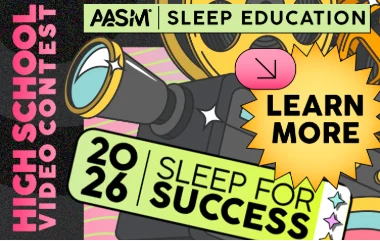
In an era defined by digital distractions, academic pressure, and a culture that often glorifies the "hustle," one of the most critical pillars of adolescent health—sleep—is frequently pushed to the sidelines. Recognizing the urgent need to address this public health challenge, the American Academy of Sleep Medicine (AASM) has officially opened the call for submissions for its 2026 “Sleep for Success” High School Video Contest.
This annual initiative is more than just a creative competition; it is a strategic effort to empower the next generation to reclaim their rest. By inviting students to translate scientific necessity into compelling visual storytelling, the AASM hopes to shift the narrative around sleep from a "luxury" to an essential component of teenage success.
Main Facts: The Mission and the Mechanics
The 2026 “Sleep for Success” contest invites high school students across the United States to produce original videos ranging from 30 to 90 seconds. The core objective is simple yet profound: to communicate the vital importance of prioritizing sleep. Whether through comedy, documentary-style testimonials, animation, or dramatic narrative, the AASM is seeking creative perspectives on how healthy sleep habits influence the teenage experience.
The contest is designed to be inclusive, allowing students to explore diverse storytelling techniques to reach their peers. Beyond the potential for winning a $1,000 cash prize, participants are encouraged to build media literacy skills and contribute to a growing repository of peer-to-peer advocacy materials. Educators, who often serve as the first line of defense in identifying sleep-deprived students, are also incentivized, with the mentor of the winning entry receiving a $100 gift card.
The deadline for all submissions is Tuesday, March 31, at 12:00 p.m. EDT. Interested students and educators can find the full rules, submission portals, and promotional toolkits on the official AASM Sleep Education website.
A Chronology of the Sleep Crisis: Why Now?
To understand the significance of this contest, one must look at the trajectory of adolescent sleep health over the last two decades.
- The Early 2000s: Research began to surface suggesting that the biological clock of adolescents shifts during puberty, making it harder for them to fall asleep before 11:00 p.m. Despite this, school start times remained unchanged, creating an inherent conflict between biology and the bell schedule.
- The Mid-2010s: The widespread adoption of smartphones and social media introduced "blue light" exposure and "FOMO" (fear of missing out), which further eroded the quality and duration of teenage sleep.
- 2020–2022: The global pandemic acted as an accelerant for sleep disorders among youth. With the dissolution of traditional routines, sleep cycles became erratic, and the psychological burden of isolation led to a surge in insomnia and anxiety-related sleep issues.
- 2026: The AASM launches the current iteration of the “Sleep for Success” contest, acknowledging that post-pandemic, the cultural conversation around "rest" has evolved. The focus is no longer just on "going to bed earlier," but on "active recovery" as a performance enhancer for athletics, academics, and mental health.
Supporting Data: The High Cost of Sleep Deprivation
The necessity of this campaign is backed by robust data. The Centers for Disease Control and Prevention (CDC) has long classified insufficient sleep among adolescents as a major public health concern. Studies consistently show that the majority of U.S. high school students fail to meet the recommended 8 to 10 hours of sleep per night.
The Impact on Cognitive and Physical Performance
When a teenager is sleep-deprived, their brain struggles to consolidate memories and process complex information. Research from the AASM indicates that students who get adequate sleep demonstrate higher levels of focus and better grades. Conversely, sleep-deprived students are at a higher risk for:
- Mental Health Struggles: Increased susceptibility to depression, irritability, and anxiety.
- Academic Decline: Reduced attention span and impaired problem-solving capabilities.
- Athletic Injury: Fatigue significantly slows reaction times, making student-athletes more prone to physical injuries on the field.
- Road Safety: Drowsy driving is a leading cause of accidents among teen drivers. A tired teen behind the wheel exhibits reaction times comparable to, or worse than, those of an intoxicated driver.
Official Perspectives: The Professional View
The AASM has positioned this contest as a bridge between the clinical community and the student population. Experts within the organization argue that top-down advice from doctors often fails to resonate with teenagers, who are more influenced by peer culture and social media trends.
"When we talk about sleep, we aren’t just talking about closing your eyes," says a representative for the AASM. "We are talking about biological restoration. We want students to realize that sleep is the foundation upon which their creativity, their athleticism, and their mental resilience are built. We aren’t telling them to go to bed because we want to be strict; we are telling them because we want them to unlock their full potential."
Educators have also weighed in, noting that students who prioritize sleep are noticeably more engaged in the classroom. "The students who participate in these kinds of creative projects usually have an ‘aha’ moment," one high school teacher noted. "By researching the topic to make their video, they discover that their own feelings of burnout or anxiety are directly linked to their sleep cycles. That realization is more powerful than any lecture I could give."
Implications: Changing the Cultural Narrative
The long-term goal of the “Sleep for Success” contest is to foster a cultural shift that destigmatizes rest. In many competitive high school environments, pulling an "all-nighter" is treated as a badge of honor, a symbol of dedication to one’s studies or extracurriculars. This contest aims to flip that script, framing healthy sleep as an essential component of high-performance living.
Beyond the Video
The implications of this campaign extend far beyond the winning entry. By creating a database of student-produced content, the AASM provides schools with a toolkit of resources that are relatable, culturally relevant, and highly shareable. These videos are often used in health classes, during morning announcements, and on social media platforms like TikTok and Instagram, where they can reach students who might otherwise ignore clinical brochures or academic papers.
Empowering Student Advocacy
Furthermore, the contest serves as an incubator for youth advocacy. Students who participate in this program often emerge as "sleep ambassadors" within their own communities. By learning to articulate the science of sleep—the role of melatonin, the impact of circadian rhythms, and the dangers of blue light—they become better equipped to manage their own schedules and influence their peers.
A Call to Action for the 2026 Cycle
As the March 31 deadline approaches, the AASM encourages students not to overthink the production value. The primary metric for success is the clarity and authenticity of the message. Whether a student chooses to highlight the physiological benefits of REM sleep or the emotional toll of exhaustion, the message must be one that resonates with their peers.
The “Sleep for Success” contest represents a rare intersection where medicine meets media, and where public health initiatives embrace the creativity of the younger generation. As the AASM continues to advocate for later school start times and better education on sleep hygiene, this contest stands as a vital piece of the puzzle—empowering teens to take control of their own rest, one video at a time.
For those looking to participate, the time to start is now. Whether you are a student with a knack for storytelling or an educator looking to inspire your class, the 2026 AASM “Sleep for Success” contest offers a unique opportunity to turn the tide on the teen sleep epidemic. Let’s make 2026 the year we wake up to the power of sleep.