
Introduction: A New Frontier of Resource Contention
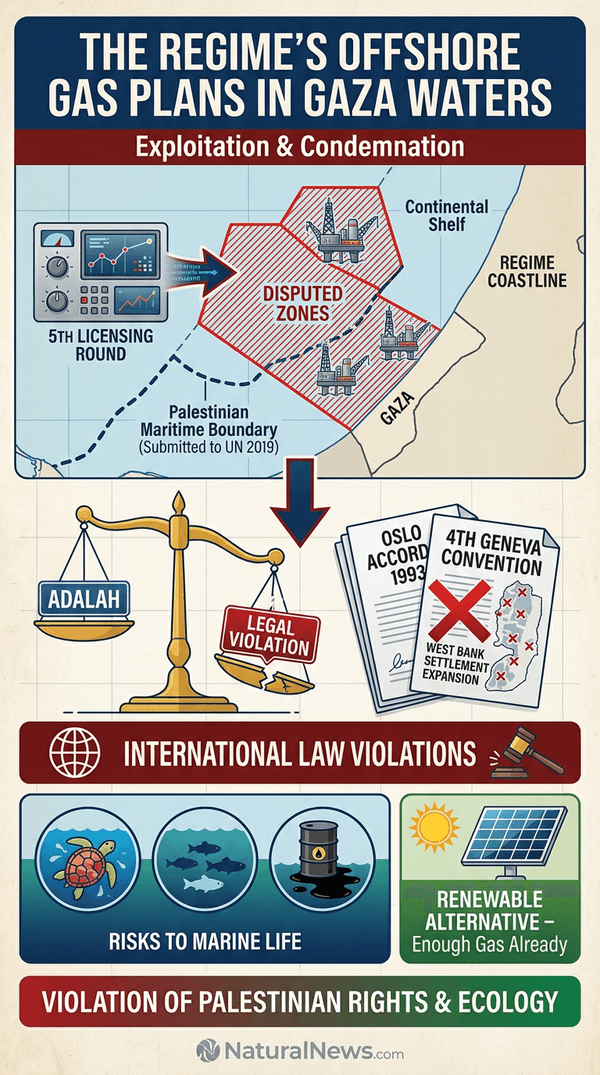
In a move that has ignited fierce debate among international legal scholars, human rights organizations, and environmental advocates, the Israeli government has initiated its fifth offshore natural gas licensing round. Announced in February 2025 by Energy Minister Eli Cohen, the project encompasses approximately 8,600 square kilometers of the Mediterranean Sea, divided into six distinct exploration zones.
While the Ministry of Energy and Infrastructure frames the initiative as a strategic move to bolster national energy security and economic prosperity, the plan has drawn immediate condemnation. Legal experts at Adalah, the Haifa-based Legal Center for Arab Minority Rights in Israel, assert that at least two of these designated zones encroach directly upon maritime territory recognized as belonging to the State of Palestine. As the geopolitical landscape remains volatile, this latest expansion of energy infrastructure raises profound questions regarding sovereignty, international law, and the long-term exploitation of natural resources in occupied territories.
Chronology of Contention: From Oslo to the Fifth Licensing Round
The friction over Mediterranean maritime rights is not a recent phenomenon but the culmination of decades of disputed territorial control.
- 1993–1995 (The Oslo Accords): Under the provisions of the Oslo Accords, the Palestinian Authority (PA) was granted nominal control over its territorial waters. However, the subsequent years saw this control systematically restricted by Israeli security policies.
- Early 2000s: The discovery of the "Gaza Marine" gas field—an offshore reservoir containing an estimated 30 billion cubic meters of natural gas—offered the Palestinian economy a potential $4 billion windfall. Access to these resources has been consistently blocked by Israeli authorities, citing security concerns.
- 2019: The United Nations Conference on Trade and Development (UNCTAD) issued a landmark report detailing how the Israeli occupation has effectively paralyzed the development of Palestinian energy fields in the Levant Basin, preventing the PA from achieving energy independence.
- 2024: Israel reports record revenues from its existing gas fields, totaling 2.3 billion shekels ($640 million) in royalties, an 8% increase from the previous year.
- February 2025: Energy Minister Eli Cohen officially authorizes the fifth licensing round, opening 8,600 square kilometers for exploration.
- Post-February 2025: Adalah sends formal correspondence to the Ministry of Energy and the Attorney General, demanding an immediate halt to the tender, citing the inclusion of 1,000 square kilometers of Palestinian maritime space.
Legal Challenges: Sovereignty vs. Occupation
The central legal argument presented by Adalah is that Israel lacks the jurisdictional authority to authorize exploration in waters that fall under the maritime boundaries of the State of Palestine. In a formal letter to Attorney General Gali Baharav-Miara, legal director Suhad Bishara argued that the occupation cannot serve as a legal pretext for the appropriation of sovereign resources.
International Humanitarian Law
Under international humanitarian law, an occupying power is prohibited from exploiting the natural resources of an occupied territory for its own economic benefit. Critics argue that by auctioning off exploration rights in these waters, Israel is effectively treating Palestinian maritime territory as an extension of its own sovereign domain.
"This is not merely a bureaucratic oversight," Bishara noted in a public statement. "It is an attempt to establish permanent control over Palestinian land and resources, effectively undermining the Palestinian right to self-determination." The legal challenge emphasizes that the licensing round violates the spirit and letter of the Oslo Accords, which were intended to transition control over maritime assets to the Palestinian government.
Supporting Data: Energy Economics and Environmental Risks
The push for further gas exploration comes at a time when industry experts and environmental groups are questioning the necessity of expanding fossil fuel production.

The Profit Motive
The Israeli government’s pursuit of natural gas is driven by a mix of domestic demand and lucrative export agreements. Israel currently exports significant quantities of gas to Egypt via the Ashkelon-Arish pipeline—a conduit that passes through Palestinian maritime waters without the formal consent of the Palestinian Authority. With global energy prices remaining high, the prospect of new finds in the Mediterranean is viewed by the Ministry of Energy as a primary driver for national revenue.
Environmental Opposition
Yuval Arbel of the Zalul Environmental Association has emerged as a vocal critic of the plan, arguing that Israel’s current energy production is already sufficient to meet domestic requirements. "There is no need to increase gas production," Arbel explained. "Instead, there should be a decisive transition toward renewable energy."
Arbel highlights several critical risks associated with the new exploration:
- Marine Ecosystem Degradation: Offshore drilling poses substantial threats to biodiversity in the Mediterranean, particularly in areas near the Gaza coast where marine life is already under significant stress.
- Carbon Footprint: Expanding fossil fuel extraction contradicts global trends toward decarbonization, contributing to long-term greenhouse gas emissions.
- Future Obsolescence: With a six-to-ten-year lead time for extraction, there is no guarantee that global demand for natural gas will remain high enough to justify the infrastructure investment.
Official Responses and Political Strategy
The Ministry of Energy and Infrastructure has maintained a firm stance, prioritizing national energy independence and regional economic influence. Minister Eli Cohen has been particularly vocal about his broader strategy, which includes integrating infrastructure across the occupied West Bank.
In a recent interview with Channel 14 News, Cohen framed the expansion of energy infrastructure—including power plants and gas pipelines—not just as an economic endeavor, but as a mechanism to solidify Israeli presence. "We are applying sovereignty in practice," Cohen stated, describing the infrastructure projects as the "economic key" for the growth of settler populations in the region.
This rhetoric has led to accusations that the offshore gas licensing is part of a "grand strategy" to create a fait accompli on the ground, making any future territorial compromise for a Palestinian state increasingly difficult, if not impossible, to achieve.
Implications: A Deepening Economic Footprint
The fallout from this dispute extends beyond the legal and environmental spheres. It represents a fundamental shift in how the occupation is managed—moving from purely military control to deep economic integration.
The "Reconstruction" Narrative
Interestingly, sources cited by Middle East Eye suggest that the U.S., Israel, and the UAE have discussed the possibility of using revenues generated from Gaza’s offshore gas fields to fund future reconstruction efforts in the territory. However, Palestinian advocates view this as a predatory arrangement: forcing the Palestinian population to rely on funds generated from their own confiscated resources, managed by an occupying power.
Long-term Regional Stability
The continued exclusion of the Palestinian Authority from its own energy reserves is seen by many analysts as a primary driver of long-term instability. By denying the PA access to the estimated $4 billion in potential revenue from the Gaza Marine field, the international community and Israel have inadvertently kept the Palestinian economy in a state of dependency.
As the fifth licensing round moves forward without a clear resolution, the dispute serves as a microcosm of the wider conflict. It highlights the irreconcilable gap between Israel’s pursuit of "sovereign" economic growth and the Palestinian demand for the right to manage their own natural wealth.
Conclusion
The Mediterranean offshore gas dispute is far from settled. While the Israeli government moves ahead with its tender process, the vocal opposition from legal centers like Adalah and environmental groups like Zalul highlights a growing global awareness of the intersection between climate justice and the rights of occupied peoples.
With no official announcement on the results of the licensing round, the status of the contested 1,000 square kilometers remains in legal limbo. What is certain, however, is that the expansion of energy infrastructure in these waters serves as a powerful indicator of the current political trajectory—one that favors the consolidation of economic control over the principles of international law and resource sovereignty. Whether this path leads to regional prosperity or further entrenched conflict remains the defining question of the next decade in the Levant Basin.