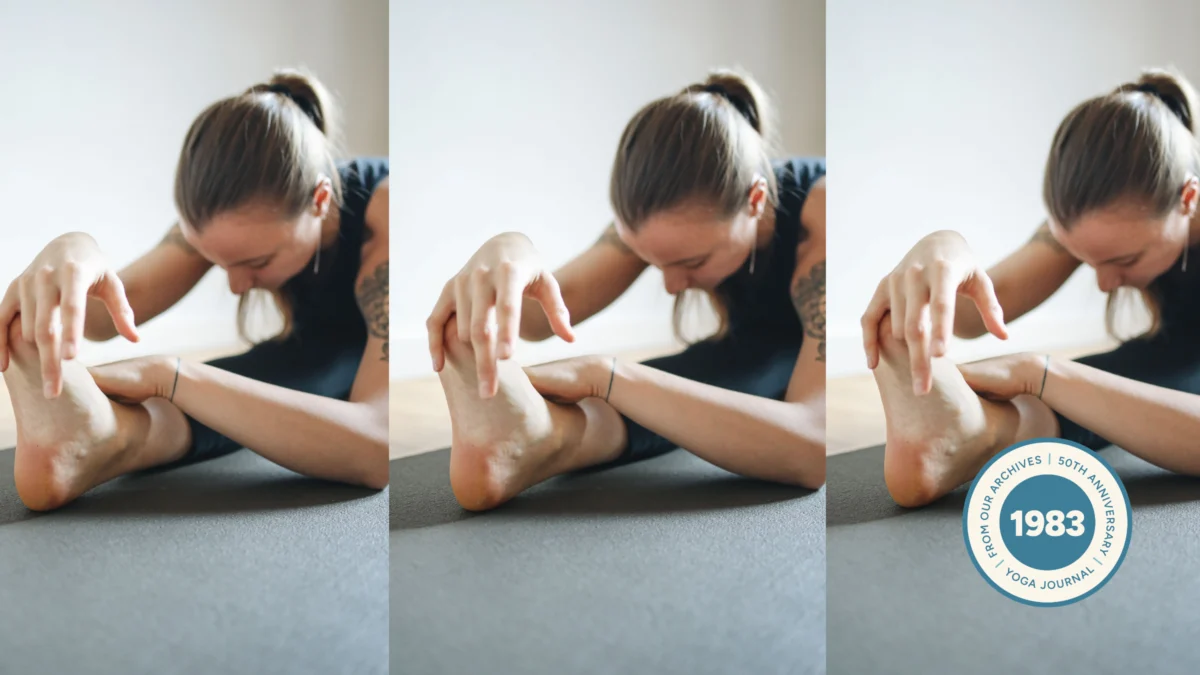
Originally published in the September-October 1983 issue of Yoga Journal, this deep dive into the mechanics and philosophy of Triang Mukhaikapada Paschimottanasana remains a cornerstone of postural study. As part of our ongoing archives series, we revisit these foundational insights to help modern practitioners navigate one of yoga’s most challenging, yet rewarding, seated forward folds.
The Anatomy of a Name: Understanding the Pose
At its core, Triang Mukhaikapada Paschimottanasana is a sophisticated exercise in structural alignment and mental equanimity. To understand the pose is to deconstruct its Sanskrit origins, which provide a blueprint for its execution:
- Triang: Refers to the "three parts of a limb"—the foot, the knee, and the buttock.
- Mukhaikapada: Mukha translates to face; eka means one; pada refers to the leg or foot.
- Paschimottanasana: An "intensive stretch to the west," or the entire posterior chain of the body.
When synthesized, the name translates to "the forward bend involving the three parts of the limb in which the face touches one extended leg." Unlike simpler forward folds, this asana introduces a deliberate asymmetry that forces the practitioner to maintain poise amidst physical complexity. It is not merely a stretch; it is a test of the body’s ability to remain centered when its foundations are uneven.
Chronology and Evolution of the Asana
While the pose has been practiced for centuries, its systematic study gained significant traction in the West during the mid-20th century, largely due to the influence of B.K.S. Iyengar. The 1983 Yoga Journal article served as a bridge, translating ancient biomechanical requirements into a language accessible to Western students—many of whom struggled with the cultural transition from chair-based sitting to the floor-based requirements of classical yoga.
Throughout the decades, the focus has shifted from the mere attainment of the "final" pose—touching the forehead to the shin—to a deeper understanding of the hip mechanics required to get there. Modern practice has refined the use of props, acknowledging that for many, the "full" expression of the pose is impossible without the elevation provided by blankets or blocks to neutralize the pelvis.
Supporting Data: Biomechanics and Alignment Challenges
The primary difficulty in Triang Mukhaikapada Paschimottanasana lies in the conflicting demands placed on the two hip joints.
The Hip Socket Paradox
In a standard seated forward fold, both legs are neutral. In this asana, however, the bent leg requires extreme internal rotation of the hip to place the foot beside the buttock. Simultaneously, the practitioner must strive to keep the pelvis level.
Common physical barriers include:
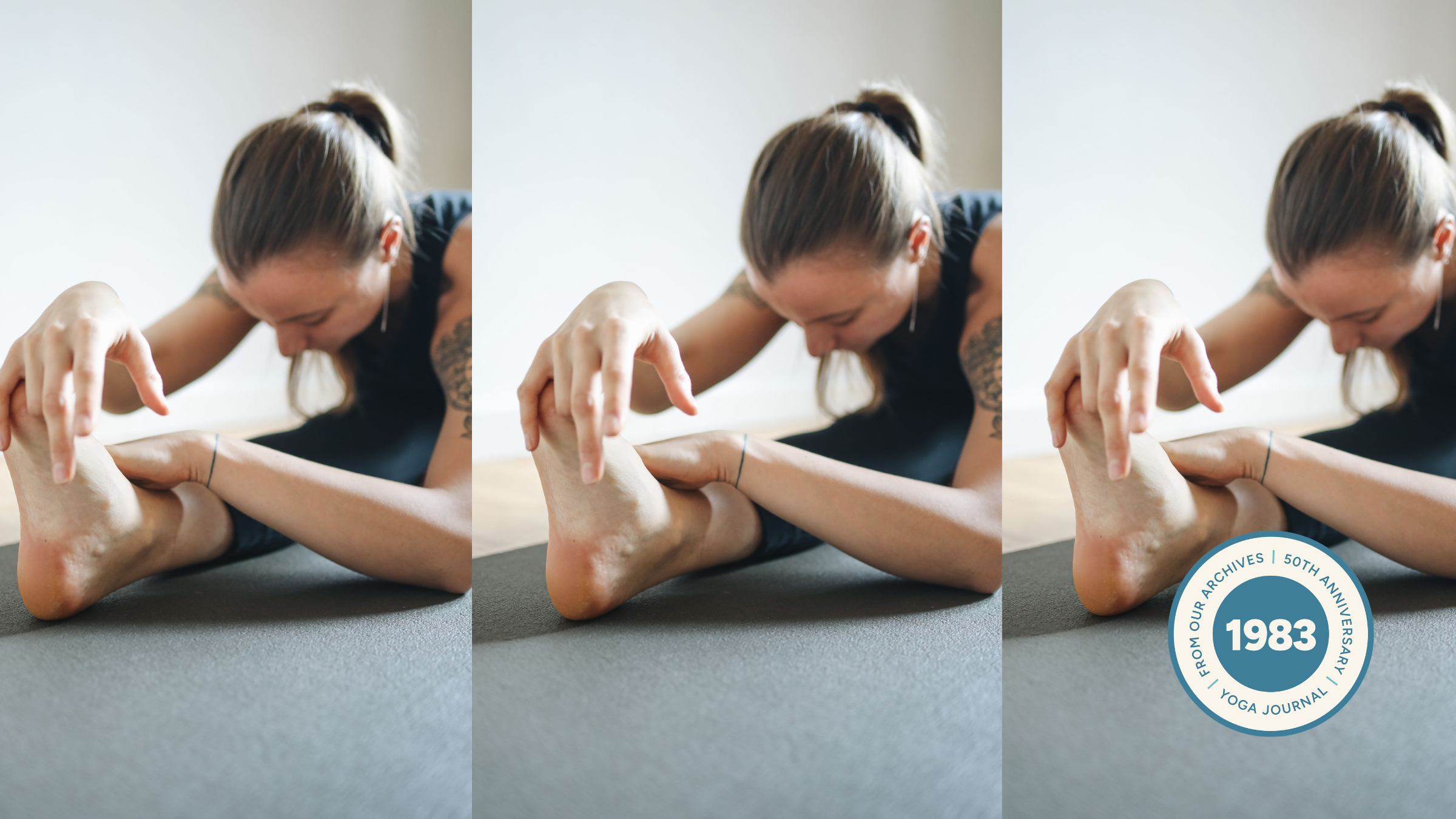
- Foot and Ankle Rigidity: If the foot lacks flexibility, or if the arch is too high, the ankle prevents the knee from bending evenly. This transfers unnecessary torque into the hip joint.
- Internal Rotator Tightness: Tightness in the internal rotators of the hip prevents the pelvis from sitting flush against the floor.
- Hamstring Limitations: Tight hamstrings in the extended leg act as an anchor, pulling the pelvis backward and causing the practitioner to lean or "fall" toward the side of the extended leg.
When a student falls to the side, the spine inevitably twists to compensate. This is not merely an aesthetic error; it is a functional one. A twisted spine during a forward fold compromises the evenness of the stretch and fails to provide the balanced stimulation to the abdominal organs and lungs that this asana is intended to deliver.
Implications: The Psychological Dimension
The physical discomfort of this pose is often a gateway to a deeper, more subtle inquiry. Yoga, in its classical sense, is designed to produce a specific type of discomfort: the confrontation with one’s own limitations.
The Philosophy of "The Limit"
When a student finds themselves unable to sit evenly or unable to fold forward, they are met with the reality of their physical and emotional boundaries. The ego often responds with frustration or an aggressive desire to "force" the pose. However, the true practice lies in the "inner strength of will"—a state of one-pointed concentration where one maintains the pose without succumbing to the desire to move or over-stretch.
By staying with the discomfort of the limitation, the practitioner learns to transcend it. It is a lesson in patience: the realization that one is finite and imperfect is not a failure, but the necessary starting point for growth.
Official Guidelines: How to Practice Safely
For practitioners looking to integrate this pose into their routine, consistency and the correct use of props are paramount.
Step-by-Step Methodology
- Foundation: Sit with legs extended, spine erect. Bend one leg, placing the foot next to the buttock. Ensure the sole of the foot faces upward; avoid turning the sole backward, as this places dangerous strain on the inner knee.
- Optimization: Pull the outer calf muscle of the bent leg slightly to the side to facilitate a healthy knee bend.
- Leveling the Pelvis: Check the sitting bones. If the pelvis tilts or you lean to one side, use a folded blanket. Placing a blanket under both buttocks can alleviate pressure on the bent foot, while placing it only under the buttock of the straight leg can counteract the tendency to lean.
- The Forward Fold: Do not rush the descent. For beginners, using a strap around the foot of the extended leg allows the spine to remain long while the hip joints engage.
- Spinal Integrity: The movement must originate from the pelvis. The moment the spine begins to "bulge" or round at the back, the practitioner has exceeded their range of motion. Maintain the length of the torso throughout the movement.
Therapeutic Benefits
According to B.K.S. Iyengar in his seminal work, Light on Yoga, the consistent, correct practice of Triang Mukhaikapada Paschimottanasana offers distinct therapeutic advantages:
- Foot Health: It serves as a corrective measure for both flat feet and excessively high arches by encouraging proper engagement of the ankle and calf muscles.
- Abdominal Stimulation: By compressing the torso in a controlled, symmetrical manner, the pose aids in the stimulation of the abdominal organs, potentially improving digestive fire.
- Circulatory Support: The intense stretch and compression cycle help reduce swelling in the legs, making it an excellent practice for those who spend significant time standing or sitting.
A Note on Progression
Always repeat the pose on both sides. Because human bodies are rarely perfectly symmetrical, you may find that one side requires significantly more padding than the other. Do not view this as a defect; view it as a map of your body’s unique history.
In the words of the 1983 archives, "The strength of will must not be confused with an aggressive pushing of the body beyond its limits." True mastery of Triang Mukhaikapada Paschimottanasana is found not in the depth of the fold, but in the clarity of the mind while sitting within the complexity of the shape. Whether you are a seasoned practitioner or a newcomer to the mat, remember that the pose is a practice of self-observation—an opportunity to confront the finite in order to experience the infinite.