For most of us, the alphabet is the foundational tool of our intellectual lives—the building blocks that allow us to communicate, calculate, and comprehend the world. We are taught these characters before we can even tie our shoelaces. Yet, as we navigate the complexities of modern adulthood, we are often left without a similarly foundational framework for managing our internal lives, specifically when it comes to the universal, yet frequently misunderstood, experience of anxiety.
Anxiety is an evolutionary marvel—a sophisticated biological alarm system designed to keep our ancestors safe from predators. However, in the 21st century, this ancient mechanism often misfires, leading to chronic discomfort and distress. Experts are now suggesting that the solution lies in a surprisingly simple, yet profoundly effective, pedagogical approach: learning your "Anxiety ABCs."
The Science of the Alarm: Decoding the Anxiety Response
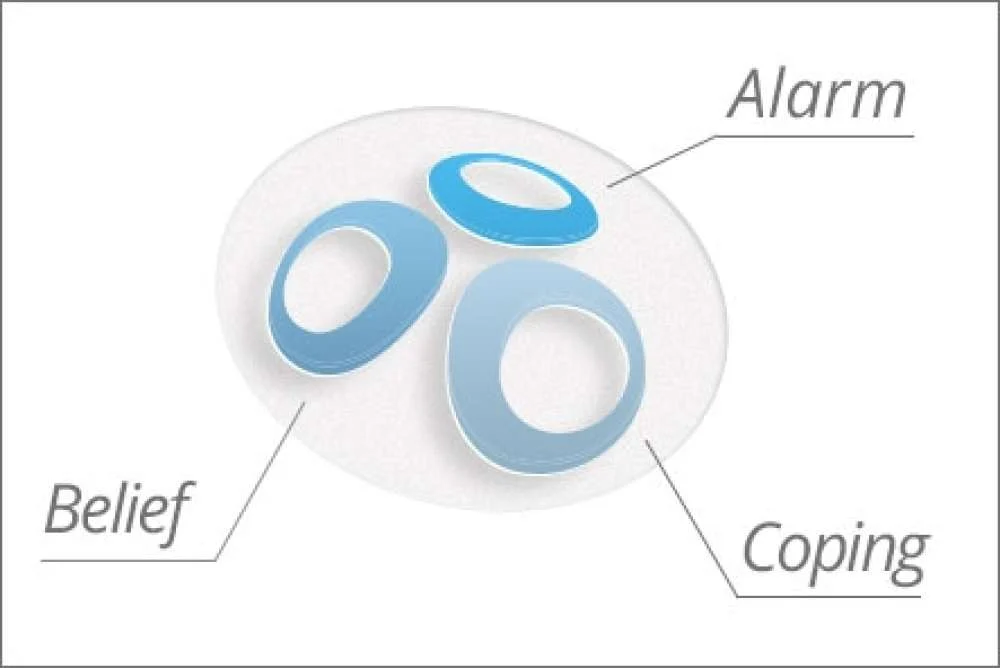
At its core, the ABCtracker™—an acronym standing for Alarm, Belief, and Coping—offers a structured psychological roadmap for individuals to identify, monitor, and eventually master their emotional triggers. By breaking down the rapid-fire succession of physiological and cognitive events that constitute an anxiety episode, individuals can move from a state of reactive helplessness to one of proactive self-regulation.
A: The Alarm – Understanding Your Biological Sentinels
To understand anxiety, one must first respect the "Alarm." Just as a sophisticated home security system triggers a siren at the slightest detection of motion, the human amygdala acts as an internal sentry. It scans the environment for threats, real or imagined.
For many, this system is calibrated too sensitively. In clinical terms, this is often referred to as a "low threshold for threat detection." When the alarm sounds, the body releases a cascade of neurochemicals, including cortisol and adrenaline, preparing the individual for "fight, flight, or freeze." The problem arises when the "threat" is a looming work presentation or a social gathering rather than a physical predator. By learning to identify the specific physiological markers of your alarm—such as a racing heart, shallow breathing, or a sudden tightening in the chest—you effectively "name" the threat, which is the essential first step in de-escalating the response.
B: The Belief – The Cognitive Filter
If the Alarm is the siren, the "Belief" is the narrative the brain constructs to justify the noise. The moment an alarm sounds, the prefrontal cortex attempts to make sense of the incoming physiological data.
Individuals suffering from generalized anxiety or panic disorders often possess what psychologists call "cognitive distortions." These are automated, often inaccurate, interpretations of reality. For instance, if one’s heart rate spikes in a crowded room, the "Belief" might instantly jump to, "I am having a medical emergency," or "Everyone is looking at me and judging me." This catastrophic thinking reinforces the alarm, creating a feedback loop that sustains the anxiety. Recognizing these beliefs allows an individual to pause and ask: "Is this thought a fact, or is it a symptom of my alarm system?"
C: The Coping – Moving from Maladaptive to Adaptive
The final stage of the cycle is the "Coping" strategy. Every human is hardwired to seek safety, but the methods we choose to achieve that safety vary wildly.
Maladaptive coping strategies—such as avoidance, substance use, or chronic reassurance-seeking—might provide immediate, short-term relief, but they ultimately reinforce the anxiety cycle. By avoiding the trigger, you signal to your brain that the "Alarm" was correct, ensuring the next cycle is even more intense. Conversely, adaptive coping strategies involve techniques that regulate the nervous system without avoidance, such as deep-breathing exercises, cognitive restructuring, or grounding techniques.
Chronology of a Crisis: The Anatomy of an Anxiety Loop
To truly master the ABCs, one must view the process as a temporal sequence. Anxiety does not exist in a vacuum; it is a rapid, chronological progression that can be interrupted at any stage.
- The Trigger (T-0): A stimulus occurs. It could be an email notification, a change in plans, or a physical sensation like a slight headache.
- The Alarm (T+1 second): The amygdala fires. The autonomic nervous system shifts into sympathetic dominance.
- The Belief (T+3 seconds): The conscious mind interprets the physical sensation. "This is bad. I can’t handle this."
- The Coping Strategy (T+5 seconds): The individual acts. If the response is maladaptive (e.g., hiding, fleeing, or snapping at a colleague), the loop is solidified.
- The Outcome (T+Minutes/Hours): The individual feels exhausted, defeated, or reinforces their own lack of confidence.
By using tools like the ABCtracker™, patients are encouraged to document these moments. Writing down the sequence forces the brain to move from the emotional center (amygdala) to the rational center (prefrontal cortex), which inherently begins to lower the volume of the alarm.
Supporting Data: Why Structure Matters in Mental Health
Clinical data consistently shows that cognitive-behavioral interventions—which share the same philosophical DNA as the ABC framework—are among the most effective treatments for anxiety disorders. According to the Anxiety and Depression Association of America (ADAA), cognitive-behavioral therapy (CBT) can be as effective as medication for many patients, with the added benefit of providing long-term "toolkits" that patients can use independently.
The effectiveness of this model lies in the data-driven nature of self-monitoring. When a patient tracks their ABCs over the course of a month, they often discover patterns they were previously blind to. They may realize, for example, that their "Beliefs" are consistently linked to specific times of day or specific environments. This objective data transforms the "fog" of anxiety into a manageable set of variables, effectively turning a psychological burden into a data-analysis task.
Official Responses and Clinical Perspectives
Mental health professionals have long championed the need for "psychoeducation"—the process of teaching patients about the mechanics of their own minds.
"The ABC model is an elegant entry point for someone who feels overwhelmed by the chaotic nature of panic," says Dr. Elena Rossi, a clinical psychologist specializing in anxiety disorders. "When a patient comes into my office, they often feel as though they are ‘broken.’ Teaching them that they are simply experiencing a misfiring of a biological system—an Alarm—removes the shame. Once the shame is gone, we can work on the Beliefs and refine the Coping strategies."
Professional organizations emphasize that while frameworks like the ABCtracker™ are excellent for self-management, they are most effective when used in tandem with professional guidance. Physicians and therapists provide the "external audit" necessary to ensure that the patient’s beliefs are being evaluated correctly and that their coping strategies are truly adaptive.
The Implications: A Shift Toward Mental Literacy
The broader implication of adopting the "Anxiety ABCs" is a shift toward a more "mentally literate" society. If we treat anxiety as a learned skill set rather than a permanent character flaw, the stigma surrounding mental health begins to dissipate.
- Personal Empowerment: When an individual understands that they have a choice between an adaptive or maladaptive coping strategy, they reclaim their agency.
- Public Health: If a significant portion of the population learns to manage their "alarms" effectively, the secondary costs of anxiety—such as lost productivity, physical illness related to chronic stress, and strain on healthcare systems—could be significantly reduced.
- Preventative Care: Teaching these ABCs in school settings could provide young people with the emotional intelligence required to navigate the high-pressure environment of the modern digital age.
Conclusion: From Beginner to Master
Every master, in any discipline, begins as a beginner. The path to overcoming chronic anxiety is not paved with overnight miracles, but with the consistent, daily practice of observing one’s own internal machinery.
By recognizing the Alarm, questioning the Belief, and consciously choosing the Coping strategy, individuals can move from being subjects of their emotions to architects of their experience. The ABCs are not just a tool for dealing with distress; they are a fundamental language of self-awareness. In a world that is increasingly loud and unpredictable, learning to regulate your own internal siren is perhaps the most essential lesson you will ever learn.