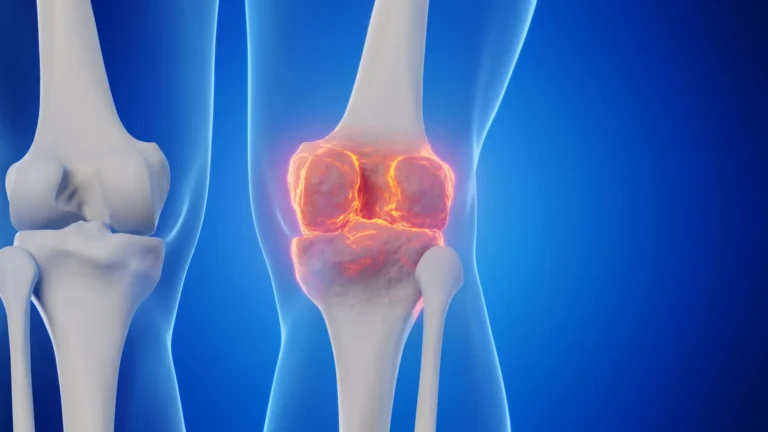



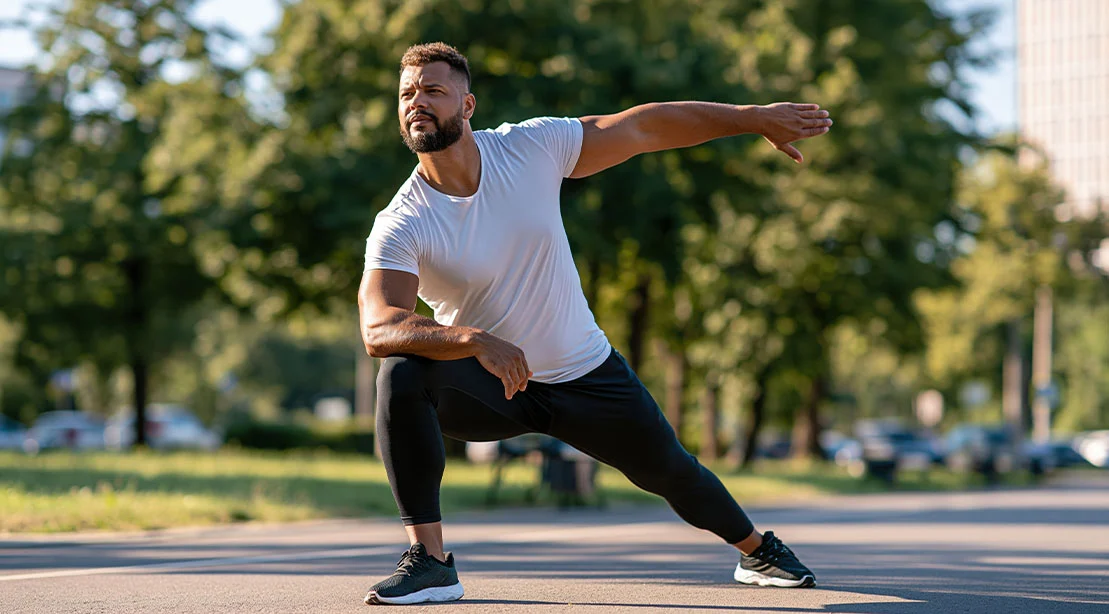
The single-leg Romanian deadlift (SLRDL) is often misunderstood as a mere balance exercise, yet elite strength coaches and physical therapists view it as the gold standard for assessing lower-body functionality. It is a movement that ruthlessly exposes the body’s kinetic weak links—specifically in hip mobility, foot stability, core bracing, and neuromuscular coordination. When these components fail to function as a unified system, the exercise becomes a struggle. If you find yourself wobbling, tipping, or rounding your back during the SLRDL, you aren’t just suffering from poor balance; you are witnessing a breakdown in biomechanical efficiency.
To truly master the SLRDL, one must shift focus from "doing the exercise" to "optimizing the movement pattern." By refining the mobility and stability prerequisites of the hinge, you not only elevate your gym performance but also build a more resilient, injury-resistant body.
The Biomechanics of the Single-Leg Hinge
To execute a flawless SLRDL, the body must achieve a complex orchestration of five key physical qualities. When these are present, the movement feels fluid; when they are absent, the body compensates, often leading to poor form and potential injury.
1. Hip Flexion and Mobility
The hip of the standing leg must possess enough range of motion to allow for a deep hinge while maintaining a neutral spine. If the hip joint is restricted, the body will inevitably compensate by rounding the lumbar spine to reach further toward the floor, a dangerous practice when under load.
2. Hamstring Length and Tension
The hamstrings are the primary stabilizers of the knee and hip in this movement. They must lengthen eccentrically as you descend. If your hamstrings are chronically tight or lack "load-bearing" length, you will lose the necessary tension required to reverse the movement safely.
3. Foot and Ankle Stability
The foot is the foundation. A stable "tripod" foot—maintaining pressure through the heel, the base of the big toe, and the base of the little toe—is essential. If the foot collapses (pronation), the knee will track inward, and the entire kinetic chain will lose its alignment.
4. Pelvic and Hip Control
The gluteus medius and deep hip rotators must work overtime to keep the pelvis level. A common failure in the SLRDL is the "open-hip" fault, where the hip of the non-working leg rotates upward toward the ceiling, stripping the working glute of its tension.
5. Core and Lat Engagement
A braced torso is non-negotiable. Engaging the lats creates a bridge between the upper body and the pelvis, effectively locking the spine in place. This "stiffness" allows the body to move as one unit rather than a collection of loose, disjointed parts.
Assessing Your Current Capacity: A Diagnostic Checklist
Before adding heavy dumbbells or kettlebells, you must be able to perform a bodyweight SLRDL with surgical precision. To test your form, stand on one leg with a soft knee bend. Hinge at the hips, reaching the opposite leg back, and descend until you feel a deep stretch in your hamstrings. Return to the starting position.
Look for these common breakdowns:
- Excessive wobbling: Suggests a lack of intrinsic foot strength or glute medius activation.
- Pelvic tilting: If your hips aren’t square to the floor, you are compensating for poor hip mobility.
- Spinal flexion: If your upper back rounds, your core bracing is insufficient.
- Loss of control: If you cannot descend slowly, you lack the eccentric strength required for the movement.
Chronology of Correction: The 5-Step Mobility Protocol
If you failed the assessment above, do not despair. The following five drills are designed to systematically fix the limitations that prevent a perfect hinge. By integrating these into your warm-up routine, you create the mobility environment necessary for long-term success.
1. Hip Airplanes: The Gold Standard for Stability
The hip airplane is arguably the most effective tool for teaching pelvic control during rotation.
- The Science: This drill trains the glute medius to stabilize the pelvis while the femur rotates in the socket. It forces you to find your end-range stability.
- Execution: Balance on one leg, hinge forward, and place your hands on a stable object. Keep your spine neutral. Slowly rotate your pelvis toward the standing leg, then rotate it away.
- Impact: This builds the "active" hip mobility required to keep your hips square during a weighted RDL.
2. Hip Controlled Articular Rotations (CARs)
Before asking a joint to handle weight, you must ensure it has full, pain-free access to its range of motion.
- The Science: Hip CARs are neurological drills that "map" the joint. By moving the hip in a slow, controlled circle, you strengthen the tissues at the outer limits of your mobility.
- Execution: Stand tall, brace your core, and lift one knee to 90 degrees. Move the knee outward, then rotate it back, and complete a full circle without moving your torso.
- Impact: This reduces compensations in the lower back and ensures the hip joint is the primary mover during your hinge.
3. Mini-Band Marches: The Activation Key
Many lifters blame "poor balance" when the real culprit is "poor muscle recruitment."
- The Science: By placing a mini-band around the feet or knees, you force the glute medius to fight for stability during every step.
- Execution: Stand tall, maintaining a neutral spine. Lift one knee, hold for two seconds, and return to center. Do not let the hip drop.
- Impact: This wakes up the lateral hip stabilizers, ensuring they are primed to support you during the single-leg hinge.
4. Hamstring Scoop Stretch
Static stretching is often ineffective for dynamic movements. The scoop stretch is a movement-based approach to hamstring health.
- The Science: By "scooping" the floor while hinging, you mimic the RDL pattern while gradually increasing tension on the hamstrings.
- Execution: Step one foot forward, keep the heel down, and hinge at the hips as you sweep your hands toward the ground.
- Impact: This teaches the brain to associate a hinge with a "stretch" rather than a "back bend," which is the primary cause of lower back pain in deadlifting.
5. Foam Roller Assisted SLRDL
This drill provides immediate biofeedback. If you lose your form, the roller falls.
- The Science: By holding a foam roller in front of you while keeping it in contact with your moving leg (or using it for balance), you reinforce the "lat-to-hip" connection.
- Execution: Place a foam roller against your thigh as you hinge. Keep the roller pressed firmly against your leg to maintain lat engagement.
- Impact: This prevents "reaching" with the arms and ensures the hinge is driven by the hips, not the lower back.
Implications for Athletic Performance
The implications of mastering the SLRDL extend far beyond gym aesthetics. A stable, powerful single-leg hinge is the foundation of almost every athletic endeavor, from sprinting and jumping to changing direction on the field.
Improved Force Production: When your hips are stable, force transfer from the ground through your body becomes more efficient. You aren’t "leaking" energy through a shaky ankle or a rotating hip.
Injury Mitigation: By correcting lateral strength deficits, you reduce the likelihood of common injuries such as ACL tears, ankle sprains, and lower back strains. The body becomes a cohesive unit capable of absorbing and producing force safely.
Bilateral Strength Gains: Perhaps the most counterintuitive benefit is that training one leg makes you stronger on two. By ironing out the side-to-side imbalances that plague most lifters, you ensure that when you step under a heavy barbell for a conventional deadlift, both sides of your body are contributing equally.
Final Thoughts: The Path to Mastery
The single-leg RDL is a high-skill movement. It is not something you "do"—it is something you practice. By treating the SLRDL as an assessment rather than just another exercise, you shift your training philosophy toward long-term movement quality.
Start by implementing the five drills outlined above into your pre-workout routine. Within a few weeks, you will notice that your balance is not something you have to "try" to maintain—it will simply be there, a natural byproduct of a body that has regained its structural integrity. Once you have built the foundation, the weights will come naturally, and the strength you gain will be as durable as it is impressive. Remember: if you can control one leg, lifting with two becomes a matter of pure, unbridled power.