











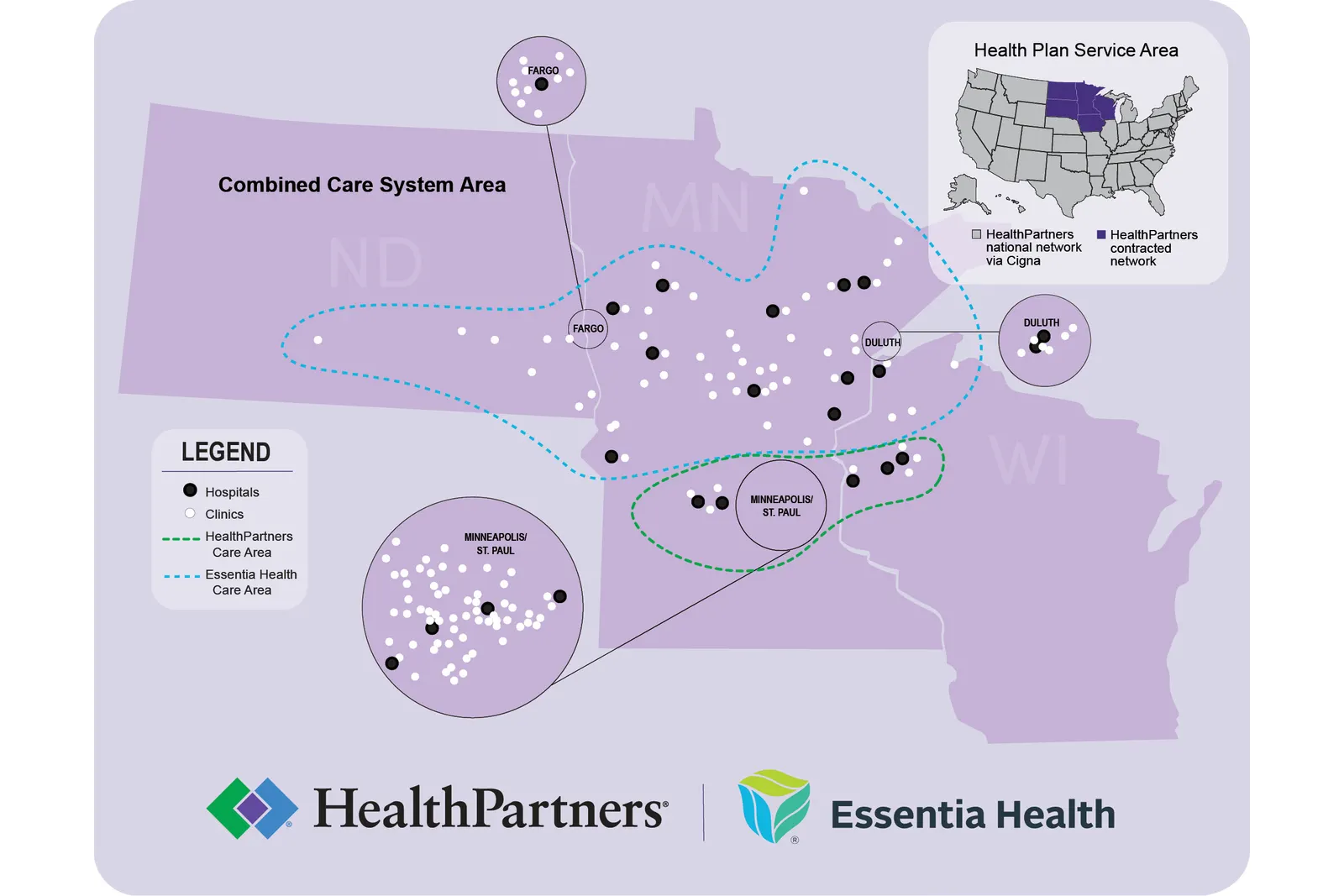
The healthcare landscape in the Upper Midwest is undergoing a seismic shift. In a move that promises to redefine regional patient care, Minnesota-based HealthPartners and Essentia Health have announced a proposed combination. This merger, if finalized, would forge one of the most expansive and influential nonprofit health systems in the United States, stretching across Minnesota, Wisconsin, and North Dakota.
The announcement arrives at a pivotal moment in American healthcare, characterized by an unprecedented wave of consolidation. As larger entities seek to stabilize their financial footing against rising labor costs and fluctuating patient volumes, the potential union of these two regional titans has sparked a fierce debate regarding the balance between institutional efficiency and the preservation of competitive, affordable care.
Main Facts: The Anatomy of a Regional Giant
The proposed merger is not merely a partnership; it is a structural integration of two distinct business models. Essentia Health currently operates a robust network of 14 hospitals, with a heavy operational footprint concentrated in north-central and northeastern Minnesota, as well as northwestern Wisconsin. Their reach into rural and suburban markets provides a vital backbone for healthcare delivery in these regions.
Conversely, HealthPartners acts as a dominant force within the Twin Cities metropolitan area and western Wisconsin, managing eight hospitals. Perhaps most significantly, the merger would incorporate HealthPartners’ well-established integrated health plan. This division offers a comprehensive suite of coverage options, including commercial, Medicaid, Medicare Advantage, and Affordable Care Act (ACA) plans.
Financially, this integration is strategic. Recent reports indicate that while the hospital sector faces headwinds—including lower patient volumes and mounting operational costs—the HealthPartners insurance division has served as a critical fiscal buffer. By merging, the new entity aims to leverage the predictability of insurance premiums to subsidize the capital-intensive demands of hospital maintenance and clinical innovation.
A Rapid Chronology of Consolidation
The news of the HealthPartners-Essentia combination is the latest chapter in an aggressive six-month period of regional hospital integration. The pace of this movement has caught many by surprise, prompting a re-evaluation of how state governments oversee medical monopolies.
- March 2026: The industry was shaken by the announcement that Sutter Health and Allina Health intended to form a $26 billion nonprofit powerhouse, a deal that signaled a departure from traditional local healthcare delivery toward large-scale regional dominance.
- Late Summer 2026: Sanford Health finalized its acquisition of North Memorial, a move that required significant regulatory oversight to ensure the protection of essential community services.
- September 2026: Following the trend, HealthPartners and Essentia Health publicly disclosed their intent to merge, triggering immediate scrutiny from the Minnesota Attorney General’s office.
This sequence of events demonstrates a clear "herd mentality" among hospital systems. As individual organizations struggle with the economic aftermath of the pandemic, scale has become the primary defensive strategy to ensure survival in a tightening market.
Supporting Data: The Case for and Against Consolidation
The arguments for consolidation often rely on the concept of "economies of scale." Proponents argue that by pooling resources, purchasing power, and administrative infrastructure, health systems can lower the per-unit cost of care. Theoretically, these savings could be passed down to the patient, resulting in lower insurance premiums and better access to advanced medical technology.
However, historical data suggests a different reality. Research from institutions such as the Leonard Davis Institute of Health Economics consistently highlights a troubling trend: hospital mergers often lead to higher prices for consumers without a corresponding increase in the quality of clinical outcomes.
Key points of contention include:

- Market Power: When two large systems merge, the combined entity often gains significant leverage in contract negotiations with insurance companies, frequently leading to higher negotiated rates.
- Access Issues: While systems promise to "improve access," the centralization of specialized services often results in the closure of smaller, less profitable clinics, forcing patients in rural areas to travel further for primary care.
- Financial Transparency: Critics argue that the internal "cross-subsidization" between hospital arms and insurance arms—the very model HealthPartners is utilizing—is a "black box" that makes it difficult for regulators to determine if rates are fair.
Official Responses and Regulatory Scrutiny
The speed and scale of these acquisitions have placed Minnesota Attorney General Keith Ellison at the center of a national conversation on healthcare antitrust policy. While his office does not have the power to "veto" a merger outright, they possess the authority to sue to block deals if they are deemed to violate antitrust laws or the public interest.
In a recent statement, Attorney General Ellison confirmed that his office will conduct a series of community meetings to gather input on the HealthPartners-Essentia deal. "As we have done several times now, we will conduct a thorough review of this potential acquisition to ensure it complies with the law and is in the public interest," Ellison stated.
The regulatory environment is becoming increasingly hostile toward "mega-mergers." The precedent set by the Sanford-North Memorial oversight agreement—where the state mandated the preservation of specific services—is likely to be the floor, not the ceiling, for the requirements placed upon HealthPartners and Essentia.
The Role of Labor Advocacy
The Minnesota Nurses Association (MNA) has emerged as a key stakeholder, expressing deep skepticism regarding the impact of the merger on frontline care. MNA President Chris Rubesch has been vocal in calling for total financial transparency. For the nurses, the concern is not just about the corporate structure, but about the "human capital" of the hospital system. When systems merge, staff burnout, administrative bloat, and the degradation of patient-to-nurse ratios are frequent, if unintended, consequences.
Implications for the Future of Healthcare
The implications of this merger are vast and extend beyond the borders of Minnesota. If this deal proceeds, it sets a regional standard that could accelerate similar mergers in neighboring states, effectively turning the American healthcare system into a series of giant, regional, nonprofit monopolies.
The Congressional Perspective
At the federal level, the House Budget Committee has been investigating the intersection of healthcare affordability and consolidation. While no comprehensive legislative package has been signed into law, the persistent focus on the issue suggests that if state-level oversight fails to curb rising costs, federal intervention via antitrust legislation or tax-exempt status reform may become inevitable.
Patient Impact: Quality vs. Cost
For the average patient, the primary concern remains the quality of care. Will the merging of these systems lead to a unified, streamlined Electronic Health Record (EHR) system that makes care safer? Or will it lead to a rigid bureaucracy that prioritizes the financial health of the system over the individual needs of the patient?
The transition to this new, larger entity will likely be a multi-year process. The next six months will be defined by rigorous data requests from the Attorney General’s office, public testimony from stakeholders, and intense lobbying from both health systems.
Conclusion: A Turning Point for the Midwest
The proposed merger between HealthPartners and Essentia Health is a litmus test for the future of nonprofit healthcare. It presents a fundamental question: Is the consolidation of healthcare systems an inevitable evolution required for financial survival in the modern era, or is it a mechanism that stifles competition at the expense of the patient?
As Minnesota prepares for a series of public forums, the outcome of this review will signal whether the current trend of hospital "super-sizing" is sustainable, or if the public and its regulators have finally reached a limit. For now, the stakeholders involved—patients, providers, and policymakers—remain in a state of watchful waiting, as the future of healthcare in the Upper Midwest hangs in the balance.