










The release of the 2025–2030 Dietary Guidelines for Americans (DGAs) has ignited a firestorm within the public health community. While the federal government’s latest roadmap for healthy eating arrives with the consumer-friendly tagline "Eat Real Food" and a long-overdue focus on curbing ultra-processed commodities, the document is simultaneously being criticized for visual contradictions and a lack of transparency in its drafting process. As Americans struggle with a burgeoning metabolic health crisis, these guidelines—intended to steer national nutrition policy—are being scrutinized for potentially confusing, and perhaps even harmful, messaging regarding saturated fats and protein intake.
Main Facts: The Core of the New Guidelines
The 2025–2030 Dietary Guidelines for Americans represent the federal government’s official stance on what constitutes a nutritious diet. Released this week by the U.S. Departments of Agriculture (USDA) and Health and Human Services (HHS), the guidelines aim to simplify nutritional advice for the average American.
The most notable shift is the explicit move to categorize and limit "highly processed" foods. For the first time, the DGAs move beyond simple warnings about sugar and sodium to target the broader ecosystem of ready-to-eat, packaged, and nutrient-poor snacks. The guidelines further intensify the war on added sugars, recommending that they be excluded from the diets of children under the age of 10—a significant escalation from previous versions, which set the age threshold at two.
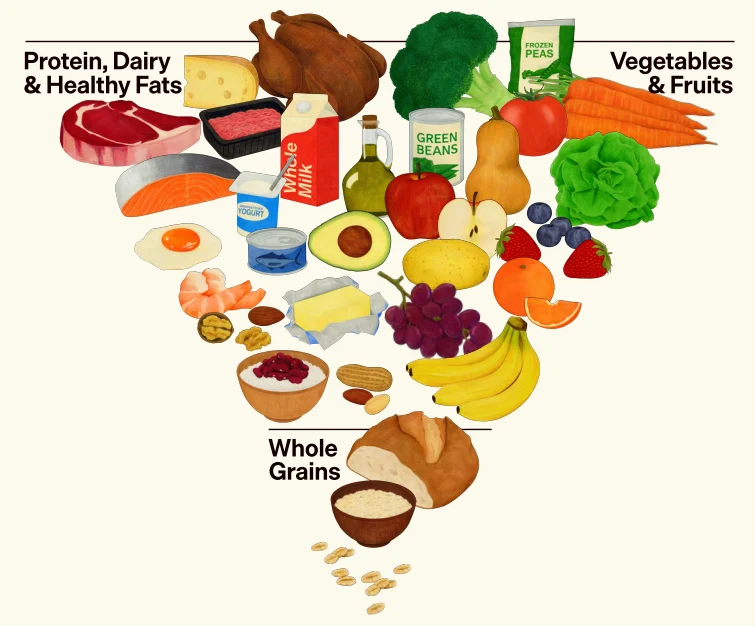
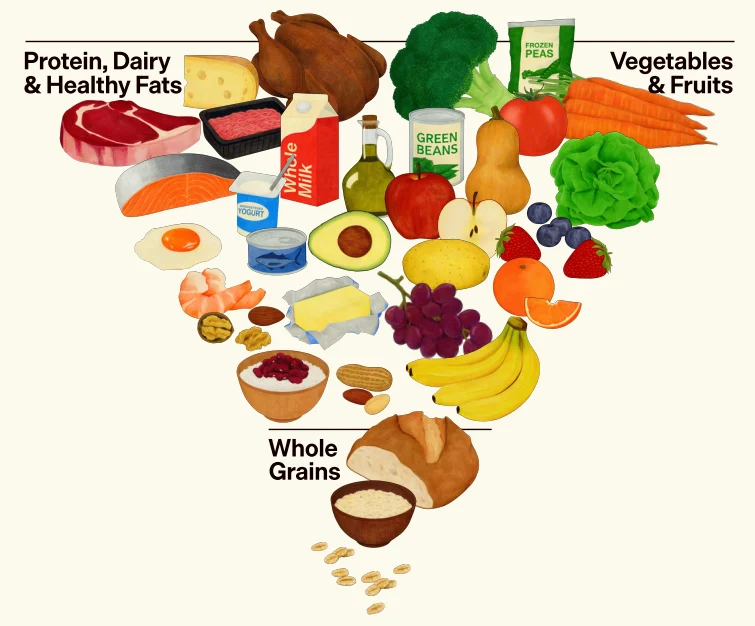
However, the core of the controversy lies in the "New Food Pyramid" visual accompanying the guidelines. Unlike previous iterations, this pyramid is inverted in its presentation of animal products, placing steak, full-fat milk, and butter in positions of prominence. While the written text of the guidelines technically maintains the established scientific consensus that saturated fat should be limited to 10% of total daily calories, the visual representation suggests a dietary hierarchy that experts argue contradicts this mathematical limit.
Chronology: A Contentious Path to Publication
The path to the 2025–2030 DGAs was marked by an unprecedented departure from standard protocol, raising questions about the influence of external interests on federal health policy.
Historically, the DGAs are developed through a multi-year, highly transparent process. An independent Dietary Guidelines Advisory Committee (DGAC), comprised of leading nutrition scientists, spends years synthesizing the latest peer-reviewed evidence to produce a "Scientific Report." This report serves as the bedrock for the final guidelines.
For the 2025 cycle, this process faced an abrupt pivot. The administration ultimately rejected the Committee’s initial Scientific Report, opting instead to commission a "supplemental scientific analysis" conducted by a group selected through a federal contracting process. This decision has drawn sharp criticism from the academic community. Deirdre Tobias, an assistant professor at the Harvard T.H. Chan School of Public Health and a member of the original 2025-2030 DGAC, noted that this supplemental process lacked the rigor and transparency of the HHS-standardized procedure.
Furthermore, investigative reporting has highlighted that several members of the secondary review panel held documented financial ties to the beef and dairy industries. This revelation has fueled concerns that the prominent placement of animal fats in the new pyramid is not a result of emerging nutritional science, but rather a reflection of lobbying interests.
Supporting Data: The Mathematics of Saturated Fat
To understand why experts like Dr. Frank Hu, chair of the Department of Nutrition at Harvard, are sounding the alarm, one must look at the "saturated fat math." The guidelines retain the 10% calorie limit, which, on a standard 2,000-calorie diet, equates to roughly 22 grams of saturated fat per day.
When the guidelines recommend three servings of dairy daily—encouraging full-fat versions—the math becomes precarious. A single cup of whole milk (5g), three-quarters of a cup of full-fat Greek yogurt (6g), and one ounce of cheddar cheese (6g) total 17 grams of saturated fat. Adding a single tablespoon of butter (7g) or beef tallow (6g) for cooking pushes an individual to 23–24 grams of saturated fat by the end of their dairy intake alone. This does not account for the saturated fat naturally present in proteins like red meat, which are heavily featured in the new pyramid.
The inclusion of olive oil is a positive step, as it is a source of healthy unsaturated fats. However, critics point out that the guidelines fail to distinguish between the cardiovascular benefits of plant-based oils and the risks associated with animal fats. As Dr. Hu notes, while olive oil is a superior choice, even better options for essential fatty acids—such as soybean or canola oil—are often sidelined in favor of animal-based recommendations that may drive up LDL cholesterol levels.
Furthermore, the new guidelines advocate for a significant increase in protein intake, recommending 1.2 to 1.6 grams per kilogram of body weight. This is a 50–100% increase over previous minimums. Without clear guidance on the "protein package"—the fiber, vitamins, and minerals that accompany protein—many Americans may turn to red meats, which are calorie-dense and high in saturated fat, rather than more favorable plant-based or fish-based sources.
Official Responses and Expert Critique
The federal government maintains that the new guidelines are designed to be more consumer-friendly and actionable. The push to avoid "highly processed" foods is a direct response to the rising rates of obesity and type 2 diabetes in the United States.
However, the scientific community’s response has been mixed. While nutritionists applaud the stricter stance on sugar and refined carbohydrates, the consensus is that the messaging on fats and proteins is contradictory. Dr. Hu emphasizes that the "mixed messages" surrounding red meat and butter are likely to cause confusion, ultimately undermining the very goals the guidelines intend to achieve.
The lack of environmental and socioeconomic context is another point of contention. The current guidelines completely omit the environmental impact of food production. As global food systems face the pressures of climate change, experts argue that dietary guidelines should reflect the sustainability of food choices, as the health of the planet is inextricably linked to the health of the population.
Implications: Navigating a Confusing Landscape
What are the implications for the average American consumer? For the public, the new DGAs represent a double-edged sword. On one hand, the call to eliminate added sugars and reduce reliance on highly processed, refined snacks is a scientifically sound recommendation that could significantly improve public health outcomes.
On the other hand, the visual prominence of saturated-fat-rich foods in the New Food Pyramid could lead to widespread dietary errors. If consumers interpret the pyramid as an endorsement of unrestricted meat and dairy consumption, the country may see a rise in cardiovascular risks. The failure to define "less" in the context of alcohol consumption further adds to the ambiguity, leaving individuals without clear benchmarks for moderation.
The fundamental issue is that images and taglines are far more memorable than the dense, nuanced text of a federal report. If the graphic conveys "eat more steak and butter," the fine print regarding the 10% saturated fat limit will likely be ignored.
For those seeking clarity, the recommendation from nutrition experts remains consistent: look past the latest government pyramid. Independent organizations, such as the Harvard T.H. Chan School of Public Health, offer resources like the "Healthy Eating Plate," which provides a more evidence-based, balanced approach to nutrition. Furthermore, as the guidelines themselves acknowledge, individual nutritional needs are highly variable. Consulting a registered dietitian or a healthcare provider remains the most effective way to cut through the noise of shifting federal policy and create a sustainable, heart-healthy, and nutrient-dense diet.
In summary, while the 2025–2030 DGAs take a commendable step toward identifying the dangers of ultra-processed foods, the document is hampered by a lack of transparency, questionable influence from industry interests, and contradictory messaging that may ultimately do more to confuse the American public than to guide them toward better health. As we move into this new five-year cycle, the public would do well to prioritize the "package" of their food—the fiber, the unsaturated fats, and the whole-food sources—over the flashy, yet potentially misleading, visuals of a government-sanctioned pyramid.