










In a landmark study that blurs the lines between evolutionary biology and oncology, researchers at the Japan Advanced Institute of Science and Technology (JAIST) have uncovered a potential "living medicine" hidden within the intestines of the common Japanese tree frog (Dryophytes japonicus). The discovery, recently published in the journal Gut Microbes, marks a paradigm shift in how we approach the treatment of solid tumors, moving away from systemic chemical bombardment toward a targeted, biological "seek-and-destroy" mission.
While the medical community has long been fascinated by the gut microbiome, most research has focused on how internal bacteria influence immune health or drug efficacy indirectly. The JAIST team, however, has taken a radical departure: they have isolated specific, naturally occurring bacteria and deployed them as a potent, intravenous anticancer agent capable of achieving a 100% complete response rate in mouse models of colorectal cancer.
The Main Facts: A New Frontier in Oncology
The study centers on the bacterium Ewingella americana. Unlike conventional chemotherapy, which often struggles to distinguish between malignant cells and healthy tissue—leading to the debilitating side effects familiar to cancer patients—this bacterial strain demonstrates an uncanny ability to ignore healthy organs while aggressively colonizing tumors.
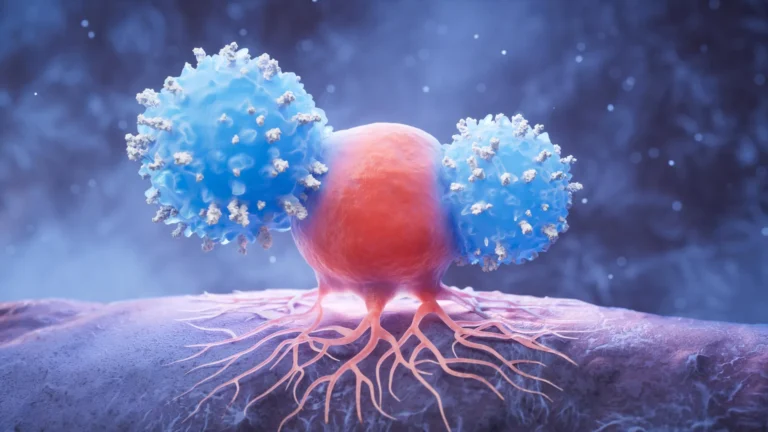
When injected intravenously into mice, E. americana did not circulate indefinitely. Instead, it showed a remarkable "homing" ability. Within 24 hours of administration, the bacterial population inside the tumors exploded, increasing roughly 3,000-fold. This rapid expansion creates a dual-pronged attack: the bacteria directly induce cellular damage to the tumor, while simultaneously acting as a biological beacon that recruits the host’s immune system to finish the job.
Perhaps most impressively, a single intravenous dose was sufficient to eliminate tumors entirely in the study’s colorectal cancer models. The researchers noted that this outcome not only matched but outperformed standard-of-care treatments, including immune checkpoint inhibitors (anti-PD-L1 antibodies) and liposomal doxorubicin, a common chemotherapeutic agent.
The Chronology of Discovery: From Amphibian Gut to Lab Bench
The path to this discovery was one of rigorous systematic screening. The JAIST team began by casting a wide net across Japan’s native amphibian and reptile populations.
Phase I: The Great Screening (Months 1–6)
The research team collected 45 distinct bacterial strains from three specific species: the Japanese tree frog (Dryophytes japonicus), the Japanese fire-bellied newt (Cynops pyrrhogaster), and the Japanese grass lizard (Takydromus tachydromoides). These animals, existing in diverse environments, host a complex array of microbes that have evolved alongside them for millennia.
Phase II: Filtering for Potency (Months 7–12)
Once isolated, the 45 strains were brought into the laboratory and subjected to a battery of screenings. The researchers were looking for strains that could survive in the unique, nutrient-poor, and often hypoxic (oxygen-deprived) environments of a tumor. Nine of the 45 strains demonstrated significant anticancer activity. Of those, Ewingella americana emerged as the clear frontrunner, exhibiting the most robust destructive potential against malignant cells.
Phase III: Testing and Validation (Months 13–24)
Following the identification of E. americana, the team moved into preclinical trials using mouse models. They monitored the pharmacokinetic behavior of the bacteria, observing how they moved through the bloodstream, where they sequestered, and how they interacted with both healthy and diseased tissue. The final phase involved analyzing the immune response triggered by the treatment and ensuring that the bacteria were cleared from the system without causing long-term toxicity.
Supporting Data: Mechanisms of Action and Safety
For a therapy to move from the laboratory to clinical practice, it must be both effective and safe. The JAIST study provides a detailed roadmap of why E. americana works and, crucially, why it doesn’t harm the host.
The Dual-Attack Mechanism
The efficacy of E. americana rests on its ability to thrive where other organisms perish. As a facultative anaerobe, the bacterium is highly adaptable. When it enters a tumor, it encounters an environment that is typically low in oxygen and high in metabolic waste—a landscape where most cells struggle to survive. E. americana flourishes here, rapidly multiplying and creating physical stress on the tumor’s architecture.
Simultaneously, the presence of the bacteria acts as a "red flag" for the immune system. The infection-like state triggered by the bacteria induces a massive influx of T cells, B cells, and neutrophils into the tumor site. These immune soldiers release inflammatory signaling molecules—specifically TNF-α and IFN-γ—which create a hostile environment for the cancer cells, effectively turning the tumor into a site of localized inflammation that the body is primed to eliminate.
The Safety Profile
One of the most persistent concerns with bacterial therapy is the risk of systemic infection or sepsis. However, the data from the JAIST team is reassuring. The bacteria have a very short half-life in the bloodstream (approximately 1.2 hours) and are completely undetectable in the body within 24 hours of injection.
The researchers performed comprehensive autopsies and screenings of healthy organs—the liver, spleen, lungs, kidneys, and heart—and found no evidence of colonization. Furthermore, the mild inflammation caused by the bacterial treatment was transient, resolving fully within 72 hours. Even after a 60-day observation period, there were no signs of chronic toxicity or secondary health issues in the treated mice.
Official Responses and Scientific Context
The scientific community has reacted with cautious optimism to the JAIST findings. While the "complete response" rates are exceptionally high, experts caution that mouse models of cancer do not always perfectly translate to human physiology, where tumor environments can be more heterogeneous and the immune system more complex.
However, the researchers themselves are transparent about these limitations. They frame the study as a "proof of concept" rather than a finished medical product. By isolating the bacteria and growing them in a lab, they have demonstrated that nature provides a library of biological tools that we have barely begun to categorize.
"This study proves that we don’t necessarily have to invent new drugs from scratch," the lead researchers suggested in their findings. "Sometimes, the evolutionary pressures on other species—like the amphibians living in our own backyard—have already solved the problem of how to target and eliminate abnormal cell growth."
Implications: A New Era of Biotherapy
The potential implications of this discovery are vast. If E. americana can be safely adapted for human use, it could provide a lifeline for patients with solid tumors—such as pancreatic cancer, breast cancer, and melanoma—that are notoriously resistant to current treatments.
Future Research Directions
The JAIST team is already planning the next steps in their research. Their strategy includes:
- Dose Fractionation: Investigating whether breaking the treatment into smaller, timed doses can increase efficacy while further reducing any risk of side effects.
- Combination Therapies: Testing whether E. americana can "sensitize" tumors to chemotherapy or immunotherapy, making those established treatments work better than they do on their own.
- Direct Injection: Evaluating whether injecting the bacteria directly into a tumor mass can achieve even more precise control.
The Biodiversity Dividend
Perhaps the most profound takeaway from this research is the argument it makes for biodiversity conservation. By viewing amphibians and reptiles not just as animals, but as repositories of potential medical breakthroughs, the study highlights the "biodiversity dividend." Every species lost to habitat destruction or environmental change represents a potential medical secret that may never be discovered.
The research was made possible through the generous support of several key Japanese institutions, including the Japan Society for the Promotion of Science (JSPS) and the Japan Science and Technology Agency (JST). Their investment in "Challenging Research" programs underscores a national commitment to high-risk, high-reward scientific inquiry.
As the team moves toward the next phase of development, the medical world will be watching closely. If E. americana can maintain its record of success in larger models, it may not be long before we see the first clinical trials of "frog-derived" cancer therapies, fundamentally changing the prognosis for millions of people worldwide.
The story of E. americana is a reminder that nature is often the greatest architect of medicine. In the intestines of a small Japanese tree frog, scientists found a weapon against cancer—a discovery that underscores how much of the future of medicine is still waiting to be found in the wild.