











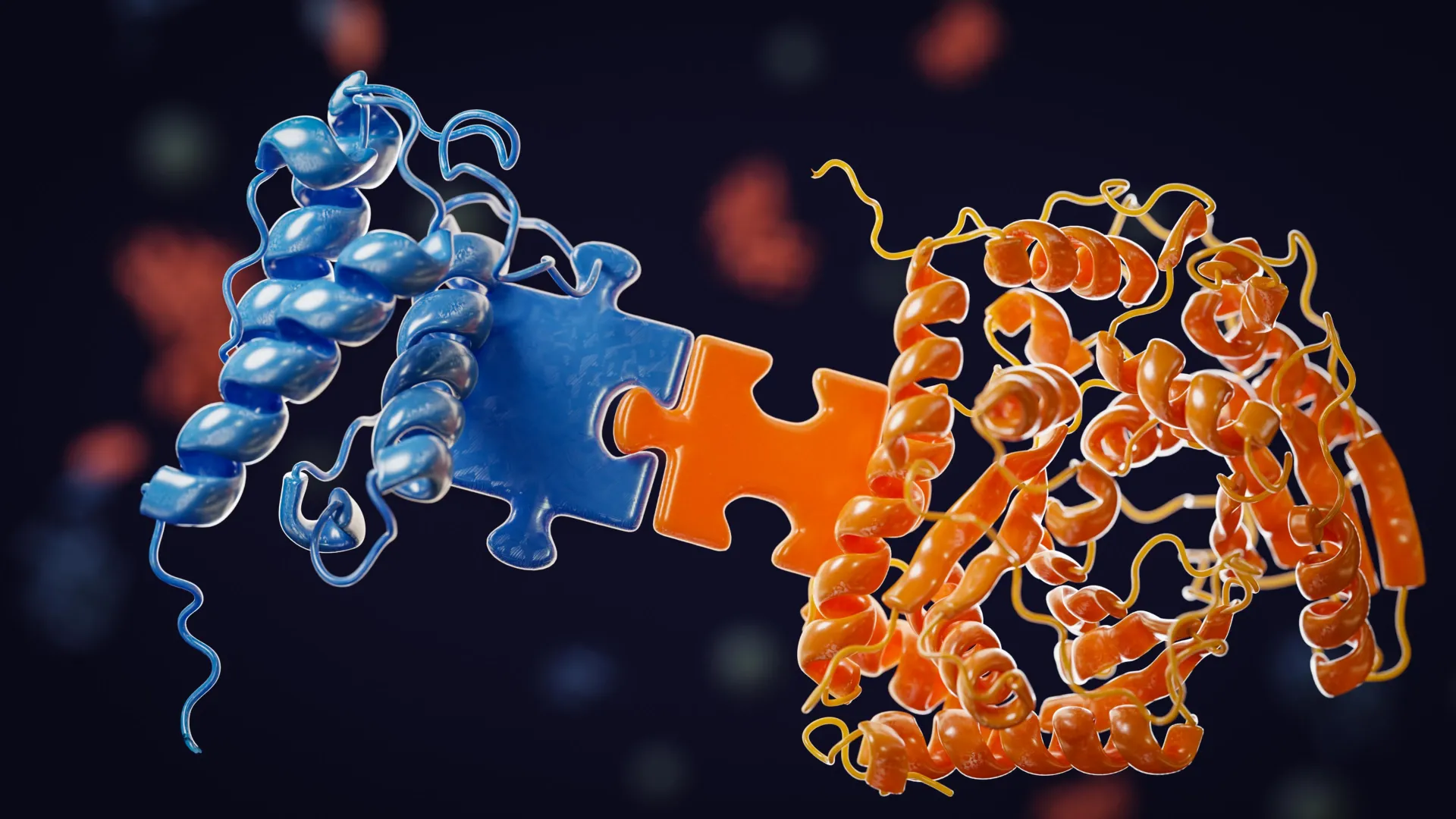
In a landmark breakthrough that promises to reshape the landscape of oncology, an international team of researchers has decoded a biological mechanism that has long puzzled the scientific community: how bacteria naturally manufacture diverse variants of complex anti-cancer compounds. By unraveling the "mix-and-match" strategy employed by these microscopic organisms, scientists have unlocked a blueprint for combinatorial biosynthesis—a process that could accelerate the creation of highly potent, next-generation cancer treatments.
The study, published in Nature Communications, details the discovery of specific "docking domains" that act as molecular connectors, allowing bacterial enzymes to coordinate their work with surgical precision. This discovery effectively provides a roadmap for researchers to emulate nature’s efficiency, moving from mere observation to the active engineering of novel, life-saving pharmaceuticals.
The Mystery of Bacterial Chemical Diversity
For decades, biologists have marveled at the chemical sophistication of bacteria. Specifically, certain soil-dwelling microbes have shown an uncanny ability to produce "families" of closely related compounds. Among these are HDAC (histone deacetylase) inhibitors—a class of drugs that function by regulating gene expression within cells to halt the proliferation of cancer. One such compound, Romidepsin (Istodax), is currently FDA-approved for the treatment of specific blood cancers, such as T-cell lymphomas.
However, despite knowing that these bacteria were producing these drugs, the "how" remained elusive. Scientists understood that these complex molecules were built by massive protein complexes known as PKS-NRPS hybrids—gigantic biological assembly lines—but they could not fathom how these assembly lines switched components to create different versions of the same drug. The process appeared too coordinated to be random, yet the communication between the enzymes involved was invisible to existing analytical methods.
"For decades, we’ve known that bacteria can naturally produce multiple versions of powerful anti-cancer drugs, yet we had no idea how they achieved this," says Dr. Munro Passmore, a Research Fellow in the Department of Chemistry at the University of Warwick and the study’s first author. "This work finally cracks that code. We’ve identified how the different enzymes communicate and cooperate to produce these drug variants, something that has eluded researchers because the system is so elegantly economical. It’s the breakthrough we needed to actually engineer these drugs ourselves."
Decoding the Molecular Assembly Line
To solve the puzzle, the research team—a collaboration between the University of Warwick and Monash University—employed a multidisciplinary approach. They integrated structural biology, advanced biochemistry, genetic analysis, and computational modeling to map the interactions within the PKS-NRPS hybrid systems.
The Role of Docking Domains
The "aha!" moment came when the team identified small, specialized molecular regions termed "docking domains." These act as the interface between the core drug-building machinery and the peripheral enzymes responsible for modifying the drug’s structure.
These docking domains share a conserved connection point, a structural feature that allows them to "dock" with multiple enzyme partners. This flexibility is the engine of bacterial chemical diversity. By swapping these partners, the bacterium can alter the molecular architecture of the resulting drug without disrupting the integrity of the assembly line. It is a biological version of a modular manufacturing plant, where the core machinery remains the same, but the final product is customized by changing a single component.
Shedding Light on FR-901375
The researchers specifically focused on a compound known as FR-901375, a chemical cousin of Romidepsin that had been identified years ago but whose biological origin remained a "black box." By identifying the docking domain mechanism, the team was able to trace the complete genetic and biochemical pathway for FR-901375. This filled a critical gap in pharmacological history and confirmed that the organism uses these docking domains to generate diverse depsipeptides—complex cyclic molecules built from amino acid building blocks and a hydroxy acid pharmacophore.
Chronology of the Discovery
The journey to this discovery represents years of cumulative scientific inquiry:
- 1990s–2000s: Discovery of HDAC inhibitors like Romidepsin and related depsipeptides. Scientists begin to hypothesize that bacteria use modular enzymes to assemble these molecules.
- 2010s: The rise of PKS-NRPS hybrid research. Scientists characterize the large protein complexes involved but struggle to explain how they interact with variable enzyme partners to create drug variants.
- 2020–2023: The Warwick-Monash team begins an intensive integrated study. They utilize high-resolution imaging and computational modeling to visualize the "docking domains" at the molecular level.
- 2024: The team successfully publishes their findings in Nature Communications, demonstrating how the docking domains act as the "keys" that unlock the combinatorial potential of the bacterial assembly line.
Implications for Modern Oncology
The implications of this research extend far beyond basic microbiology. By reverse-engineering nature’s evolutionary logic, the researchers are now positioned to build synthetic pathways that go beyond what nature produces.
A Blueprint for Better Drugs
Prof. Greg Challis, Monash Warwick Alliance Professor of Sustainable Chemistry, believes this discovery is a turning point. "This research gives us a blueprint to do what nature does, but better and faster," Challis notes. "By reverse-engineering nature’s evolutionary logic, we can now design synthetic pathways that generate new anti-cancer drug candidates with properties optimized for clinical use, such as superior potency, improved selectivity, and fewer side effects."
The team’s immediate goal is to curate an expanded library of drug candidates. Because these compounds are naturally derived, they often possess complex, "drug-like" scaffolds that are difficult to synthesize from scratch using traditional chemistry. By utilizing bacteria as the "factories," researchers can produce these drugs more efficiently.
Clinical Potential: Beyond T-Cell Lymphoma
HDAC inhibitors are a versatile class of drugs. Beyond their current use in treating blood cancers, researchers are investigating their potential in solid tumors and even in diseases outside of oncology, such as neurodegenerative conditions. The ability to create "designer" versions of these molecules means that scientists could theoretically fine-tune a drug to target a specific mutation in a cancer cell while sparing healthy tissue, drastically reducing the side effects commonly associated with chemotherapy.
The Future of Synthetic Biology
This discovery highlights the growing importance of synthetic biology in the medical field. By moving from a descriptive science—observing how bacteria work—to a generative science—building new systems based on those observations—the researchers are entering a new era of "programmable" medicine.
The study also provides a fascinating look into the evolution of these systems. The researchers concluded that the pathway for producing the compound studied likely evolved through gene duplication and recombination over millions of years. Nature, through trial and error, arrived at a "mix-and-match" system that is both incredibly precise and remarkably adaptable.
As the scientific community begins to digest these findings, the focus will now shift to high-throughput engineering. With the "code" cracked, laboratories worldwide can begin utilizing these docking domains to create custom-tailored enzymes. This will allow for the rapid prototyping of anti-cancer compounds that were previously impossible to access in the lab.
"Our goal is to build an expanded library of candidates for various cancers where new treatments are urgently needed," says Prof. Challis. "This discovery is moving us from understanding how the systems work to building new ones."
The era of manual, trial-and-error drug discovery is slowly giving way to an era of biological engineering. As researchers learn to speak the language of bacterial enzymes, the possibility of creating a vast, curated library of potent, selective, and life-saving anti-cancer agents is no longer a distant dream—it is a tangible, upcoming reality. The tiny docking domain, once a hidden detail of bacterial life, has become the key to a major leap in human health.