By Tayler Goectau
Clinical Research Coordinator & Disability Advocate
For many adults, the realization that they might be autistic does not arrive as a sudden epiphany, but rather as a slow-dawning recognition. It often begins in the quiet hours of the night—researching neurodivergent traits, taking online self-screening questionnaires, and scrolling through forums where the lived experiences of others mirror one’s own inner life.
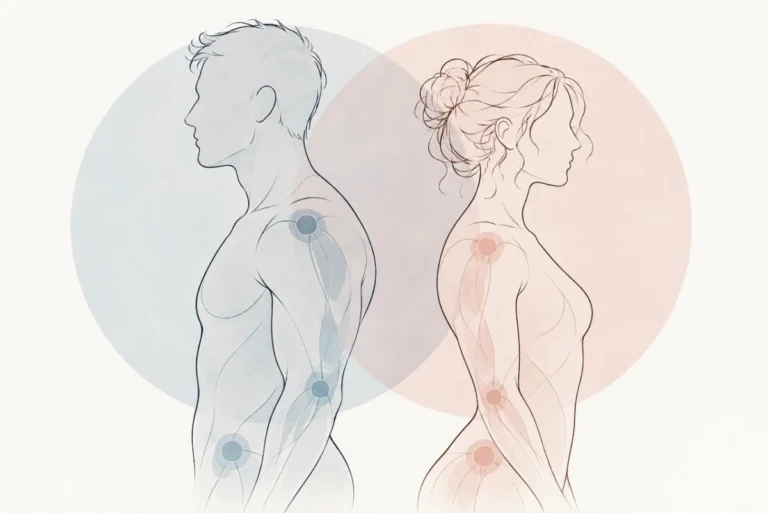
This journey is frequently compounded by a specific clinical overlap: recent data indicates that approximately 39% of autistic patients also present with Ehlers-Danlos Syndrome (EDS) or Hypermobility Spectrum Disorders (HSD). For those living with chronic pain and hypermobility, the search for an autism diagnosis is not just about identity; it is about finding a cohesive explanation for a lifetime of sensory, physical, and social differences.
If you are currently standing at this crossroads, questioning your neurotype, know that your curiosity is a valid clinical starting point. This guide explores the logistical, emotional, and practical steps of seeking an adult autism evaluation.
Main Facts: The Reality of Adult Assessment
The landscape of autism assessment has shifted significantly in the last decade. Historically, autism was viewed exclusively as a pediatric diagnosis. Today, clinical awareness has expanded to recognize that autism does not "go away" in adulthood—it simply manifests through the lens of lived experience, often involving decades of "masking" or compensating for social and sensory challenges.
A formal diagnosis is not merely a label; it is a clinical key that can unlock access to workplace accommodations, therapeutic support, and, most importantly, a deeper understanding of one’s own nervous system. However, the process is not without its hurdles. Finding a provider who is specialized in adult neurodivergence is the single most important factor in the success of an assessment. Many general practitioners and even some therapists lack the specific training to identify autism in adults who have spent a lifetime developing complex strategies to blend into neurotypical environments.
Chronology: The Roadmap to Evaluation
The path to an evaluation is rarely linear, but it generally follows a distinct trajectory from self-discovery to clinical confirmation.
Phase 1: Pre-Evaluation Exploration
Before engaging a professional, many individuals use screening tools. While not diagnostic, tools like the AQ (Autism-Spectrum Quotient) or the RAADS-R are frequently referenced by clinicians. These tools serve as a "compass" to help organize thoughts and identify patterns. During this phase, it is vital to document your experiences. Keep a log of traits you have noticed throughout your life, noting both childhood behaviors and current adult struggles.
Phase 2: Provider Selection
This is the most critical stage. Do not settle for the first available provider. Research their specific background: Do they list "adult autism assessment" as a primary specialty, or is it buried among a dozen other services? Reach out to your local neurodivergent community for referrals. If you currently see a therapist, ask for their input, but conduct your own due diligence on any recommended specialists.
Phase 3: The Day of the Assessment
On the day of your appointment, arrive prepared but allow yourself grace. Evaluations can range from one to three hours, sometimes split across multiple sessions. Expect a comprehensive review of your psychiatric and medical history. Your evaluator will likely cross-reference your self-reported notes with the DSM-5 criteria, either through direct questioning or open-ended conversation.
Phase 4: Post-Evaluation Recovery
The assessment is an emotionally taxing event. It requires deep introspection and the dredging up of memories that may be difficult to revisit. Plan to clear your calendar for the remainder of the day. The "wait" for the official report can be anxiety-inducing, but remember: the report is a document, not a definition of your existence.
Supporting Data: The Autism-EDS/HSD Connection
One of the most significant developments in recent clinical research is the documented intersection of connective tissue disorders and neurodivergence. Research published in reputable journals, such as the study linking Ehlers-Danlos Syndrome to autism, has become a cornerstone for many patients seeking a holistic understanding of their health.

For those navigating both chronic pain and suspected autism, presenting this research to an evaluator can be transformative. A provider who is familiar with this intersection is far more likely to understand the sensory sensitivities that often accompany hypermobility. If your evaluator is unaware of this correlation, it may be a red flag that they are not current on the latest clinically significant literature regarding neurodevelopmental comorbidities.
Official Perspectives and Clinical Best Practices
In the clinical community, the debate regarding adult diagnosis often centers on the "diagnostic criteria" provided in the DSM-5. While these criteria provide a framework, clinicians who specialize in adults emphasize that the application of these criteria must change.
"Masking," the conscious or unconscious suppression of autistic traits to mimic neurotypical social behavior, is a hallmark of adult presentation. A qualified evaluator must be able to "look past" the mask. They should be asking, “How much effort does it take for this person to navigate a social interaction?” rather than simply, “Do they make eye contact?”
If you feel your evaluator is failing to account for your compensation strategies, it is your right to ask for clarification. You may ask, "Are you evaluating my social skills, or are you evaluating the effort I expend to perform those skills?"
Implications: Moving Forward After the Assessment
The conclusion of an evaluation—whether it results in an autism diagnosis or not—is a milestone.
If You Receive a Diagnosis
A diagnosis can be a form of liberation. It allows you to shift from a framework of "self-improvement" or "fixing" yourself to a framework of "accommodating" your needs. It opens doors to sensory tools, such as noise-canceling headphones, stimming devices, or workplace adjustments that were previously unavailable to you.
If You Do Not Receive a Diagnosis
A "no" from a clinician does not invalidate your internal reality. If you feel the assessment was incomplete or that the provider did not understand your lived experience, seeking a second opinion from a specialist who focuses exclusively on adult, high-masking, or gender-diverse autism may yield a different result.
The Power of Self-Advocacy
Regardless of the outcome, the process of documenting your life and learning about your neurotype is an act of advocacy. You are taking ownership of your identity.
Key Takeaways for Your Journey:
- Curiosity is Evidence: Your desire to seek an evaluation is based on a lifetime of lived experience. Trust your internal radar.
- Prioritize Specialist Expertise: Look for providers who specialize in adult neurodivergence. Generalist evaluations often miss the nuances of adult masking.
- Bring Your "Data": Create a document of your traits and experiences. This prevents memory lapses during the high-pressure environment of an evaluation.
- Prepare for the Aftermath: The process is exhausting. Treat the day of your assessment like a medical procedure; rest and self-care are non-negotiable.
- The Report Does Not Define You: Your identity exists outside of a clinical document. Use the report as a tool for support, but do not allow it to dictate your self-worth.
The journey to understanding your brain is a marathon, not a sprint. By arming yourself with knowledge, selecting the right support, and prioritizing your own well-being, you can navigate the path to diagnosis with greater confidence and clarity.
Disclaimer: This article is for informational purposes only and does not constitute medical or psychological advice. Always seek the guidance of a qualified healthcare professional regarding any medical or mental health concerns.