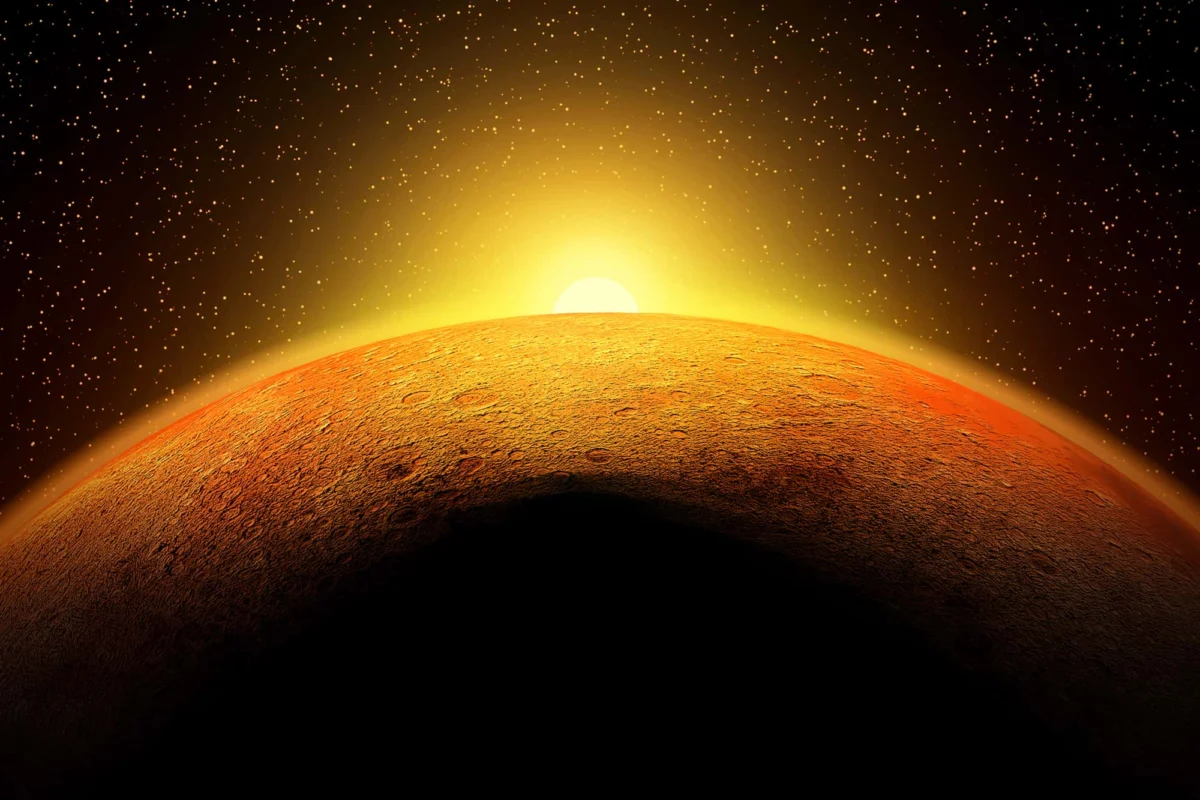
In a landmark achievement that echoes the dawn of industrialization on Earth, humanity has officially begun the process of "living off the land" on another world. NASA’s Mars Oxygen In-Situ Resource Utilization Experiment (MOXIE), a compact device no larger than a microwave oven, has successfully demonstrated that oxygen can be manufactured from the thin, carbon-dioxide-rich atmosphere of Mars. This breakthrough, conducted aboard the Perseverance rover, marks the first time in history that humans have synthesized life-sustaining gas on the surface of another planet, effectively turning the Martian environment into a resource rather than an obstacle.
The Core Achievement: Manufacturing Breathable Air
For decades, the primary challenge of crewed Mars exploration has been the "logistics of survival." Transporting enough oxygen to sustain a team of astronauts for a mission lasting several months—and providing the necessary propellant for a return journey—would require gargantuan payloads that current rocket technology simply cannot support.
Enter MOXIE. Installed within the chassis of the Perseverance rover, which landed in the Jezero Crater in February 2021, the device was designed as a proof-of-concept technology demonstration. Its primary function was to pull in the Martian atmosphere—which is 96% carbon dioxide—and subject it to a process known as solid oxide electrolysis. By applying high heat and electrical currents, the device separated oxygen atoms from the carbon dioxide molecules. The resulting byproduct was pure, breathable oxygen, while the leftover carbon monoxide was vented back into the atmosphere.
Between 2021 and 2023, MOXIE operated 16 distinct times, testing its capabilities under a variety of atmospheric conditions, ranging from the freezing Martian night to the dust-laden afternoons. By the time the experiment concluded its primary mission phase, it had produced a cumulative 122 grams of oxygen. While this quantity is modest—roughly equivalent to what a small dog might breathe over the course of 10 hours—it represents a monumental shift in space exploration doctrine: the transition from "Earth-dependent" to "Earth-independent" operations.
A Chronology of the Martian Oxygen Milestone
The journey to producing oxygen on Mars began long before Perseverance touched down on the dusty plains of Jezero Crater. The development of MOXIE was a multi-year effort spearheaded by the Massachusetts Institute of Technology (MIT) in collaboration with NASA’s Jet Propulsion Laboratory (JPL).
The Pre-Deployment Phase (2014–2020)
Before the device was ever integrated into the rover, it underwent rigorous testing in vacuum chambers designed to simulate the harsh, thin atmosphere of Mars. Engineers had to ensure that the solid oxide electrolysis unit, which operates at temperatures around 800 degrees Celsius (1,470 degrees Fahrenheit), could function within the rover’s sensitive internal environment without damaging the vehicle’s other critical scientific instruments.
Landing and Initial Activation (2021)
Following the "seven minutes of terror" that characterized the Perseverance landing in February 2021, the rover underwent a series of health checks. MOXIE was brought online for its first production run on April 20, 2021. The successful generation of oxygen during this initial run was met with cautious optimism by mission control, as it proved that the hardware could survive the extreme vibration of launch and the shock of landing.
The Experimental Campaign (2022–2023)
Over the subsequent two years, the mission team pushed MOXIE to its limits. They tested its efficiency during the Martian seasonal shifts, which bring significant changes in atmospheric pressure and temperature. By varying the power output and testing different intake pressures, researchers were able to gather a comprehensive dataset on how electrochemical oxygen production behaves in a non-terrestrial environment. Each of the 16 runs provided vital telemetry, proving that the device could start up, operate, and shut down reliably despite the planet’s volatile conditions.
Supporting Data: The Science of Electrolysis
To understand the magnitude of this achievement, one must look at the chemistry involved. The Martian atmosphere is incredibly sparse, with a surface pressure less than 1% of Earth’s. Extracting resources from such a vacuum is a Herculean task.
MOXIE utilizes a ceramic material that acts as an electrolyte. When the Martian atmosphere is compressed and heated, it is pushed through this ceramic membrane. The electricity creates an electrochemical reaction that breaks the chemical bonds of the CO2. The oxygen ions are then transported through the membrane and recombined to form O2 molecules.
The data gathered from the 16 runs revealed several key findings:
- Consistency: MOXIE consistently produced oxygen at the predicted rates, regardless of the dust levels in the atmosphere or the temperature of the external environment.
- Purity: The oxygen generated met the stringent purity standards required for life support systems, proving that the filtration processes were effective at scrubbing out potential contaminants from the Martian regolith.
- Scalability: The most important data point was the efficiency of the power-to-oxygen ratio. The experiment proved that the current design, if scaled up, could provide a predictable output, allowing mission planners to mathematically calculate the energy requirements for a future, full-scale oxygen production plant.
Official Responses and Scientific Perspectives
The success of MOXIE has been lauded by the global scientific community as a turning point for deep-space exploration.
"MOXIE’s impressive performance shows that it is feasible to extract oxygen from Mars’ atmosphere—oxygen that could help supply future astronauts with breathable air or rocket propellant," said NASA Deputy Administrator Pam Melroy in an official statement following the conclusion of the experiment. "Developing technologies that let us use resources on the Moon and Mars is critical to build a long-term lunar presence, create a robust lunar economy, and allow us to support initial human exploration campaigns to Mars."
Michael Hecht, the principal investigator for MOXIE at the MIT Haystack Observatory, noted that the project was a testament to the power of cross-disciplinary engineering. "The goal was not just to make oxygen," Hecht explained, "but to demonstrate that we could operate an industrial-scale process on a planet with a hostile environment. We have moved from science fiction into the era of interplanetary chemical engineering."
Within the aerospace industry, the implications are profound. Private companies like SpaceX, which have stated goals of colonizing Mars, view technologies like MOXIE as the "holy grail" of mission sustainability. By removing the need to ship liquid oxygen from Earth, the mass of a return vehicle can be reduced by several tons, dramatically lowering the cost and risk of the entire mission profile.
Implications for Future Martian Missions
The success of MOXIE has far-reaching consequences for the future of human spaceflight. NASA is already planning follow-up missions that will incorporate "In-Situ Resource Utilization" (ISRU) as a core mission requirement.
1. The Human Element
For a crewed mission, oxygen is not just for breathing; it is the primary ingredient in rocket propellant. To launch a crew from the surface of Mars back toward Earth, a massive amount of fuel is required. If that fuel can be manufactured on-site, the mission becomes exponentially more viable.
2. The Next Generation of Hardware
The current MOXIE device was a prototype. Future iterations will need to be much larger and operate continuously for months or years at a time. Scientists are already conceptualizing "MOXIE 2.0"—a facility that would be deployed to Mars ahead of human arrival, running autonomously to fill massive storage tanks with oxygen before the astronauts even descend to the surface.
3. Planetary Protection and Sustainability
As we look toward the 2030s and 2040s, the focus will shift from "can we survive" to "how do we thrive." The ability to manipulate the Martian atmosphere for our benefit opens doors to other ISRU technologies, such as extracting water ice from beneath the surface to create hydrogen fuel or building habitats from local Martian regolith.
Conclusion
The 122 grams of oxygen produced by MOXIE may seem like a drop in the ocean, but in the history of space exploration, it is a tidal wave. It marks the moment humanity stopped being visitors to Mars and began the long process of becoming inhabitants.
As NASA moves forward with the Artemis program on the Moon—which will serve as a testing ground for these same technologies—the lessons learned from the Perseverance rover will prove indispensable. We now know that the Martian atmosphere, once seen only as a thin, cold veil, is actually a rich storehouse of the raw materials necessary to sustain human life. The Red Planet is no longer a destination to be visited, but a home to be built, one breath at a time.