









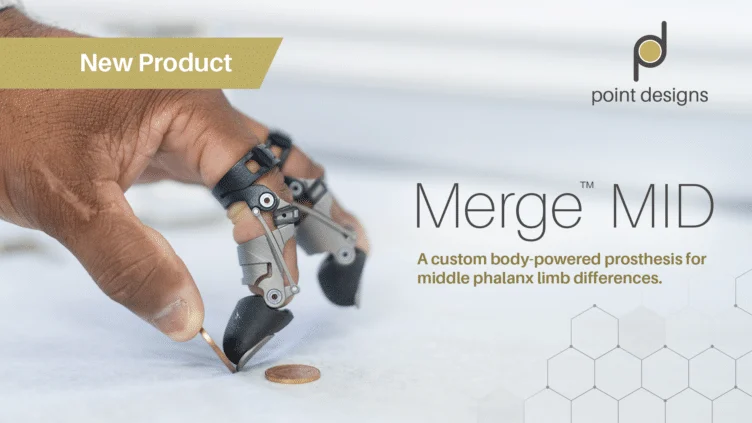
Boulder, Colorado – [Date of Publication, e.g., October 26, 2023] – Point Designs, a leader in advanced prosthetic solutions for partial-hand amputations, has announced the official launch of its latest innovation, the Merge MID. This custom-designed, body-powered finger prosthesis is specifically engineered to cater to patients who have experienced middle-phalanx amputations of digits 2 through 5. The introduction of the Merge MID marks a significant milestone in the field of prosthetics, promising to restore crucial function and independence for a patient population that has historically been underserved, filling a substantial void in available prosthetic care.
The Merge MID is not merely another prosthetic device; it represents a meticulously crafted solution born from rigorous engineering and a deep understanding of patient needs. Its primary aim is to seamlessly integrate with a patient’s residual anatomy, leveraging natural body movements to provide a functional replacement for a lost finger segment. This launch is poised to revolutionize the lives of thousands of individuals annually, offering them a tangible pathway to improved quality of life and enhanced capabilities in performing daily tasks.
Main Facts: A New Era for Mid-Phalanx Amputees
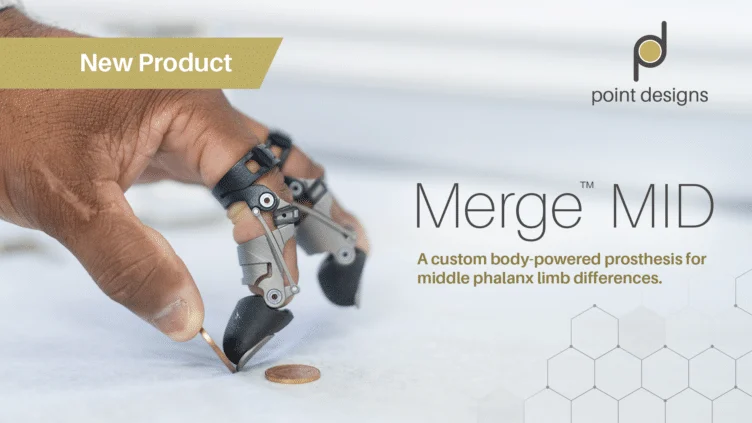
The Merge MID, developed by Point Designs, is a custom body-powered prosthesis specifically engineered for individuals with amputations through the middle phalanx of the index, middle, ring, or pinky fingers (digits 2-5). This innovative device operates by harnessing the existing motion of a patient’s proximal interphalangeal (PIP) joint, which remains intact after a middle-phalanx amputation. This allows for intuitive and controlled movement of the prosthetic digit, mimicking the natural bending and extension of a finger.
The significance of the Merge MID cannot be overstated, particularly when viewed against the backdrop of current prosthetic care for this specific amputation level. An estimated 13,000 patients in the United States alone experience middle-segment amputations each year. Despite this considerable number, fewer than 4% of these individuals currently receive any prosthetic solution. This stark statistic highlights a profound clinical gap, indicating a severe lack of suitable, accessible, and effective devices for this patient group. The absence of appropriate prostheses often leaves individuals struggling with compromised hand function, affecting their ability to perform routine tasks, engage in professional activities, and maintain personal independence.
Point Designs identifies this unmet need as a core driver behind the Merge MID’s development. By bringing "proven prosthetic engineering to body-powered solutions," the company aims to provide a reliable, custom-fit device that integrates seamlessly with the patient’s remaining hand structure. The custom nature of the Merge MID ensures an optimal fit and maximum functionality, tailored precisely to the unique anatomical requirements of each individual. This personalized approach is critical for devices that rely on intricate body mechanics for operation, guaranteeing comfort, stability, and effective performance. The ultimate goal is to empower patients, offering them a renewed sense of capability and autonomy through enhanced hand function.
Chronology: From Identifying a Gap to Pioneering a Solution
The journey leading to the launch of the Merge MID is rooted in Point Designs’ long-standing commitment to addressing the complex and often overlooked challenges of partial-hand amputations. Founded on the principle of restoring function and independence, the company has consistently sought to push the boundaries of prosthetic innovation, focusing on areas where existing solutions are either inadequate or non-existent.
The conceptualization of the Merge MID began with a thorough analysis of the prosthetics market and patient demographics. While advancements in upper-limb prosthetics have seen significant progress, particularly in whole-hand and wrist-level devices, solutions for partial-hand amputations, especially those involving the middle phalanx, have lagged. Clinicians and patients alike expressed frustration over the limited options available, often resorting to passive cosmetic devices or going without any prosthesis due to the lack of functional alternatives. Point Designs recognized that the unique biomechanics of middle-phalanx amputations—where a significant portion of the finger remains, including critical joint motion—presented both a challenge and an opportunity for a body-powered solution.
The development phase of the Merge MID was characterized by an iterative process of design, engineering, and clinical collaboration. The engineering team at Point Designs faced several key challenges. Firstly, designing a device that was compact enough to replace only the middle phalanx while still providing robust and reliable articulation. Secondly, ensuring that the body-powered mechanism was efficient, requiring minimal effort from the patient’s residual PIP joint, yet strong enough to facilitate practical grasping and manipulation. Materials selection was also paramount, balancing durability, weight, and aesthetic integration. Advanced CAD/CAM technologies were employed to facilitate precise custom fabrication, allowing for individualized sizing and shaping based on patient measurements and photographs.
Extensive research into the kinematics of the human finger and the specific adaptations required for amputations at the middle-phalanx level informed every design decision. Early prototypes were developed and refined through continuous feedback from prosthetists and occupational therapists who understood the intricate needs of patients. This collaborative approach ensured that the Merge MID was not just theoretically sound but also practically effective and user-friendly in real-world scenarios. The goal was to create a device that felt like a natural extension of the patient’s hand, maximizing comfort and minimizing the learning curve.
The culmination of these efforts, spanning several years of dedicated research and development, led to the successful creation of the Merge MID. The formal announcement of its launch signifies the transition from an innovative concept to a commercially available product, ready to make a tangible difference in the lives of those it is designed to serve. This phased approach, from initial problem identification to rigorous engineering and clinical validation, underscores Point Designs’ commitment to delivering high-quality, impactful prosthetic solutions.
Supporting Data: The Unmet Need and Functional Ingenuity
The statistics underscore a glaring disparity in prosthetic care. With approximately 13,000 new middle-segment amputations occurring annually, primarily due to trauma, accidents, or medical conditions, the fact that fewer than 4% of these patients receive a prosthetic solution represents a significant healthcare inequity. This low adoption rate is attributable to several factors:
Firstly, the anatomical complexity of partial-hand amputations, particularly those at the middle phalanx, presents unique design challenges. Traditional prosthetics often focus on more extensive amputations, making it difficult to scale down or adapt existing technologies for smaller, more intricate replacements.
Secondly, the limited availability of specialized devices has meant that many patients are told there are no suitable options for their specific amputation level. This lack of awareness and specialized products contributes to both patient and clinician resignation regarding prosthetic intervention for mid-phalanx loss.
Thirdly, existing solutions, if any, might be overly complex, bulky, or aesthetically unappealing, leading to low patient acceptance and abandonment rates.
The Merge MID directly addresses these issues through its innovative design and functionality. Its "body-powered" mechanism is central to its effectiveness and accessibility. Unlike myoelectric prostheses that rely on electrical signals from muscles, the Merge MID harnesses the natural mechanical movement of the patient’s remaining anatomy. For middle-phalanx amputations of digits 2-5, a crucial element typically retained is the active motion of the proximal interphalangeal (PIP) joint. This joint, located between the proximal and middle phalanges, allows for the bending and straightening of the finger. The Merge MID is designed to connect to the residual portion of the middle phalanx and leverage the active flexion and extension of the PIP joint. As the patient bends their PIP joint, a precisely engineered linkage system within the prosthesis translates this motion into a corresponding flexion of the prosthetic finger tip, mimicking natural grasping. When the patient extends their PIP joint, the prosthesis extends as well.
This ingenious design offers several advantages:
- Intuitive Control: The prosthesis operates through natural body movements, requiring minimal cognitive effort to control. This leads to a shorter learning curve and a more natural integration into daily activities.
- Durability and Reliability: Body-powered devices are generally more robust and less prone to electronic failures than their myoelectric counterparts. They are also less susceptible to environmental factors like moisture and dust, making them suitable for a wider range of activities and environments.
- Lightweight and Low Maintenance: Without the need for batteries, motors, or complex wiring, the Merge MID is lighter, reducing strain on the residual limb. It also requires less maintenance, simplifying the user experience.
- Enhanced Sensory Feedback: While not directly providing tactile sensation, the patient receives proprioceptive feedback through the movement of their own body, allowing for a more nuanced understanding of the prosthesis’s position and interaction with objects.
Point Designs’ clinical team plays a crucial role in ensuring optimal outcomes. Each potential candidate undergoes a thorough review process involving detailed patient measurements and photographs. This step is critical to confirm the patient’s eligibility – specifically, ensuring they retain sufficient residual finger length and active PIP joint motion to effectively drive the prosthesis. This personalized assessment ensures that the Merge MID is prescribed only to patients who will genuinely benefit from its unique capabilities, maximizing the chances of successful integration and patient satisfaction.
Functionally, the Merge MID is designed to restore a significant degree of prehension and manipulation capabilities. Patients can regain the ability to grasp, pinch, and stabilize objects, which are fundamental for countless daily tasks, from holding a pen or utensil to manipulating tools, typing, or simply picking up small items. The custom fit not only ensures comfort but also optimizes the leverage and mechanical advantage of the body-powered system, resulting in a highly functional and responsive prosthetic digit.
Official Responses: A Mission-Driven Commitment
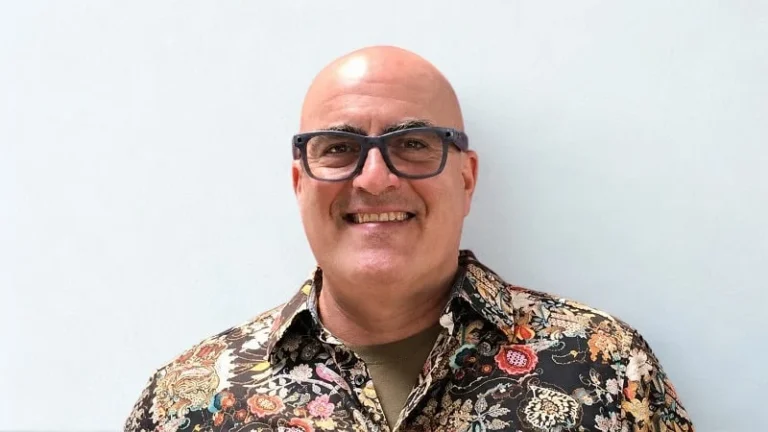
Levin Sliker, Vice President and General Manager of Point Designs, articulated the core philosophy driving the company’s latest innovation, stating, "We’ve always been driven by a single mission: to restore function and independence for people with partial-hand amputation. Merge MID expands that mission into a category we hadn’t yet addressed: body-powered solutions. It reflects our commitment to rigorous engineering, clinical collaboration, and genuine patient-centered design, delivering something that works—really works—for everyone involved."
Sliker’s statement encapsulates Point Designs’ unwavering dedication to its founding principles. The emphasis on "restoring function and independence" goes beyond mere product development; it speaks to a profound understanding of the psychological and practical impact of limb loss. For individuals with partial-hand amputations, the ability to perform seemingly simple tasks can significantly impact their quality of life, self-esteem, and professional opportunities. The Merge MID is thus not just a device, but a tool for empowerment.
The strategic expansion into "body-powered solutions" signifies Point Designs’ responsiveness to diverse patient needs and clinical realities. While advanced myoelectric prosthetics offer sophisticated control, body-powered devices excel in their simplicity, robustness, and direct user feedback, making them ideal for specific amputation levels and patient preferences. For middle-phalanx amputations, where residual joint motion can be effectively leveraged, a body-powered system offers an elegant and efficient solution that avoids the complexities and costs associated with externally powered devices. This move demonstrates a comprehensive approach to prosthetic care, acknowledging that no single technology fits all.
The commitment to "rigorous engineering" is evident in every aspect of the Merge MID, from its durable materials to its precise mechanical linkages and custom fabrication process. Point Designs prides itself on a scientific approach to design, ensuring that each component is optimized for performance, longevity, and patient comfort. This engineering excellence is coupled with "clinical collaboration," underscoring the company’s belief that the best solutions emerge from a partnership between engineers, prosthetists, therapists, and patients. Feedback from the clinical community is not merely considered but actively integrated into the design and refinement process, ensuring that the device meets the practical demands of both fitting specialists and end-users.
Finally, the focus on "genuine patient-centered design" is the bedrock of Point Designs’ philosophy. This means designing with the end-user’s experience at the forefront, prioritizing comfort, ease of use, aesthetic integration, and functional efficacy. The Merge MID is designed to be as unobtrusive as possible, allowing patients to regain functionality without drawing undue attention to their prosthesis. Sliker’s concluding remark, "delivering something that works—really works—for everyone involved," reinforces the company’s dedication to creating solutions that are not just technically sound but genuinely transformative for patients, beneficial for clinicians, and sustainable for the healthcare system. This holistic approach distinguishes Point Designs as a compassionate and innovative leader in the prosthetics industry.
Implications: A New Horizon for Partial-Hand Amputees and the Prosthetics Industry
The launch of the Merge MID carries significant implications, not only for individuals with middle-phalanx amputations but also for the broader field of prosthetics and rehabilitative medicine.
For Patients: The most immediate and profound implication is the potential for vastly improved quality of life. For years, many patients with middle-phalanx amputations have had limited functional options, often leading to compensatory movements, overuse injuries in other digits, and psychological distress associated with functional limitations and altered body image. The Merge MID offers a tangible path to regaining fine motor skills, precision grip, and overall hand dexterity crucial for everyday tasks, professional duties, and recreational activities. This restoration of function can lead to increased independence, improved self-confidence, and a higher sense of well-being. Psychologically, receiving a functional prosthesis can be incredibly empowering, helping individuals to overcome feelings of loss and reintegrate more fully into their social and professional lives.
For the Prosthetics Industry: The Merge MID sets a new benchmark for addressing niche but significant amputation levels. By successfully developing a custom, body-powered solution for middle-phalanx amputations, Point Designs demonstrates that innovation can thrive in previously neglected areas. This could spur further research and development within the industry, encouraging other manufacturers to invest in solutions for various partial-hand and partial-foot amputations, thereby expanding the scope of prosthetic care. The emphasis on custom fabrication and patient-specific solutions also reinforces a growing trend towards personalized medicine, where devices are tailored precisely to individual anatomical and functional requirements, leading to better outcomes and higher patient satisfaction.
For Healthcare Providers and Systems: The availability of a proven solution like the Merge MID provides clinicians with a valuable tool to offer their patients, reducing the frustration of having to tell patients there are no viable options. This can lead to increased referrals for prosthetic services and a greater willingness among patients to pursue prosthetic fitting. From a broader healthcare perspective, increased functionality can potentially reduce long-term healthcare costs associated with compensatory injuries, rehabilitation for secondary conditions, and lost productivity. The relatively simple and robust nature of body-powered devices might also offer a more cost-effective long-term solution compared to complex electronic prostheses, potentially improving accessibility for a wider range of patients and insurance plans.
Future Outlook: The success of the Merge MID could pave the way for further innovations from Point Designs and others. It might encourage the development of similar body-powered or hybrid solutions for other unique amputation levels within the hand or foot. The methodologies employed in its development – rigorous engineering, extensive clinical collaboration, and patient-centered design – could become a template for future prosthetic projects. Furthermore, as technology advances, there may be opportunities to integrate enhanced sensory feedback or even subtle power assistance into body-powered designs, creating an even more seamless user experience.
In conclusion, the Merge MID represents more than just a new product; it is a testament to the power of targeted innovation and compassionate engineering. By directly addressing a critical clinical gap and offering a highly functional, patient-centric solution, Point Designs is not only advancing the field of prosthetics but also profoundly enhancing the lives of thousands of individuals who have long awaited such a breakthrough. The call for clinicians and patients to explore the Merge MID page for candidacy and ordering information is an invitation to embrace a future where comprehensive prosthetic care for partial-hand amputations is not just an aspiration, but a tangible reality.