








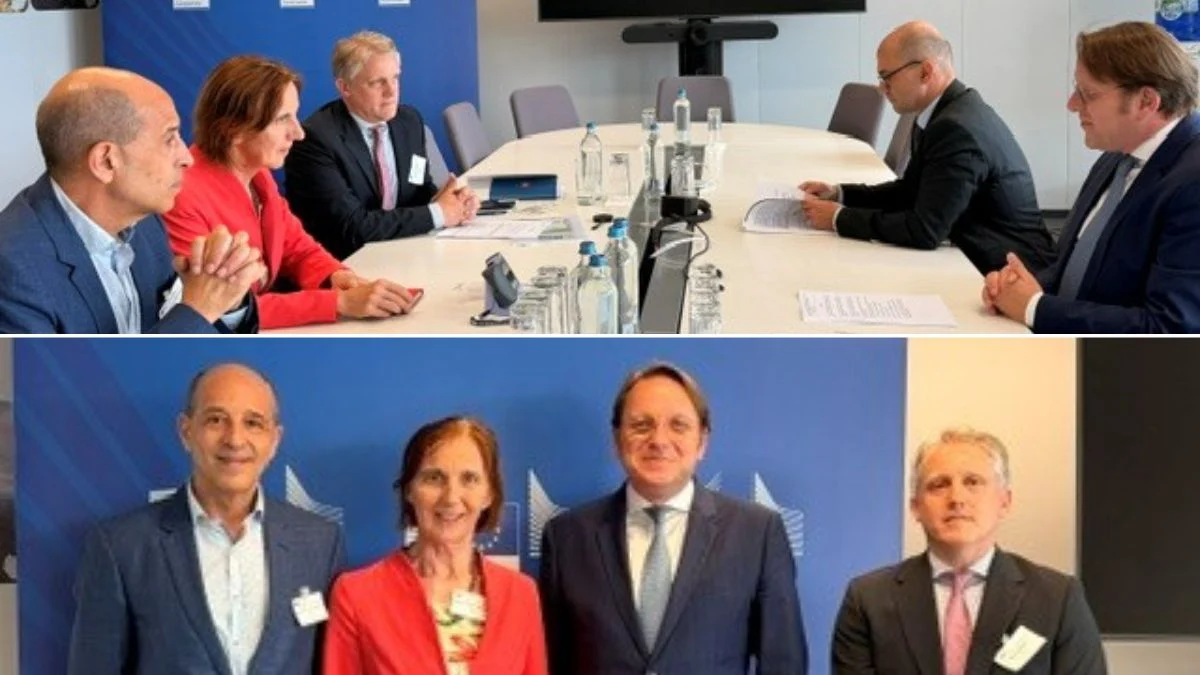
BRUSSELS — In a strategic move to elevate respiratory wellness on the European Union’s legislative agenda, a high-level delegation from the European Respiratory Society (ERS) convened this week with Olivér Várhelyi, the European Commissioner for Health and Animal Welfare. The meeting, held in the heart of the EU’s administrative hub, marks a critical turning point in the ongoing effort to transition respiratory health from a clinical concern to a primary political mandate.
As Europe faces a complex landscape of environmental shifts, an aging population, and the lingering effects of post-pandemic health challenges, the ERS delegation—led by Secretary General Prof. Ildikó Horváth, President-Elect Dr. Marc Miravitlles, and Director of Advocacy and European Affairs Brian Ward—sought to impress upon the Commissioner that the continent’s respiratory health is inextricably linked to its economic and social stability.
The Core Mandate: Main Facts of the Engagement
The primary objective of the meeting was to secure a formal commitment from the European Commission to prioritize respiratory health in upcoming health strategies. Respiratory diseases, including Chronic Obstructive Pulmonary Disease (COPD), asthma, lung cancer, and the long-term sequelae of infectious respiratory diseases, represent a significant portion of the EU’s disease burden.
The ERS delegation highlighted that current healthcare spending is heavily skewed toward reactive, late-stage treatment. By shifting the focus toward preventative policies—such as improved air quality standards, smoking cessation initiatives, and early diagnostic screening programs—the Society argued that the EU could significantly reduce the strain on national healthcare systems.
"We are not merely asking for funding," said Prof. Horváth following the session. "We are asking for a structural integration of respiratory health into the broader European health framework. When we talk about healthy aging, the green transition, and digital transformation, we are effectively talking about lung health."
A Timeline of Advocacy: The Road to the Commission
The meeting with Commissioner Várhelyi was not an isolated event but rather the culmination of years of persistent lobbying and scientific consensus-building by the ERS.
2022–2023: Setting the Foundation
Following the global disruption caused by COVID-19, the ERS intensified its focus on the fragility of respiratory systems. During this period, the Society published a series of position papers detailing the economic impact of respiratory diseases, estimating that the collective cost to the EU economy runs into hundreds of billions of euros annually due to lost productivity and direct medical expenditures.
Early 2024: The Strategic Pivot
The ERS Advocacy department shifted its focus from purely clinical guidelines to policy-based lobbying. The Society began forming alliances with other patient advocacy groups and environmental organizations, creating a broader coalition that could influence the European Parliament’s Health Committee.
Late 2025: Drafting the Policy Briefs
Throughout the latter half of 2025, the ERS leadership engaged in a series of technical briefings with European Commission staffers. These discussions focused on data-driven policy changes, specifically regarding the revision of EU Air Quality Directives and the integration of lung health into the EU4Health program.
July 2026: The High-Level Meeting
The summit this week represents the successful culmination of this preparatory work. By gaining direct access to Commissioner Várhelyi, the ERS has ensured that their recommendations are now sitting on the desk of the executive branch of the European Union, moving them from the realm of academic suggestion into the sphere of potential legislative action.
The Data Landscape: Why Respiratory Health Demands Attention
To understand the urgency of the ERS mission, one must look at the sobering statistics defining respiratory health in Europe today.
The Burden of Disease
- COPD and Asthma: Approximately 30 million people in Europe suffer from chronic respiratory diseases. These conditions are leading causes of disability and premature mortality across the continent.
- The Economic Toll: Respiratory disease is a major driver of indirect costs, including work absenteeism and disability pensions. Estimates suggest that respiratory-related healthcare costs account for nearly 6% of the total health budget of EU member states.
- Air Quality and Health: Research cited by the ERS indicates that fine particulate matter (PM2.5) remains the single largest environmental health risk in Europe. Despite recent legislative improvements, air pollution remains a critical factor in the development of both acute and chronic lung conditions.
The Diagnostic Gap
The ERS highlighted that a significant percentage of Europeans living with lung conditions remain undiagnosed until their disease is in an advanced, often irreversible stage. By promoting early detection through primary care, the Society argues that the EU could flip the script on chronic disease management, moving from expensive hospital-based care to more manageable community-based prevention.
Official Responses and Political Implications
The meeting concluded with a constructive dialogue, though the road to legislative adoption remains long.
The ERS Position
Dr. Marc Miravitlles emphasized that the scientific community is ready to provide the evidence base required for these policy shifts. "Our role is to provide the clinical roadmap. We have the data to show that investing in lung health provides a massive return on investment, not just in financial terms, but in human quality of life," Dr. Miravitlles noted.
The Commission’s Stance
While Commissioner Várhelyi did not issue a binding legislative promise, the dialogue was described as "highly receptive." A spokesperson for the Commission stated that the meeting provided valuable insights into the interlinkages between environmental policy and public health. The Commissioner acknowledged that respiratory health would be a key component of the Commission’s ongoing review of the "Health in All Policies" approach.
The Broader Implications
The meeting carries significant implications for future EU policy, specifically:
- Legislative Integration: There is now a higher probability that respiratory health will be explicitly mentioned in the next multi-annual financial framework (MFF) of the EU.
- Environmental Alignment: The ERS’s advocacy is pushing the EU to harmonize its climate goals with public health targets, forcing a more aggressive stance on industrial and traffic-related emissions.
- Cross-Border Collaboration: The meeting may lead to the creation of a European-wide registry for respiratory diseases, which would allow for better data sharing and standardized treatment protocols across member states.
Moving Forward: The Path to 2030
As the meeting concluded, the ERS made it clear that their work is only beginning. The Society plans to continue its pressure campaign throughout the remainder of 2026, targeting both the European Parliament and the Council of the European Union to ensure that the discussions held this week are translated into actionable directives.
The ERS has invited the Commissioner to attend upcoming scientific congresses, where he will have the opportunity to engage with thousands of respiratory experts. This transparency is intended to keep the political leadership accountable to the medical reality on the ground.
For patients across Europe, this advocacy represents a beacon of hope. For too long, respiratory health has been overshadowed by other health priorities. Through the persistent efforts of the ERS, the narrative is changing. As Brian Ward, the ERS Director of Advocacy, stated, "We are not just advocating for patients; we are advocating for the future of European public health. Breathing is a fundamental right, and it is the government’s duty to protect the air we breathe and the health of our lungs."
Call to Action for Stakeholders
The ERS continues to call upon its members, patient groups, and the public to remain engaged. By participating in local and national consultations, citizens can amplify the message being delivered in Brussels. The Society provides comprehensive resources on its advocacy portal, encouraging professionals to use their clinical expertise to influence local policy.
As the European Commission prepares its agenda for the coming years, the ERS remains a vigilant sentinel, ensuring that respiratory health is not merely a footnote, but a cornerstone of a healthier, more resilient Europe.
For more information on the ERS’s ongoing advocacy initiatives, legislative updates, and resources for health professionals, please visit the ERS Advocacy Portal.